
Producer Partnership
Ending Hunger One Day at a Time
Livingston, Montana
Written by Cyd Hoefle
Photography by Producer Partnership
Winter Issue - 2026
In 2006, the USDA coined the term “food insecurity,” as an official designation of not only hunger but also the lack of access to nutritious food. Fast forward to 2020 when food insecurity was running rampant because of the pandemic. Grocery stores, unable to keep stock on their shelves due to unstable food chains, forced many to turn to food banks to tide them over, causing extra strain on the system.
When the pandemic hit, in early 2020, Matt Pierson was in the middle of calving season - already “social distancing,” as he jokingly said. Matt operates a cow/calf operation at the base of the Absaroka Mountain Range with his wife and two sons. The ranch goes back three generations. It’s a beautiful place; the views and the serenity are second to none.
As every cattle producer knows, there’s rarely enough time in a day to finish what needs to be finished. Matt is no exception. He’s plenty busy, but he also has a servant’s heart.
In addition to ranching, Matt spent the last 25 years coaching youth soccer in Livingston. When the impact of the pandemic hit food supplies, Matt knew families in the Livingston area that were considered food insecure. He didn’t stand back and wait for someone to figure out what to do, the Livingston rancher took the bull by the horns.
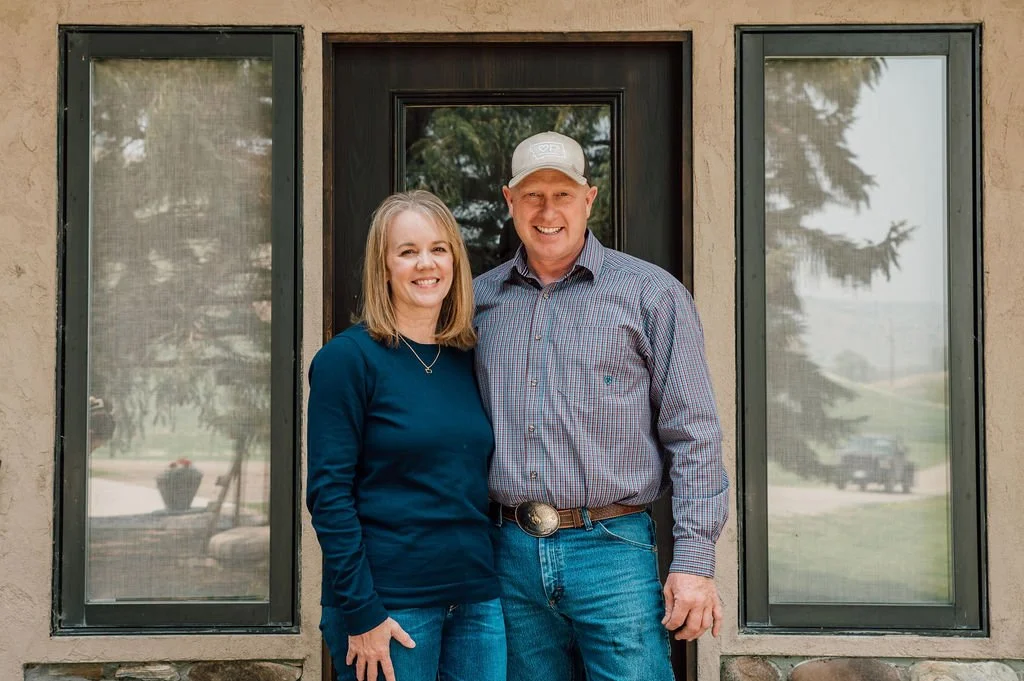
“I knew I could do something about it,” he said. “I could feed them beef.”
As the shelves in Livingston grocery stores emptied faster than they could be filled, Matt and his crew came up with the idea of processing donated cattle and giving the meat to the local food bank. Within a week he contacted several ranchers who were immediately on board with the idea. The timing was providential. Just as Covid reared its ugly head and everyone was trying to figure out how to move forward, producers quit taking their livestock to processing plants. Quite abruptly there was no livestock to butcher.
“It was a window of about ten days,” Matt explained. “My ranch and a couple of others donated some cows and Pioneer Meats in Big Timber processed them for us. For those ten days, we were able to fill the time slots with animals and donate the meat right back into the Livingston community.”
The window, however, quickly slammed shut. Consumers began scrambling for alternative ways to purchase meat. Direct sales from farms to consumers took off and suddenly processing facilities were looking at a year to eighteen month wait list.
But the seed had been planted, the need evident and Matt wasn’t about to stop what he had started. Naming his newly formed non-profit, Producer Partnership and appointing a board of directors, he called every processing facility within a five-state region and found a plant in Williston, North Dakota that could take up the slack. The ND facility agreed to process the donated livestock; Matt just had to deliver them.
“People wanted to help,” Matt said. “It exploded after that.”
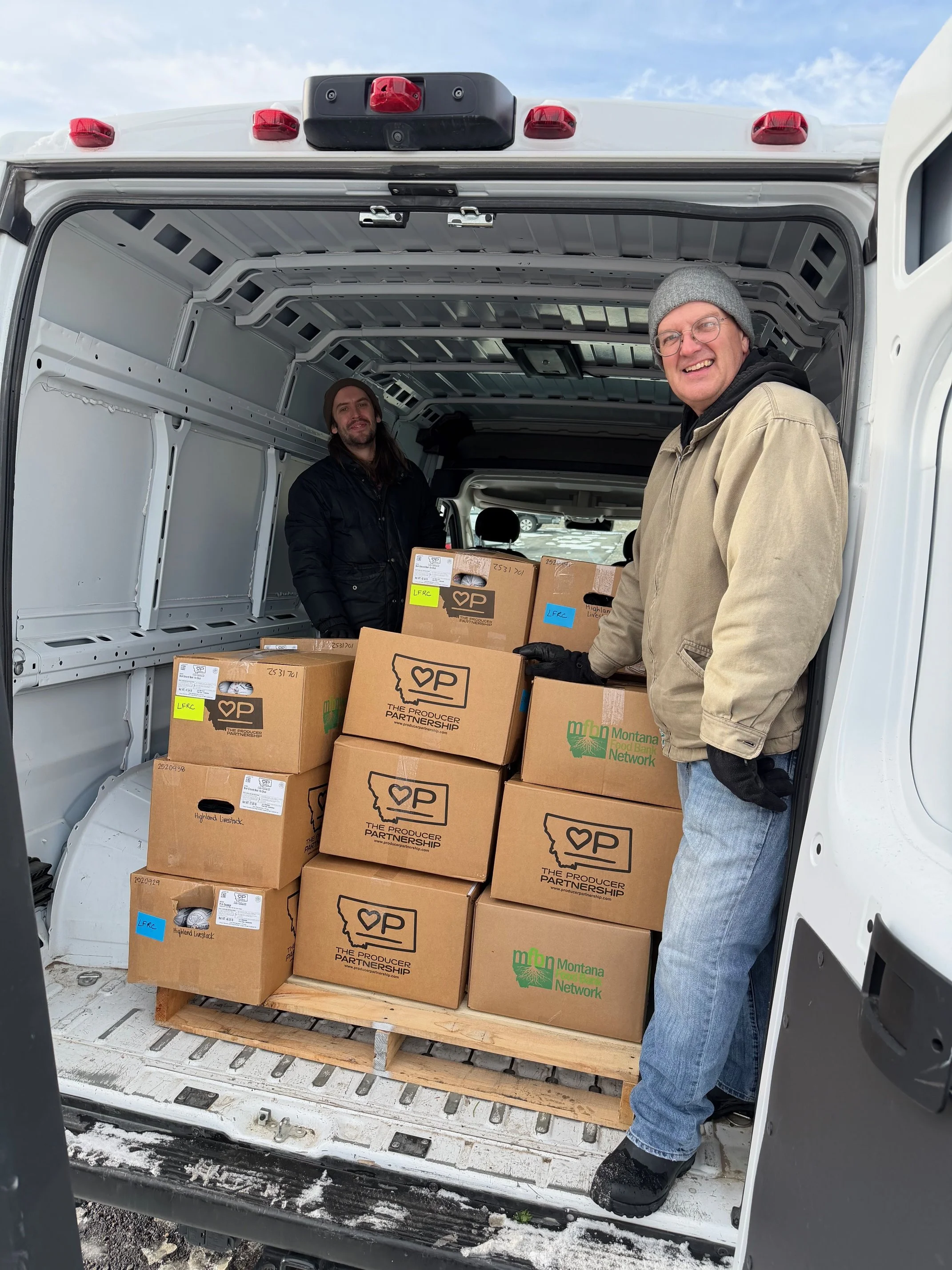
As donations of livestock came in and word spread, more producers stepped up. When the food bank in Livingston ran out of freezer space, Matt reached out to neighboring communities, who gratefully accepted the donations of quality meat.
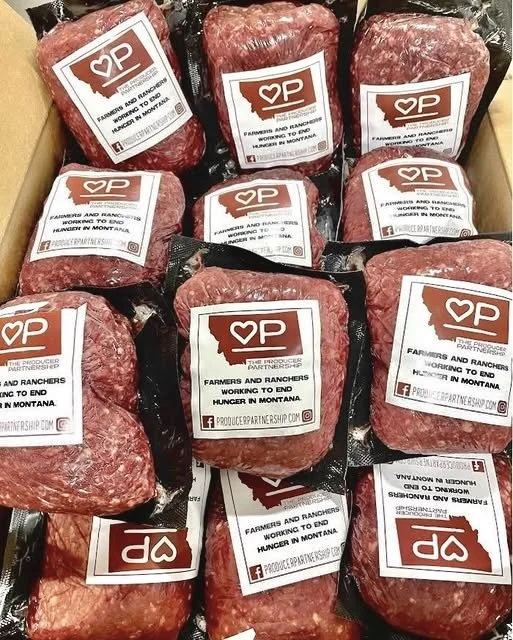
A rhythm fell into place. With continued donations of livestock, Matt began holding the animals on feed until he had a trailer load and would then haul them to North Dakota. Once the animals were processed, the Montana Food Bank Network (MFBN) would pick up the packaged, frozen meat and distribute it to one of their 240 food bank locations.
Though grateful for the ND plant, it was obviously not a long-term solution. Matt’s next step was to figure out how to process the animals at a lower cost. Opening a processing plant closer to home provided the best solution.
“When we set out, we wanted to make sure that we were part of the solution and not part of the problem,” Matt said. “The number one problem with locally sourced protein is the cost of processing.”
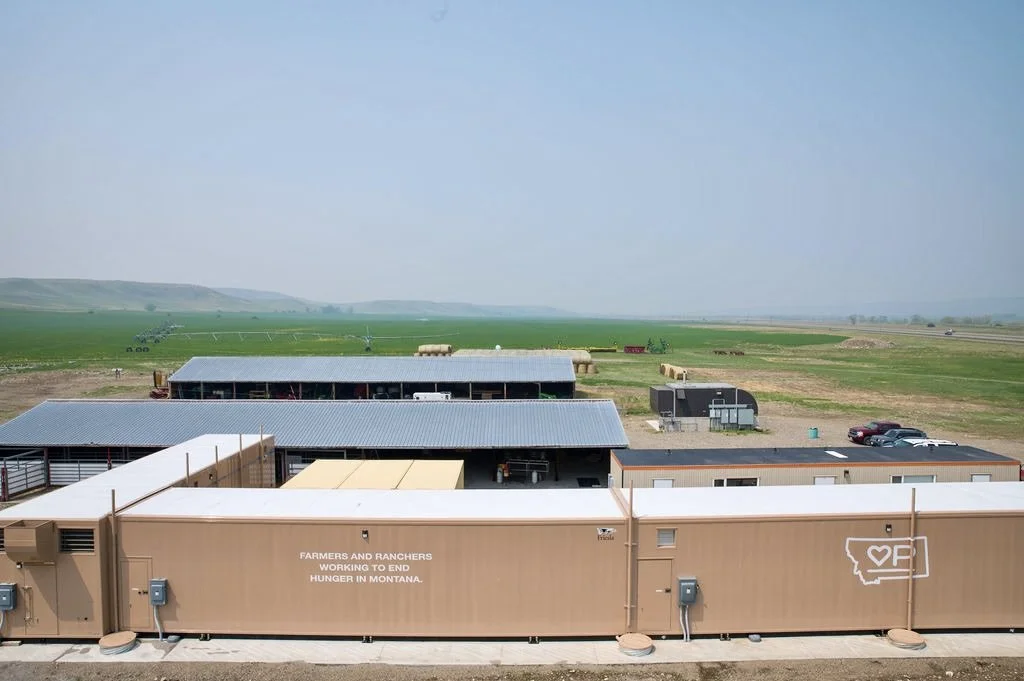
Logically, since Matt’s ranch parallels I-90, it made the most sense to build a facility right on the property. Raising over $2 million for the project took time, but Matt and the board of directors found favor with several foundations, companies and individuals who donated generously. By Spring of 2021, construction started and four modular meat processing units were purchased. In June of 2022, the doors were opened to the new facility, and it became the first and only USDA federally inspected non-profit facility in the U.S.
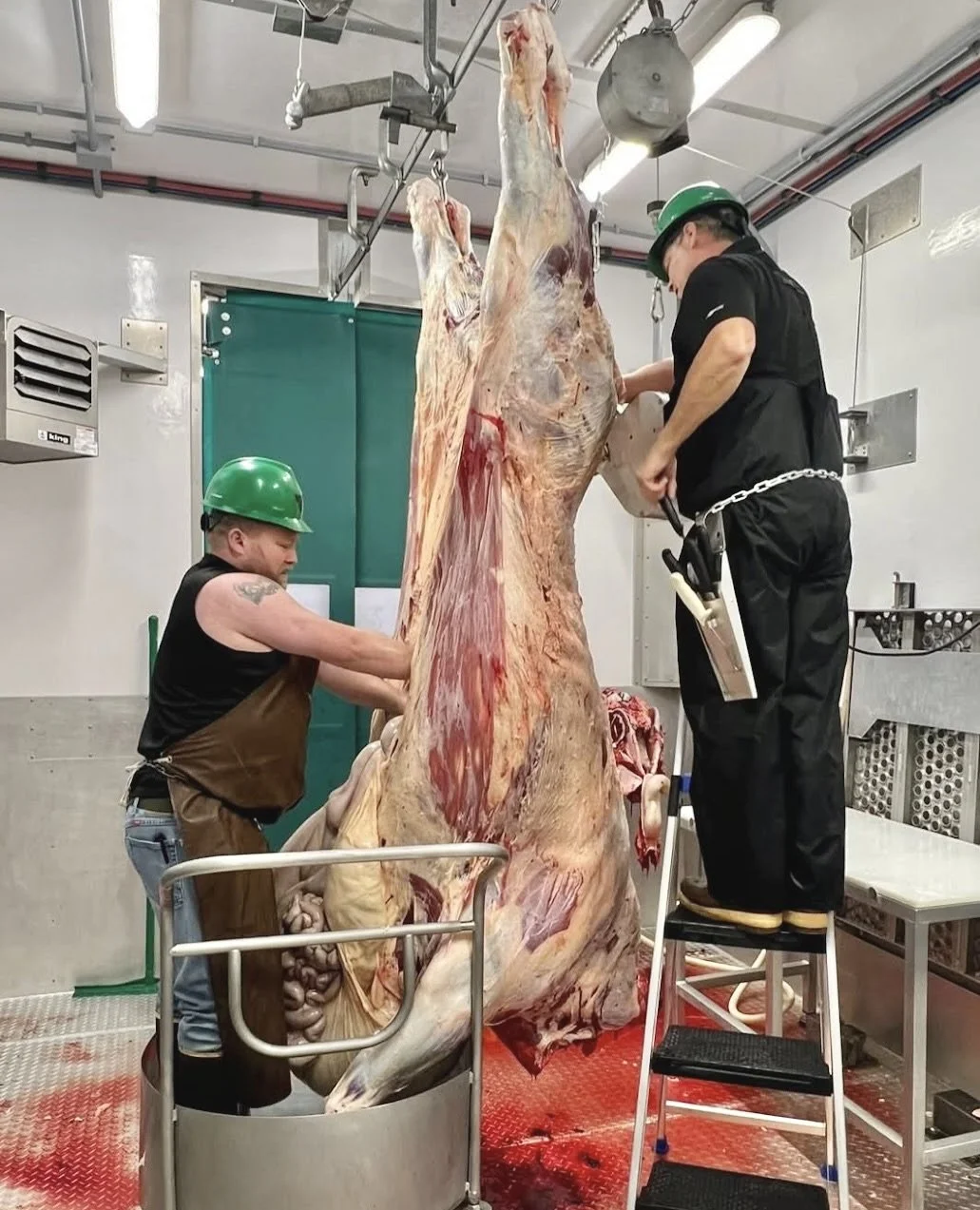
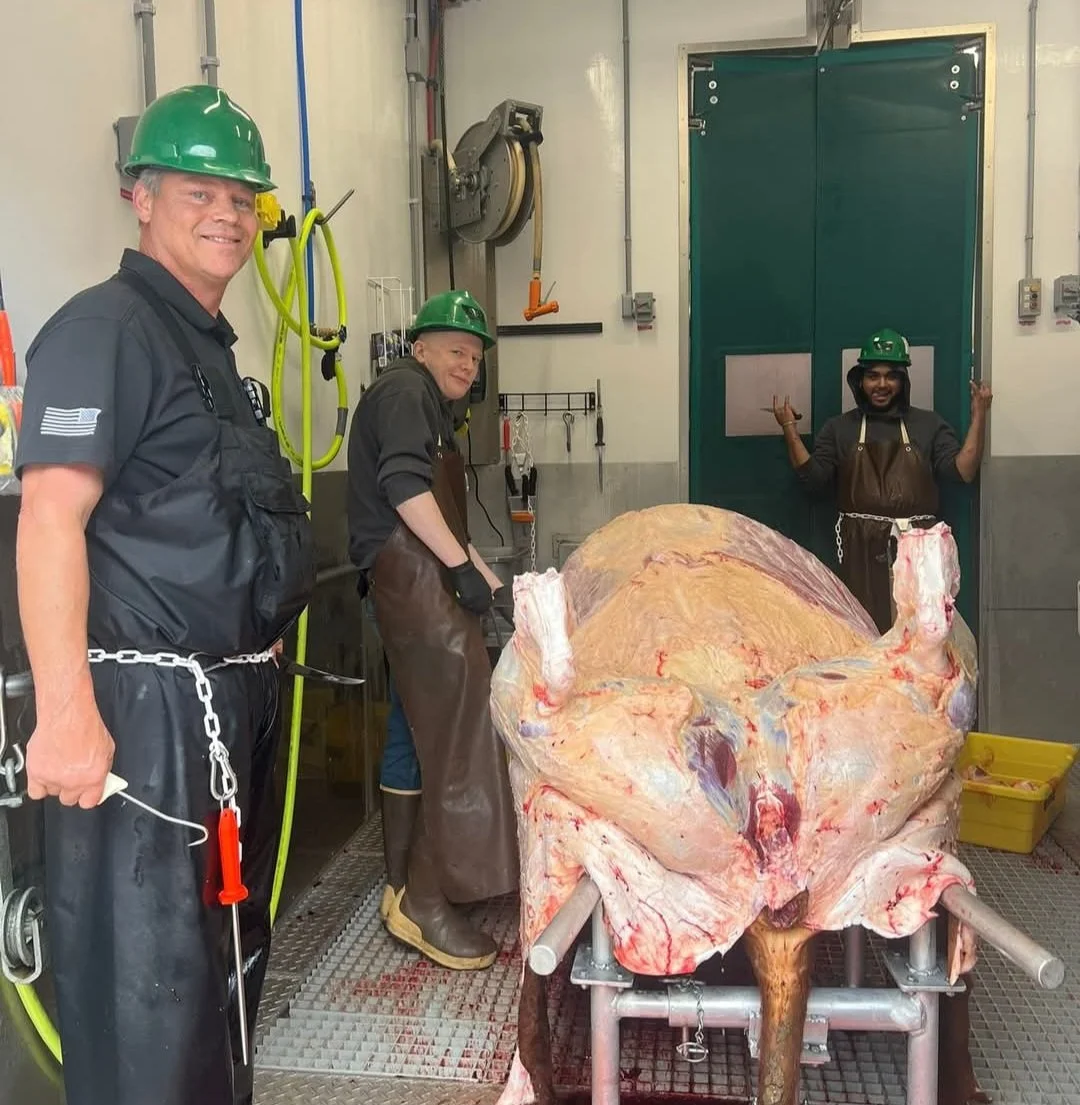
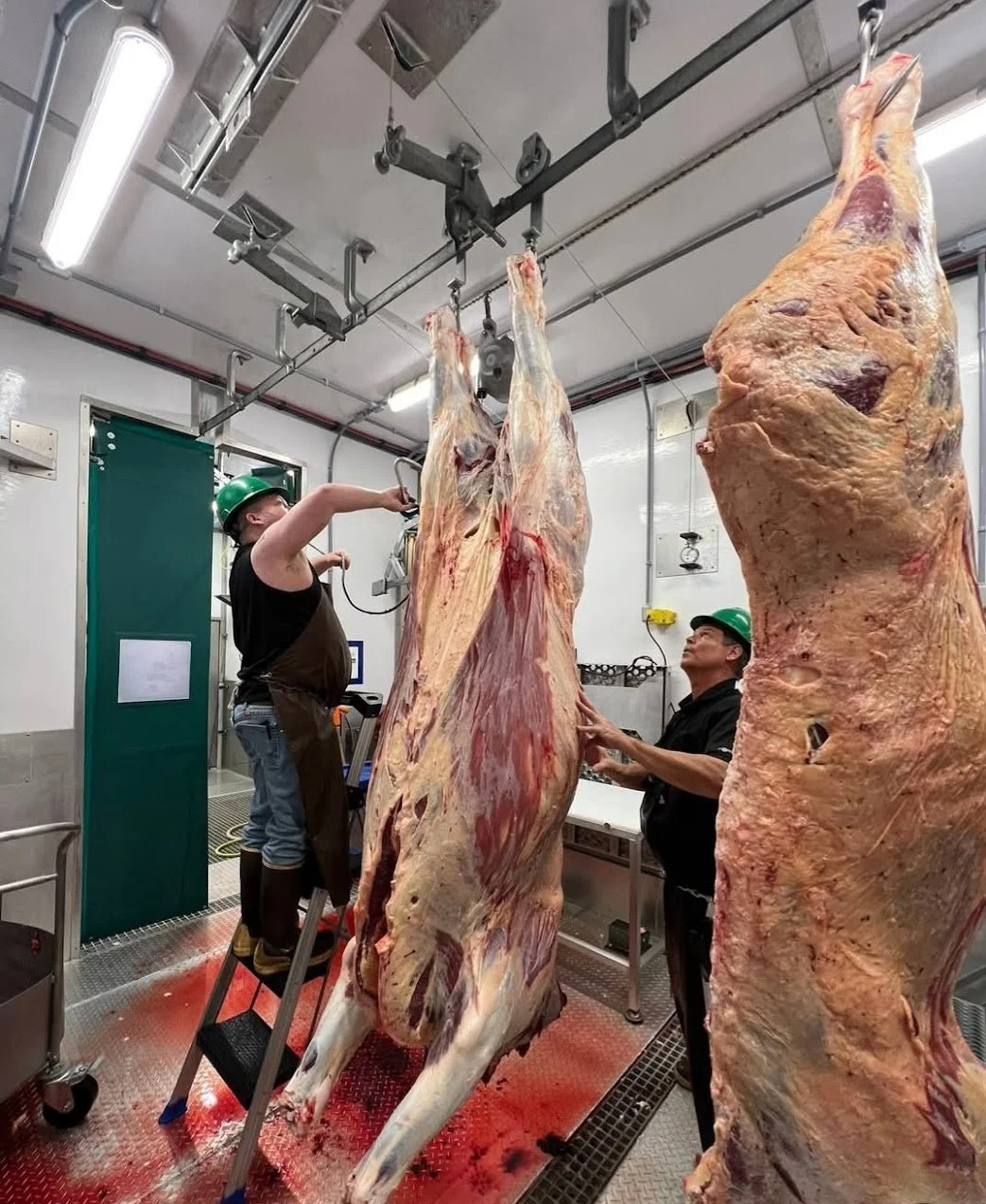
That first year, Producer Partnership donated over 53,000 pounds of meat to MFBN. As the needs and donations simultaneously continued to rise, Matt went from being a full-time rancher and soccer coach to working full-time providing meat to the hungry in Montana.
MFBN is the only statewide food bank in Montana and has a network of locations that distribute food to Montanans most in need, including food pantries, schools, senior centers and other community sites. From the beginning, Producer Partnership has made an impact.
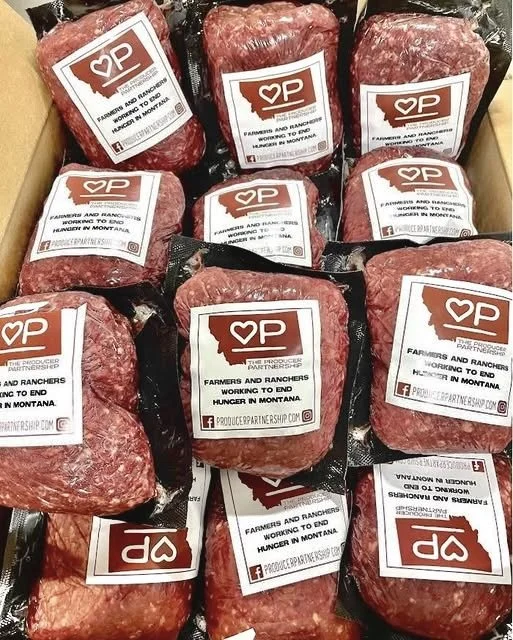
“Producer Partnership has donated over 215,000 pounds of beef, pork, breakfast sausage and chorizo to MFBN,” said Brent Weisgram, Vice President and COO of MFBN. “That’s over $1 million worth of highly nutritious protein. It’s made a substantial difference to our program.”
In addition to MFBN, Producer Partnership has donated another 135,000 pounds of meat directly to schools and senior centers.
The Joliet school system has been one of the recipients. Clark Begger, Superintendent, said the donation of meat from Producer Partnership has changed the trajectory of their hot lunch program. They are currently going through four to five carcasses per year.
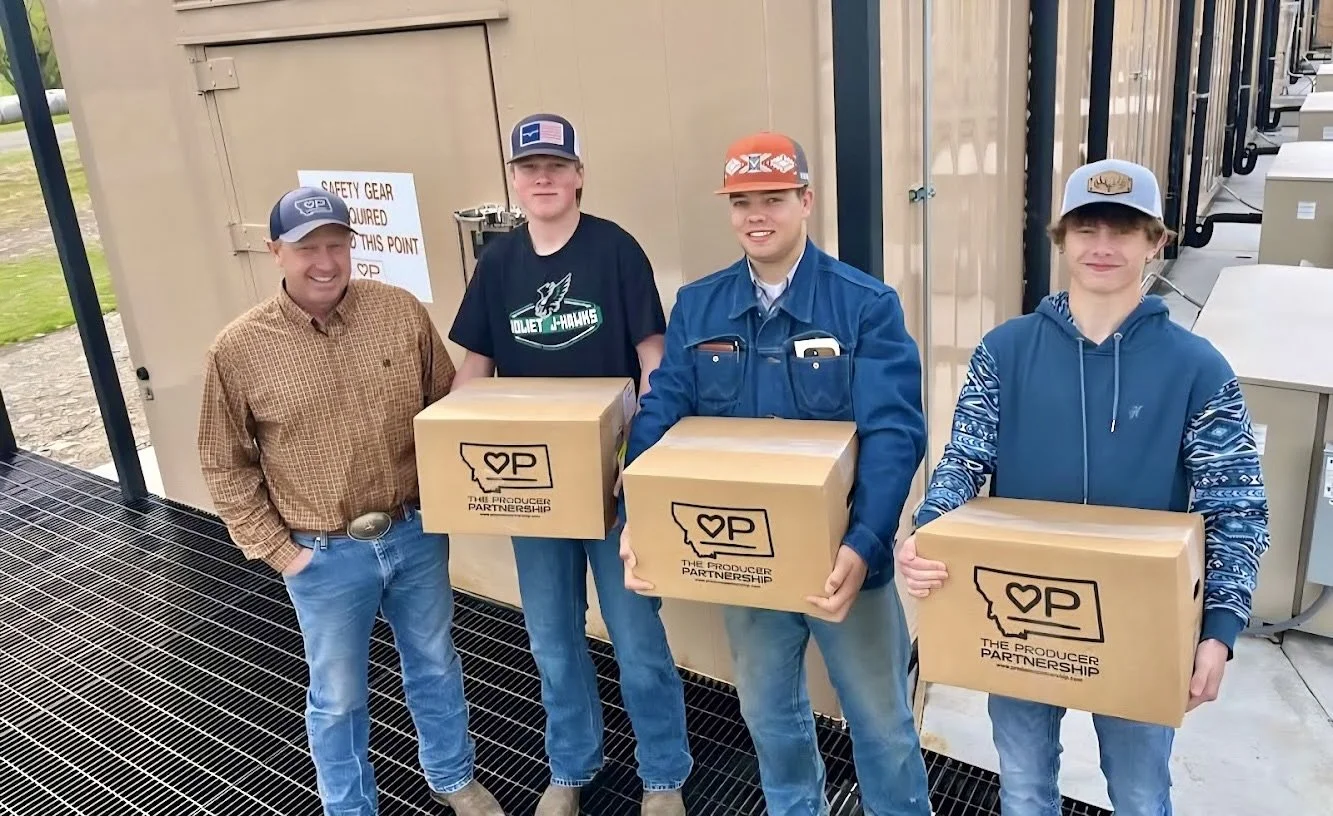
FOUNDER MATT PIERSON WITH JOLIET HIGH SCHOOL JOB TRAINEES
“A local ranch family has specified that the cattle they donate go to Joliet,” Clark said. “It’s been a great way for them to give back to our community and we really appreciate it. For us, it helps balance the budget. We try to keep lunches affordable for our students and this has made it possible for kids to keep eating here.”
But that’s not all that Joliet has experienced from Producer Partnership. Last year, five high school students trekked to the facility once a week to take part in a newly developed school program that exposes students to all aspects of meat processing.
“There’s a shortage of good (meat processing) workers,” Matt explained. “We’d like to be able to close that gap.”
Brandon Williams, a Joliet senior, was one of the students that was involved in the program.
“It was really a cool experience,” he said. “I learned so much about where my food comes from and how it’s handled.”
Brandon said his experience made him a better hunter and he was excited to put those butchering skills to use last fall when he went hunting.
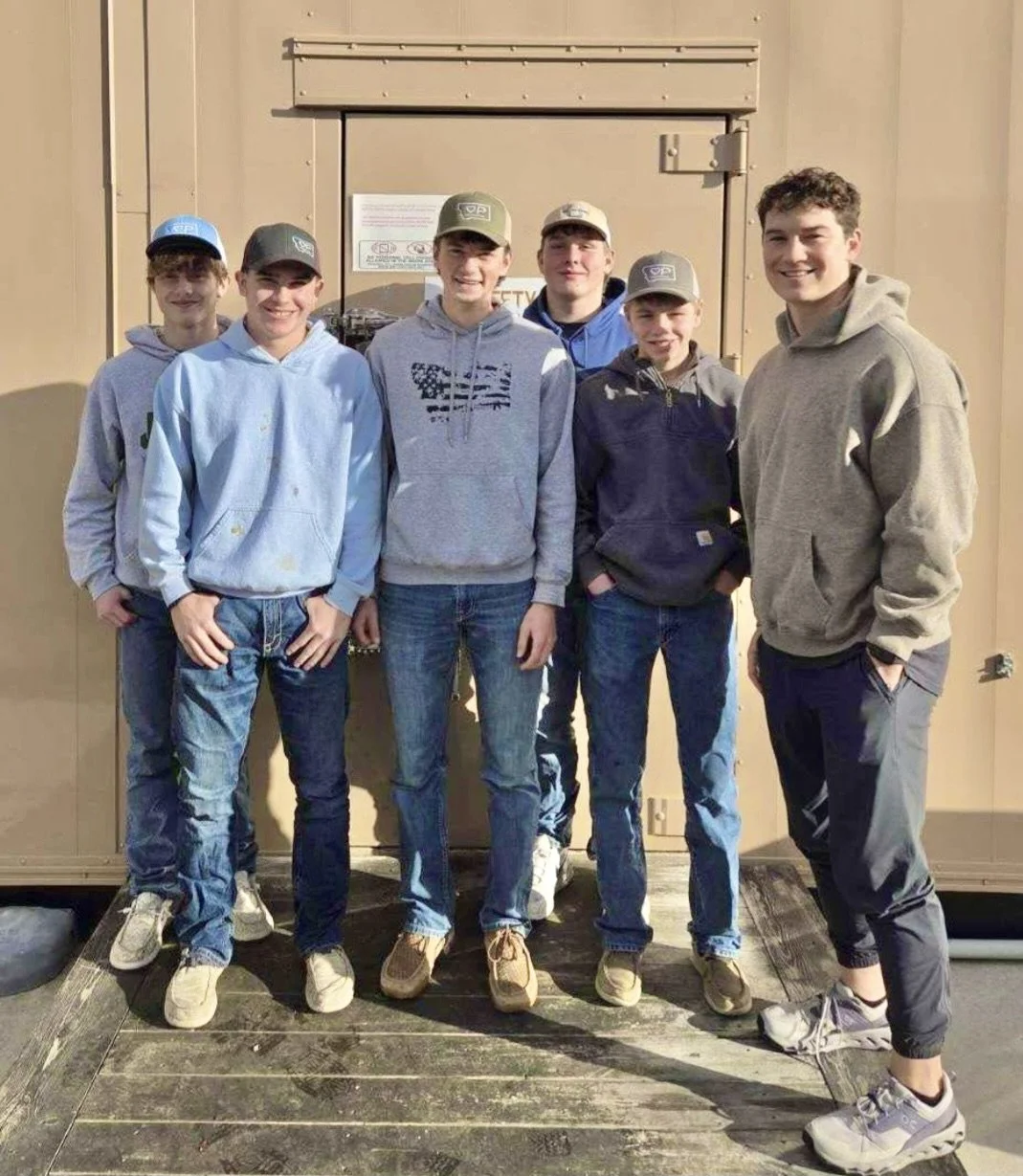
TOMMY MELLOTT SURPRISES THE JOLIET BOYS WITH A VISIT
“A good knife is well worth the investment,” he said. “That and knowing the best way to cut up an animal. I’ll always have those skills now.”
Matt is a Montana State University alum and lifelong supporter of the MSU Bobcats, and one day he surprised the boys when Tommy Mellott, former quarterback for the MSU Bobcats and professional football player for the New Orleans Saints, stopped by while they were there.
“Now that was really cool,” Brandon said excitedly. “I’ll never forget that!”
As Producer Partnership continues to make donations to schools across Montana and bolster their lunch programs, the same thing is true at MFBN.
“Because of Producer Partnership’s generous program, the $1 million we saved for our food purchase budget has been redirected and used toward other programming needs,” Brent Weisgram continued.
And it's not just beef that Producer Partnership donates, it’s all livestock. Matt is very strict about the health and care of the animals that he accepts. This fall the state rounded up 100 head of domestic hogs that had been released in northern Montana to run wild and dropped them off at the facility.
“The pigs weren’t feral, but close,” Matt said. “The state was just going to shoot them, but for us, if there is a will, there’s a way.”
The crew at Producer Partnership processed the animals into breakfast sausage and chorizo for MFBN.
“If there is a way to keep from wasting potential food, I’ll do it,” Matt said. “It amounted to over 10,000 pounds of pork for the food bank.”
As more schools across the state look into locally sourced meat, Matt has seen growing collaboration between communities.
“We really encourage ranchers to decide themselves where they want their meat to go,” he said. “Local ranchers like knowing that the cow they donated is being fed to the kids in their community. For a school like Joliet, they know where their meat is coming from, they get a higher quality product, the school uses the money saved from purchasing meat to buy other higher quality foods and the rancher gets a tax break and the chance to help feed the kids. It’s an amazing ripple effect of good.”
Future plans include doubling the number of livestock processed; building a smoker to process bacon; constructing a compost facility where the byproducts can be used to eliminate waste; and offering more internships for both high school and college students.
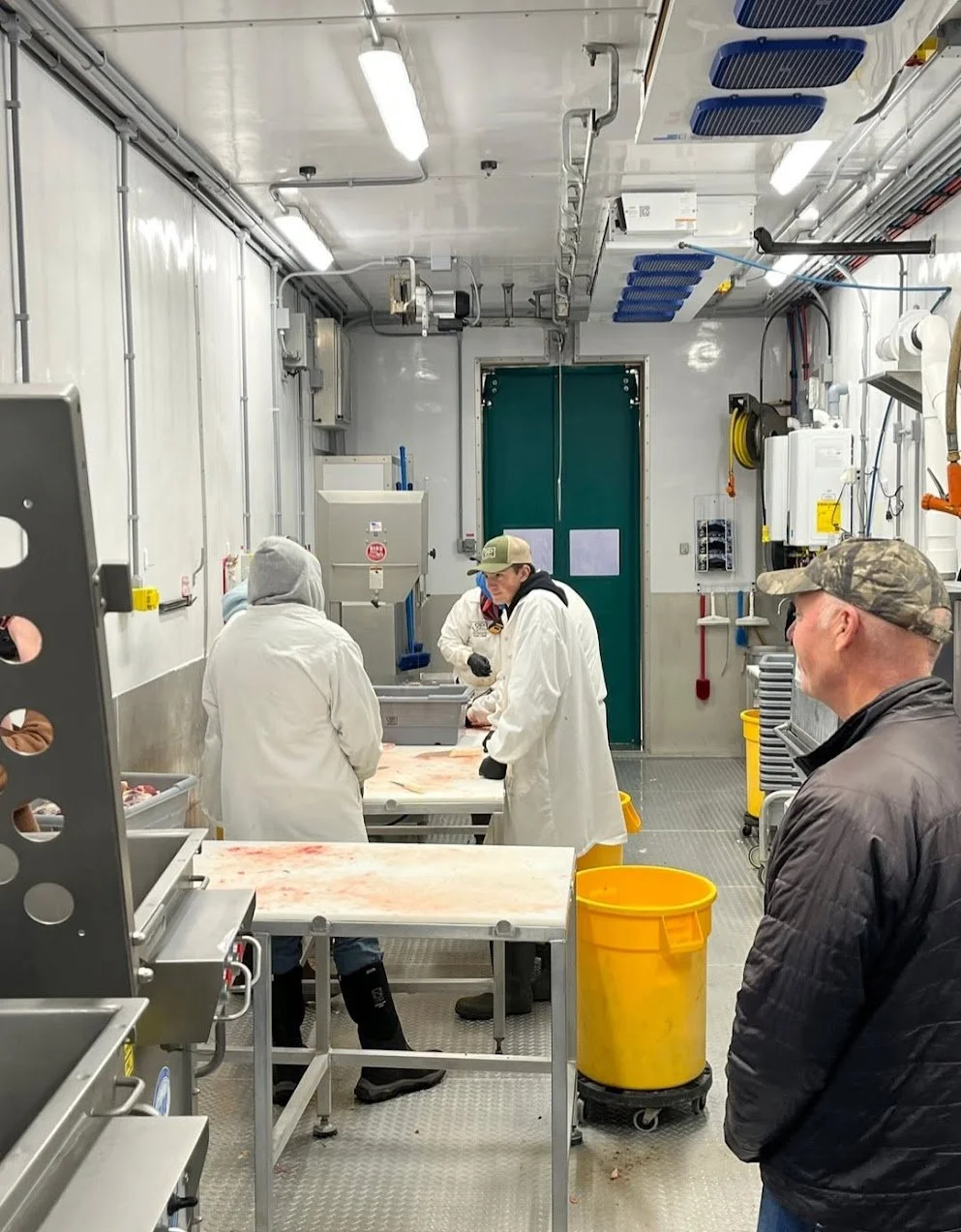
GOVERNOR GIANFORTE VISITED PRODUCER PARTNERSHIP
To date, there has been no federal dollars granted to Producer Partnership and just one state grant of $64,000. Governor Gianforte gave a portion of his salary to the foundation this fall, privately donating over $20,000. Foundation grants and private donations have provided the remaining funding.
Matt doesn’t stop. He attends conventions to showcase what he’s doing, always looking for financial support and more donations of cull cattle. He’s an open book, inviting interested parties to tour the Producer Partnership facility. His mission is to end hunger in the state by taking it one day at a time.
“It’s not rocket science,” Matt said. “But the longer we continue doing what we do, the better our track record is. We’ve taken the core of what people are already doing and made it a lot bigger and more accessible and easier for both sides. The easier you make a program, the more likely people are to use it.”
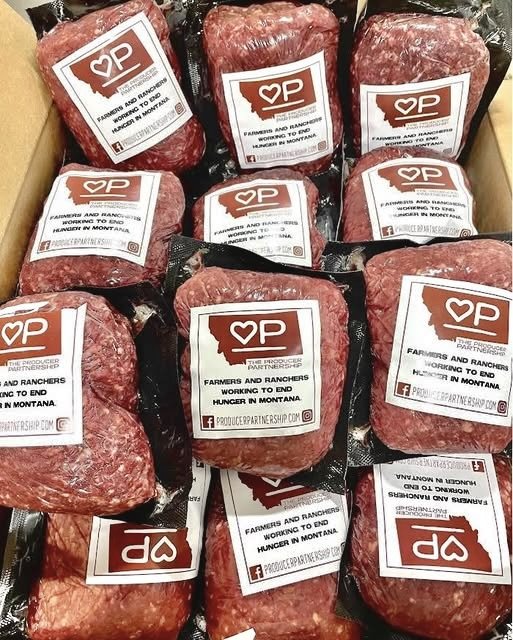
EVEN ONE CULL COW MAKES AN IMPACT
All donated livestock are processed at no cost to the donor
Nine stockyards across the state are drop-off locations for donated livestock including both PAYS and BLS in Billings
Donors are encouraged to choose where they would like their meat to be donated
Producer Partnership has donated over 350,000 pounds of meat to feed Montanans
Over 42 schools across MT are benefiting from meat donations
Plans are to increase the amount of processed meat to 700,000 pounds-annually within five years
For more information or to make a financial donation:
Phone: 406.220.7830
Email: info@producerpartnership.com
Website: www.producerpartnership.com
Facebook: Producer Partnership