The Power of Garlic
A Complete Guide to Garlic at Home
Across Montana
Photography by Amy Grisak
November Issue - 2025
As a Hungarian descendent, we jokingly refer to garlic as part of the “Holy Trinity” of cooking: garlic, onions, and paprika. It is used for breakfast, lunch, and dinner; and a recipe calling for one clove of garlic usually means that amount is quadrupled.
Garlic holds an equally strong position in the medicine cabinet. For heart health; studies indicate that it lowers blood pressure, improves cholesterol levels, helps prevent blood clots, and rejuvenates arterial function.
Beyond those qualities, garlic is one of my top go-to home remedies if I feel that impending-doom tickle in my throat or nose. As my first line of defense to ward off a cold, I’ll chew up and swallow a clove of crushed garlic or add it to a spoonful of honey to make it more palatable.
Garlic is one of the key ingredients in my homemade “Fire Cider,” a potent concoction made of equal parts of chopped onion, garlic, ginger, and horseradish that is steeped in vinegar for weeks, and includes a dash of cayenne pepper for an extra kick. Regular doses during cold and flu season boosts the immune system.
Garlic is easy to grow if it's planted in the fall. It can be planted up to a month before the ground freezes, although planting too early can cause it to sprout. I have planted garlic well into November with fine results.
Like many other vegetables, garlic prefers a loose, well-drained soil that is rich in nutrients. Add compost and well-aged manure several weeks prior to planting because garlic tends to be a heavy feeder.
Garlic also prefers slightly acidic soil, which is not typically found in our Western region of the country. If your soil has a pH above 7.0, add peat moss, coffee grounds, and/or pine needles to the bed to help reduce the pH. A more effective solution, although it takes months to become available within the soil, is elemental sulfur. Sprinkle it into the area now, so it will be bioavailable to the plants by spring.
Full sun is always the best, but garlic will still grow well in eight hours of sunlight. And, while garlic is often used as a companion plant to deter pests on certain plants, do not plant it too closely to your beans or other legumes. Garlic’s anti-bacterial properties can affect the good bacteria in the soil that help the beans fix nitrogen.
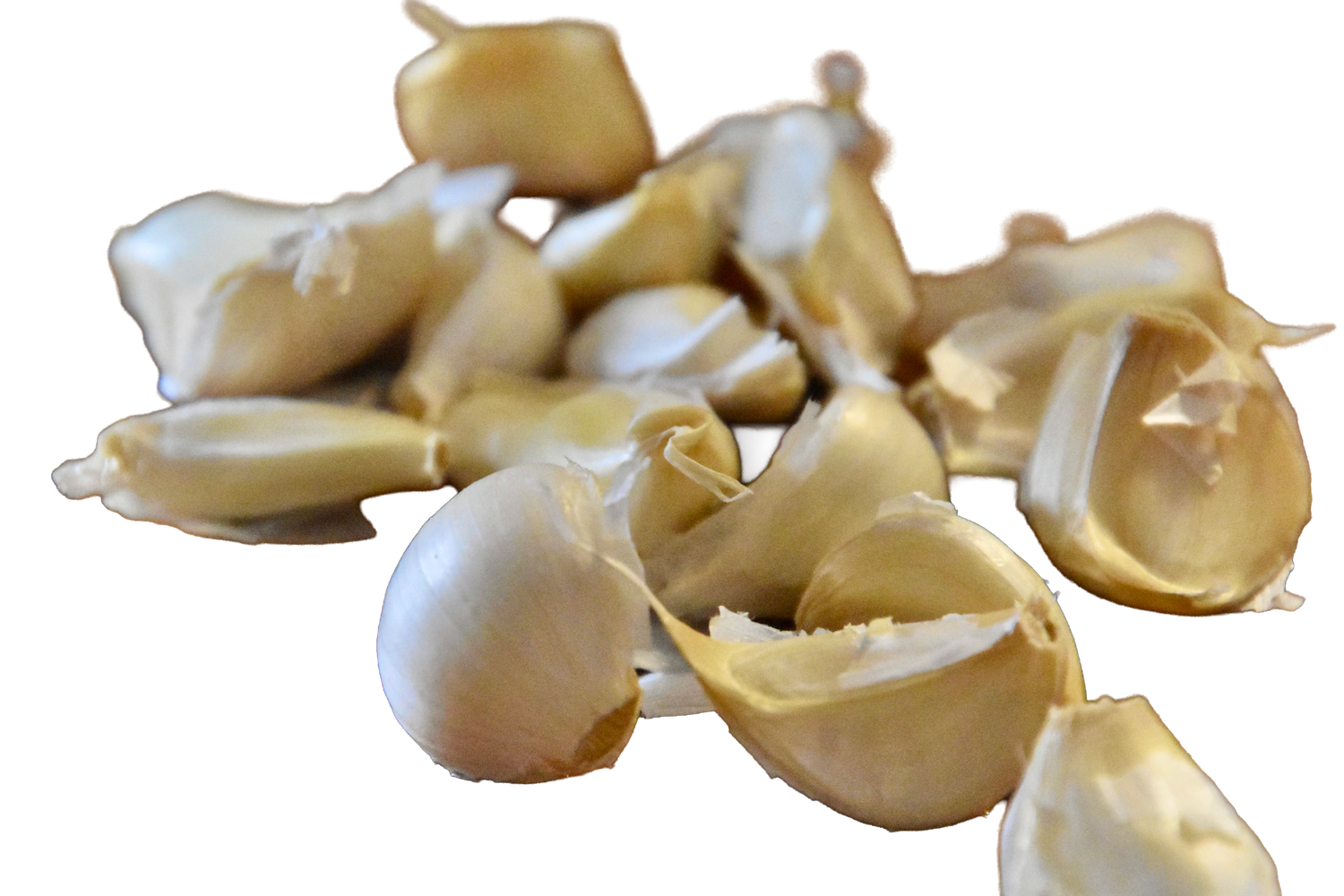
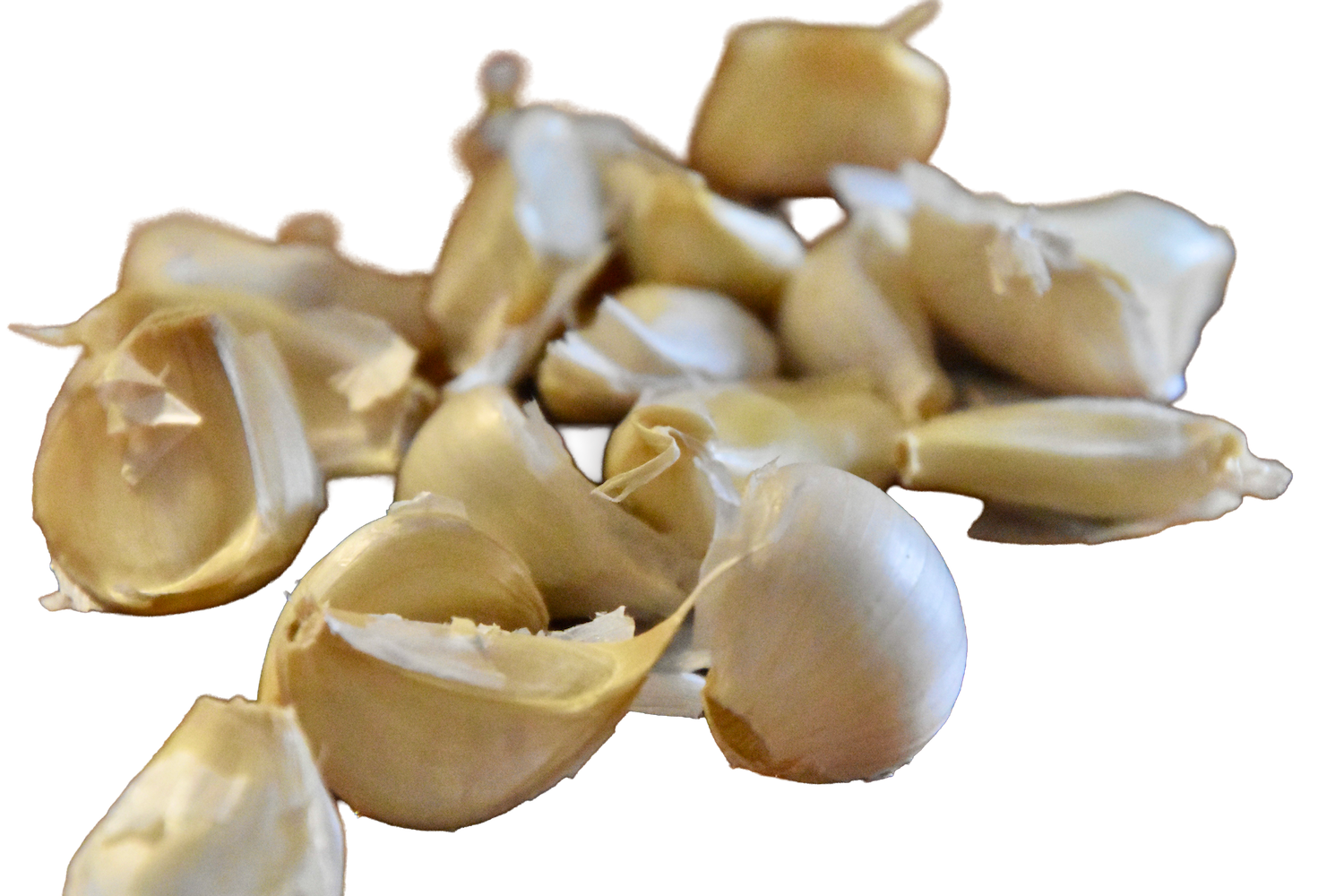
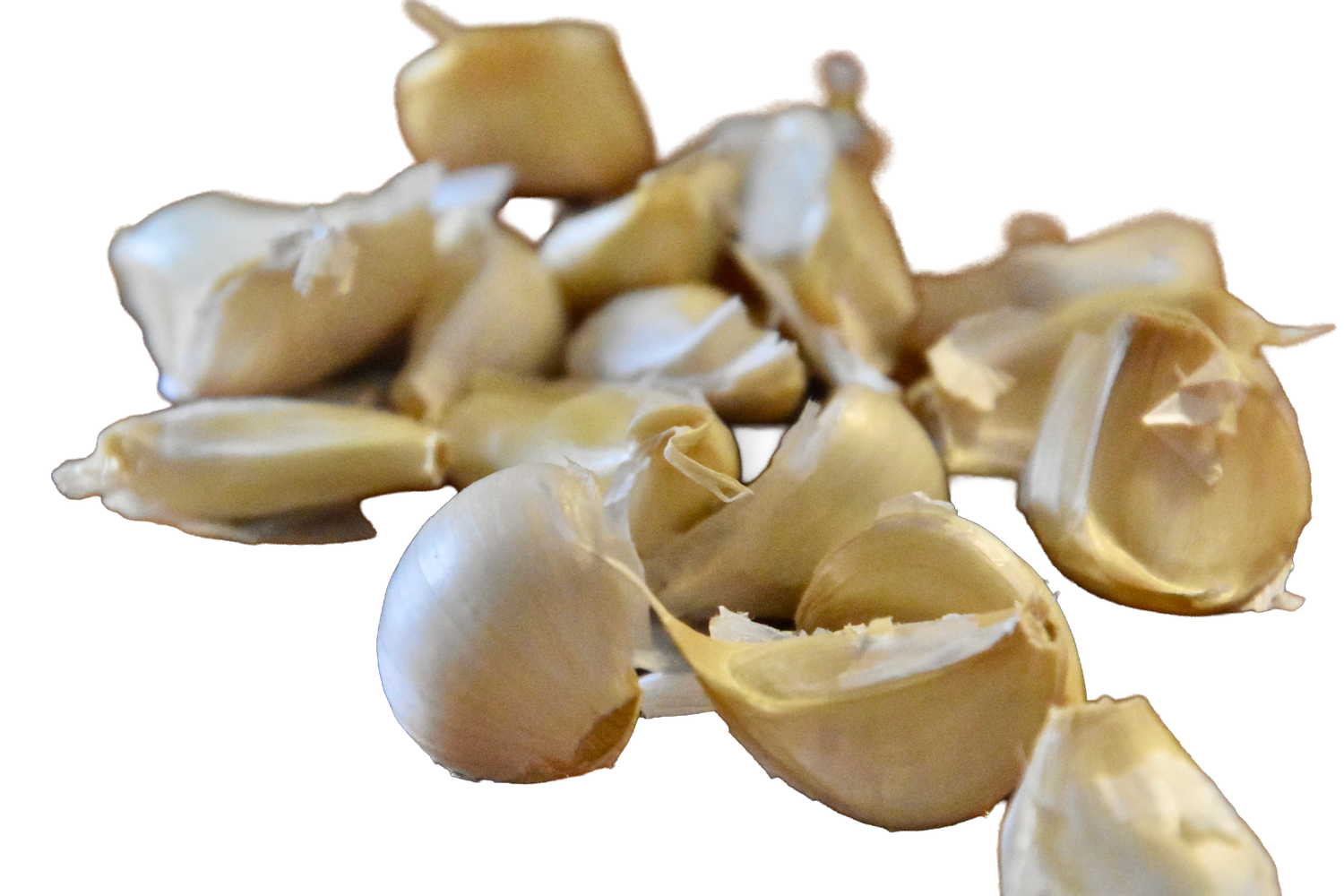
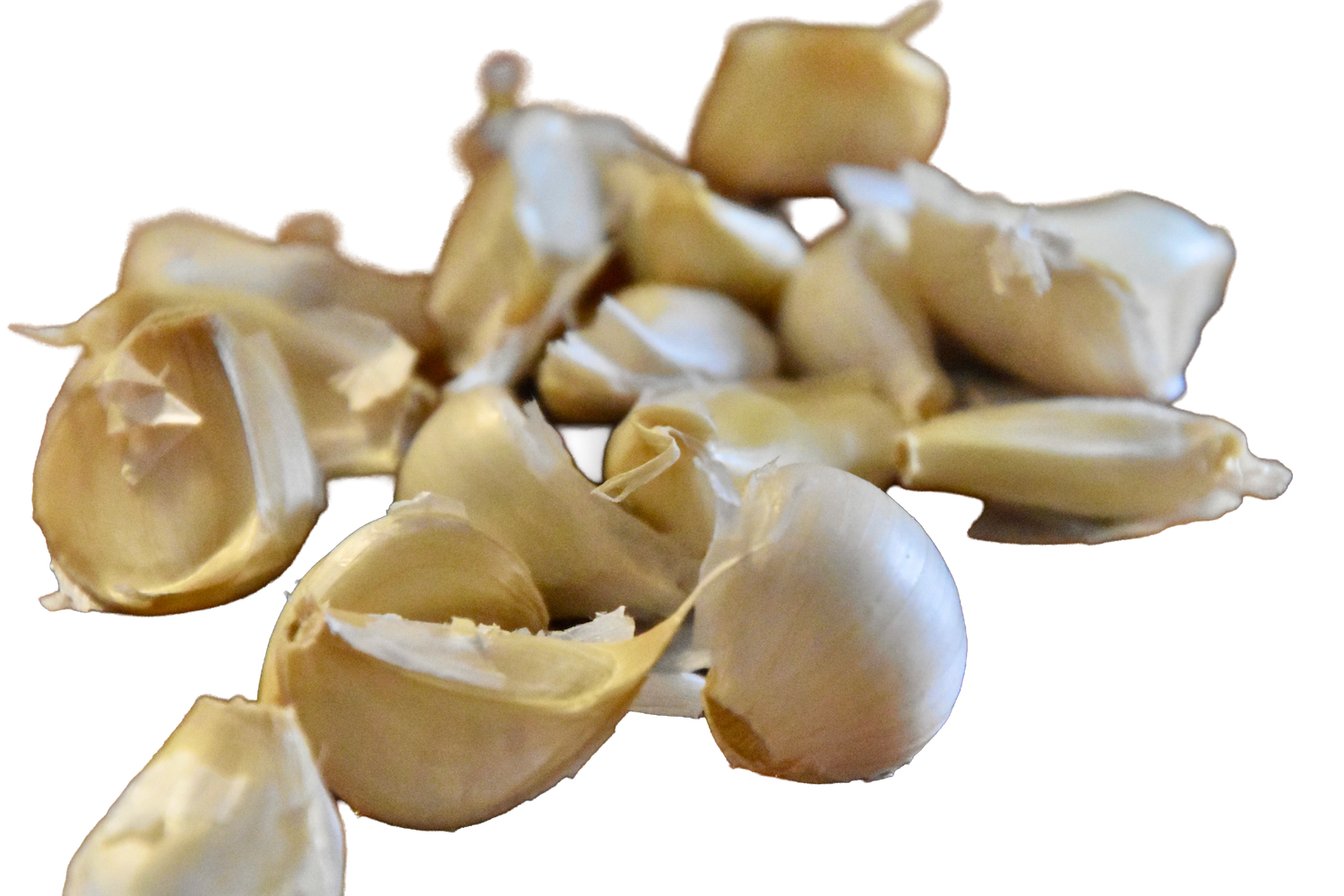
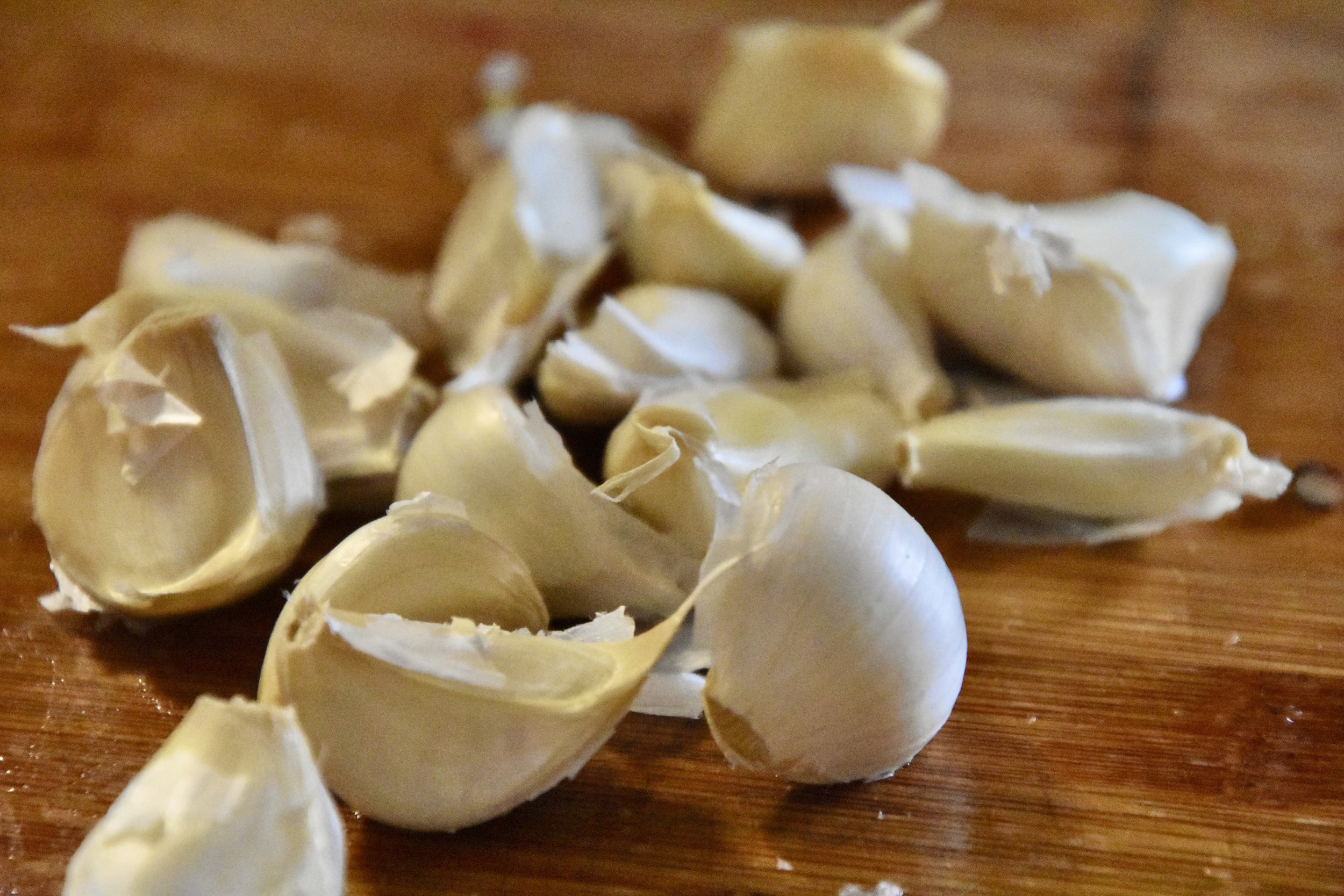
There is no specific “seed” garlic but choose bulbs that are nice sized without damage or visible mold. Order bulbs from online seed companies, or choose the nicest-looking organic, and preferably locally grown, bulbs at the grocery store.
There are two kinds of garlic: hardneck and softneck. Both are delicious, but they have slightly different qualities.
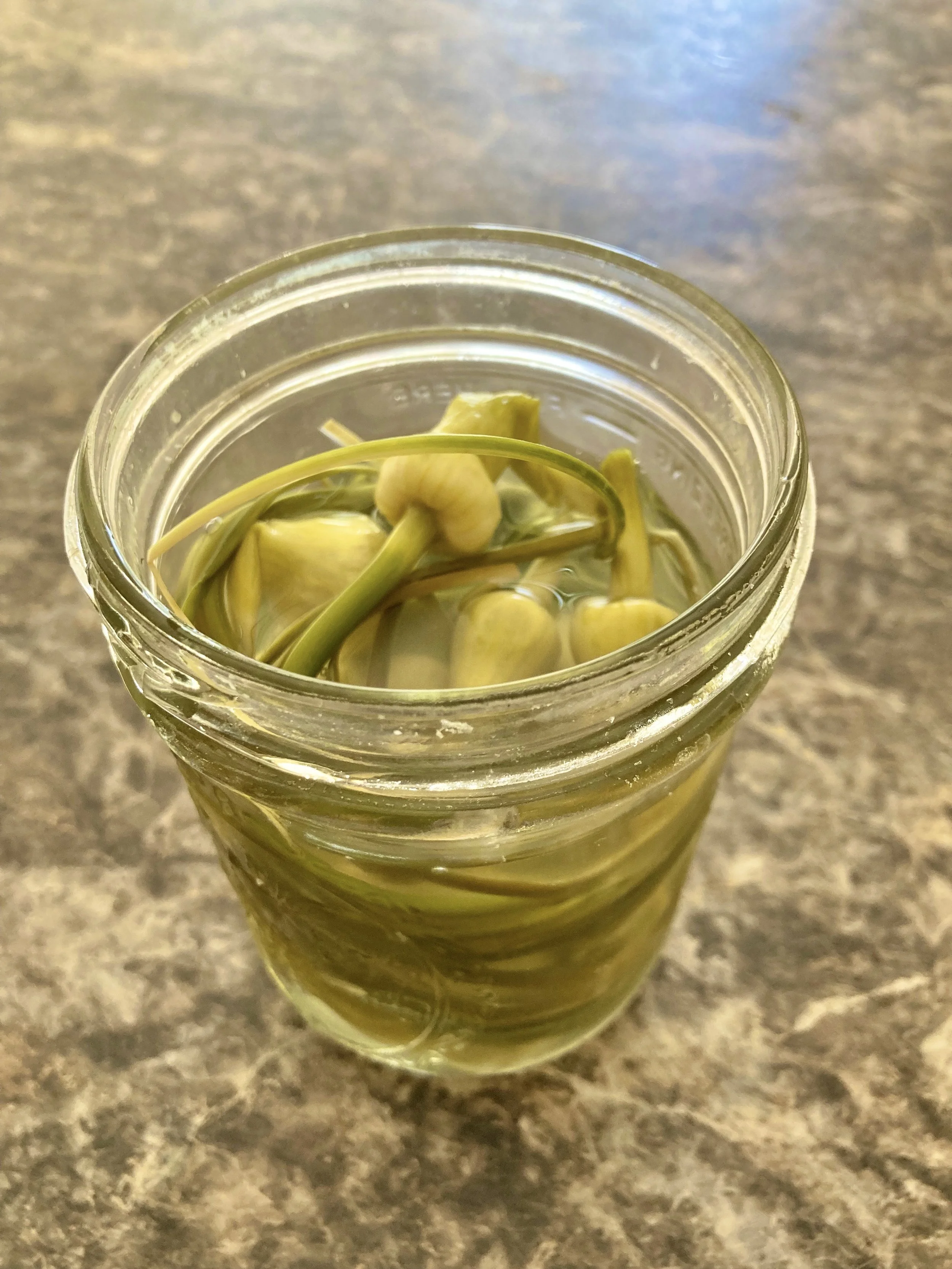
I typically grow hardneck garlic because I prefer the larger cloves. Many of the varieties I like, such as Rocambole, Purple Stripe, and German White, are part of this group. The hardneck garlic produces garlic scapes, (the flower stalks of the garlic plant) which are an extra bonus in the garlic world. Scapes can be stored for up to six months, although my supply rarely lasts that long.
Softneck garlic typically does not have scapes and the stalks remain soft enough for braiding, which some people prefer for long-term storage. Instead of four to six cloves per bulb, there might be a dozen, and some of these varieties have strong, spicy flavors. Silver White is a good choice for braiding, and New York White has larger, very flavorful, bulbs.
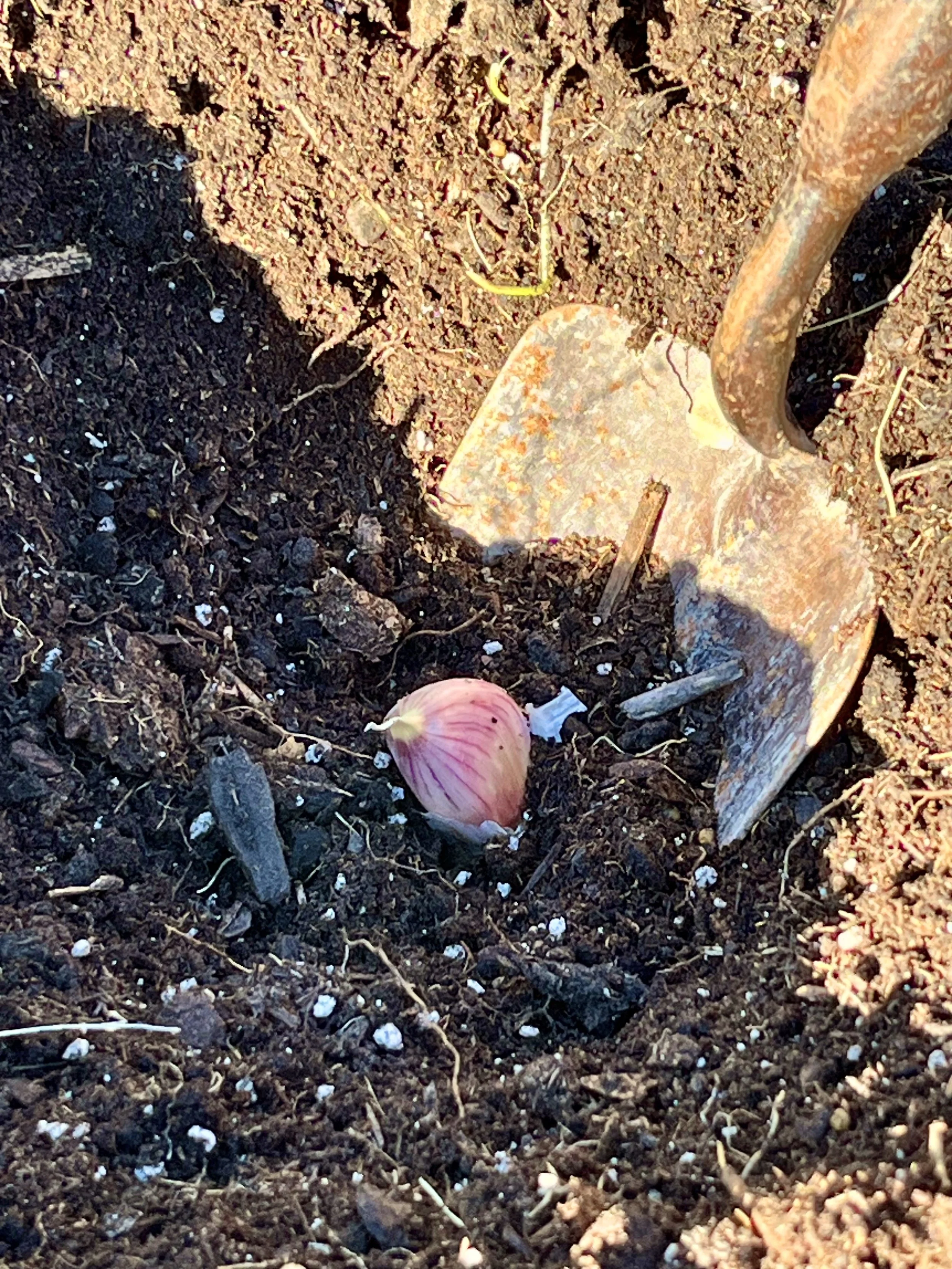
Planting garlic is as easy as digging a hole and setting in the clove, making sure the pointy side is facing up.
Depending upon your variety, space your cloves four to six inches apart and bury them two to three inches deep. Whether you’re planting them in a wide row or a raised bed, keep them the same distance apart all the way around.
Once the garlic is planted, cover the bed with three or four inches of straw. This will moderate the freezing and thawing cycles prevalent in our region.
Usually, by April, the garlic begins to emerge requiring removal of the straw to allow it to grow. Garlic thrives with consistent watering and fertilization with a balanced fertilizer.
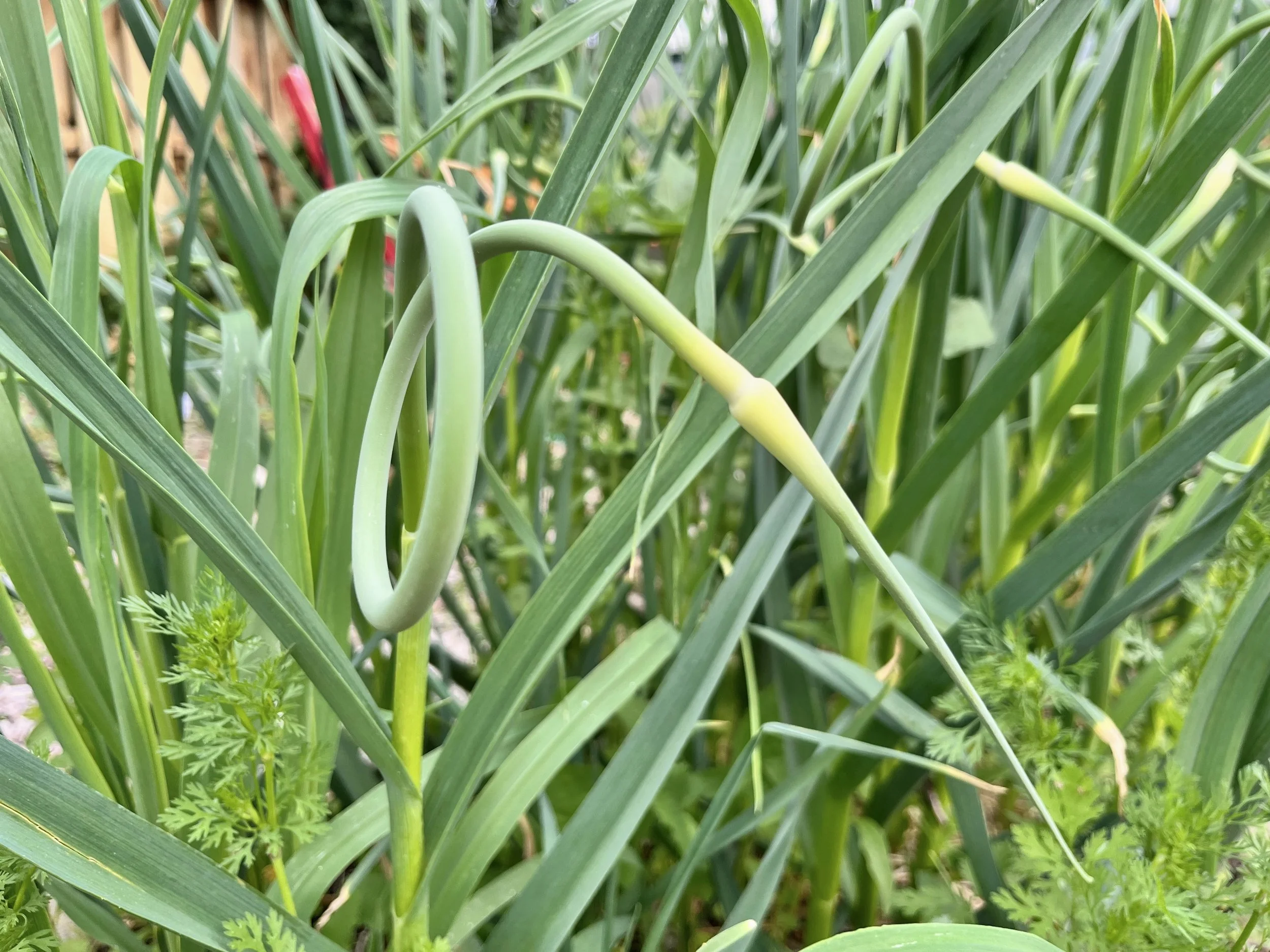
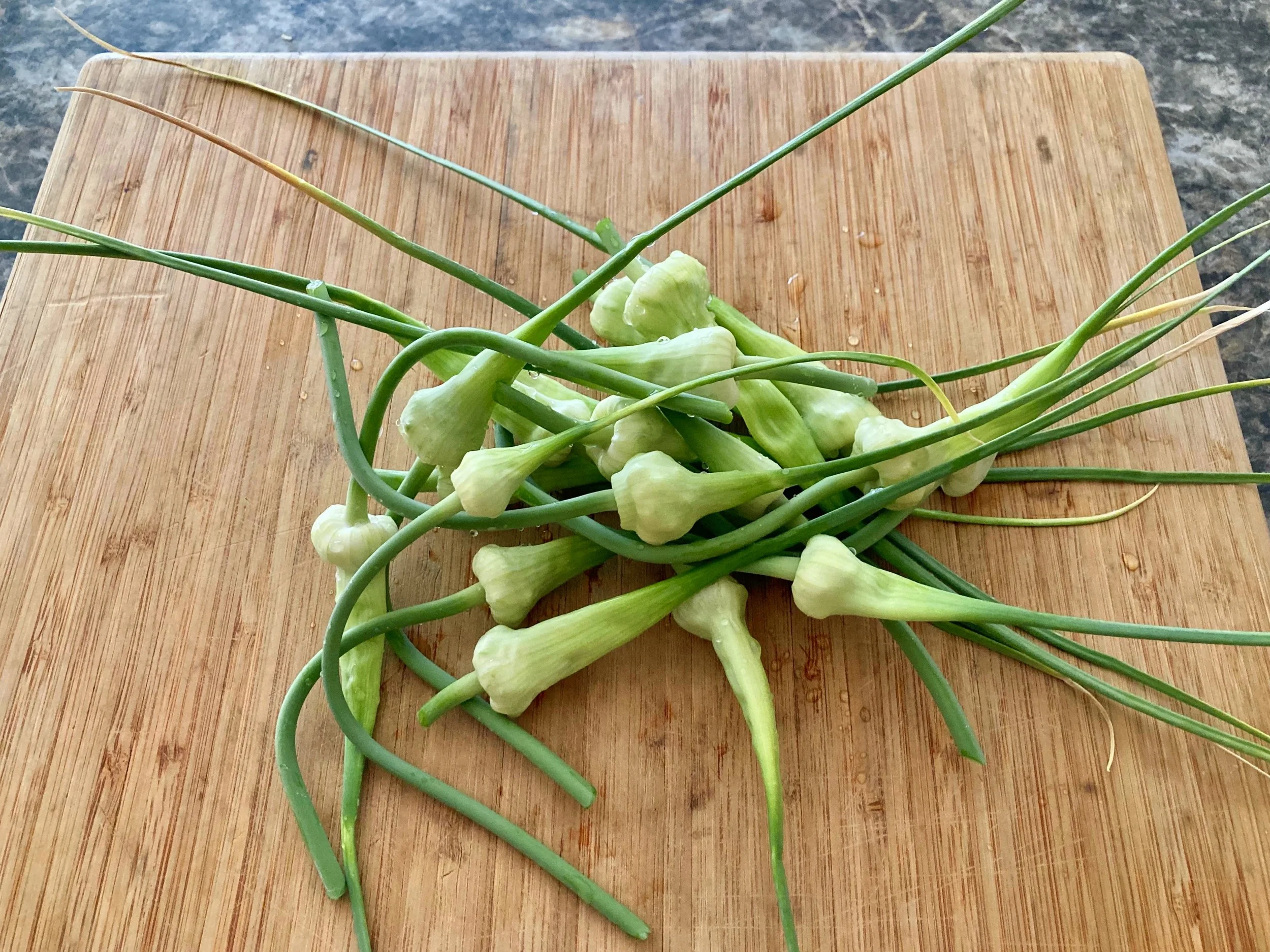
When the scapes form in June, cut them off to force more energy into the bulbs, but don’t discard them. The garlic scapes have a milder flavor but are delicious when chopped into any dish that needs a little garlic touch.
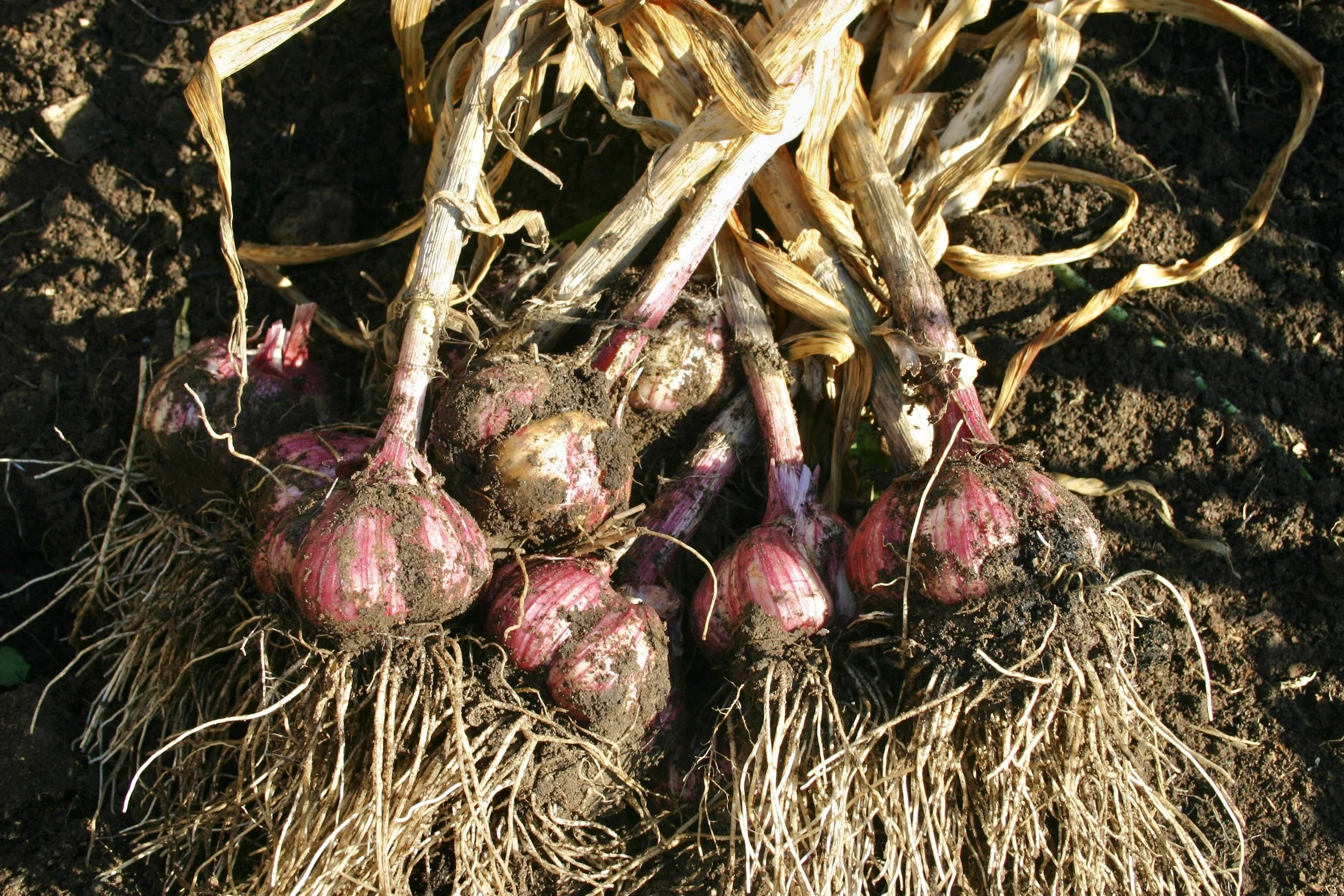
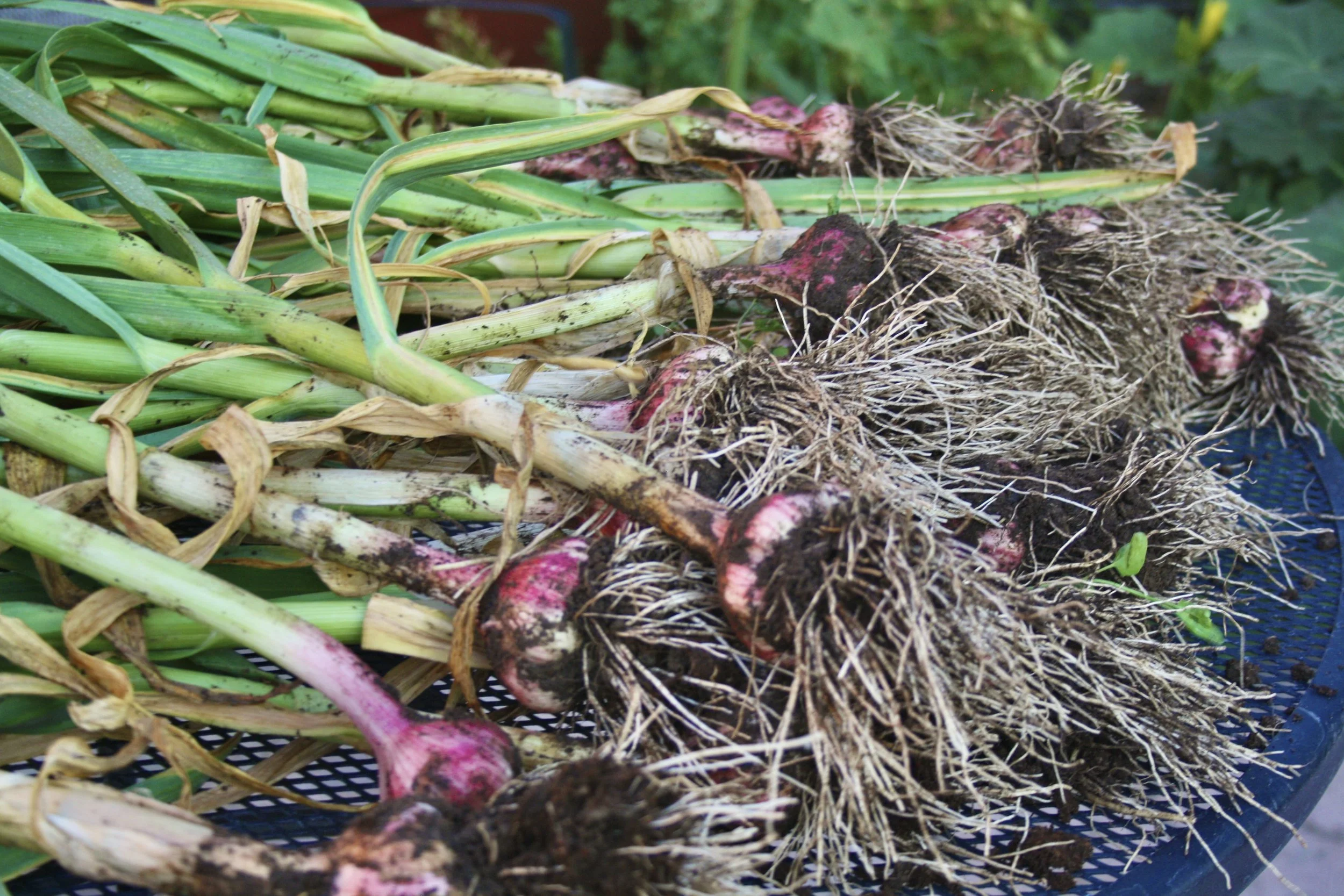
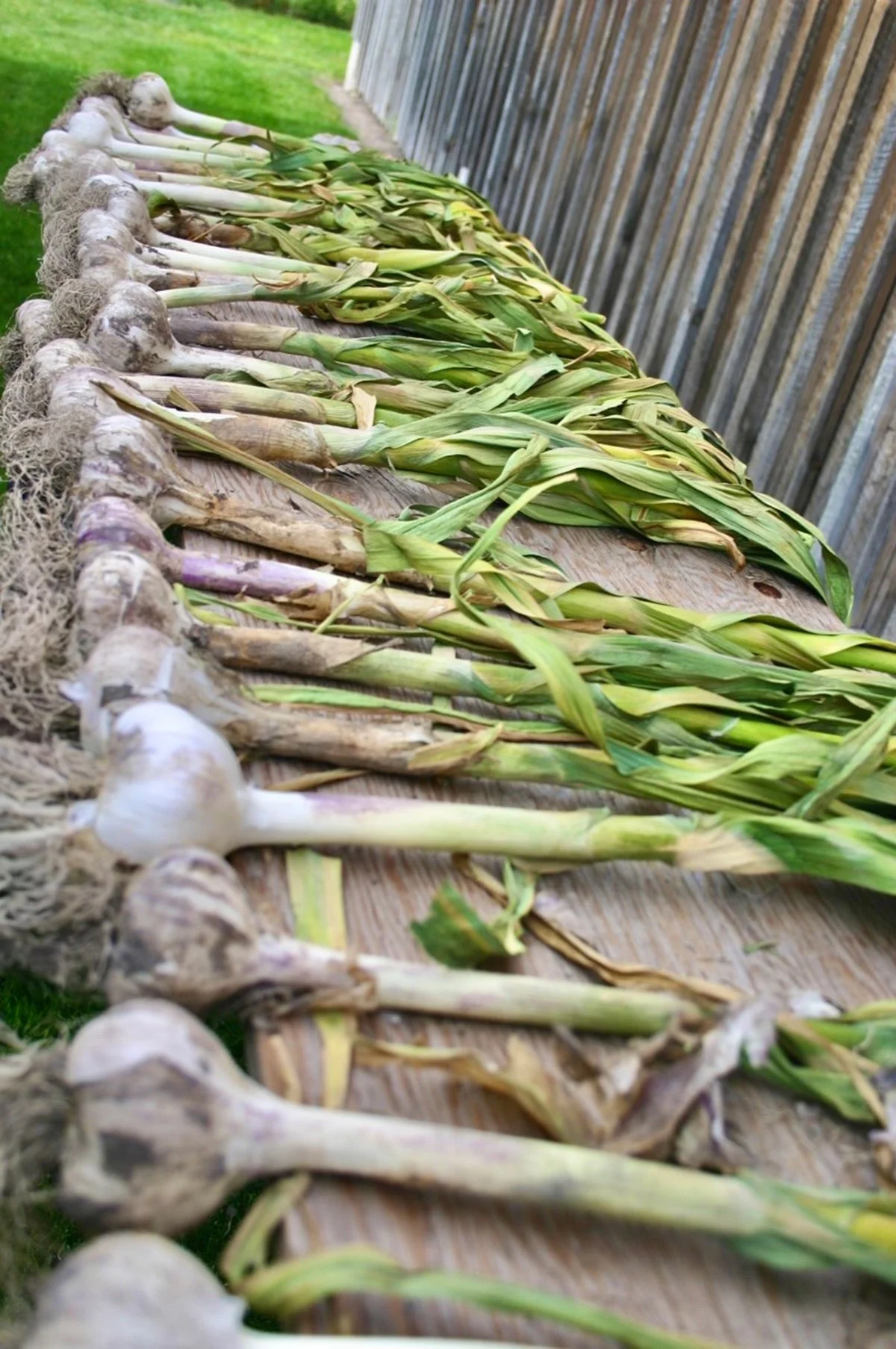
Harvest garlic in late July when the leaves are dying back. After digging the garlic and removing the soil, cut back the stems to roughly four inches and place the garlic somewhere out of direct sunlight to cure for a couple of weeks before preparing it for long-term storage.
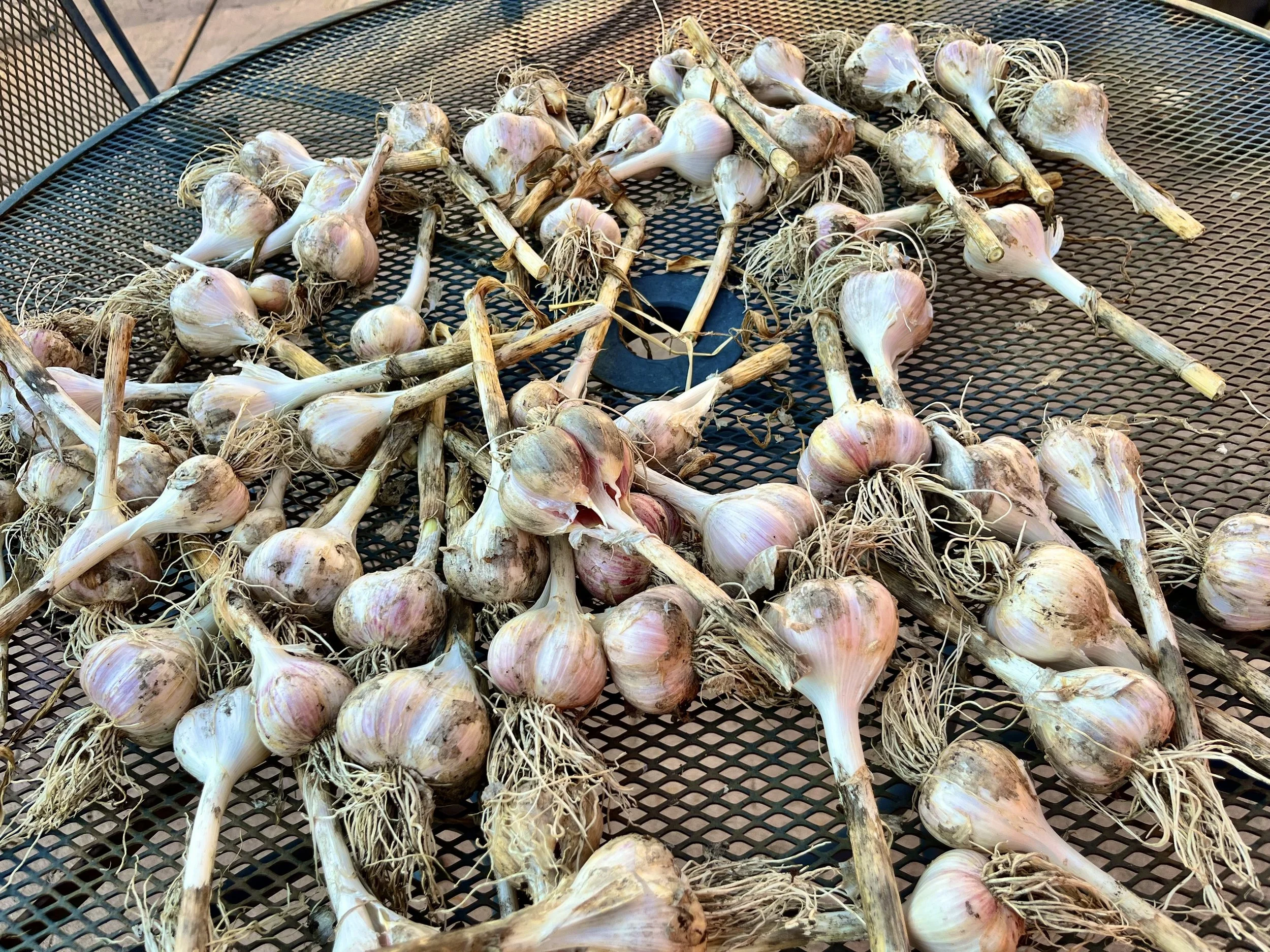
For hardneck garlic, remove the roots and place them in a basket, ventilated box, or bag stored in a cool, dark place. Softneck garlic can be kept in the same manner or braided.
The gardening season really isn’t complete until we plant our garlic for next year. As long as the ground isn’t frozen, grab your trowel and put in a few bulbs. You’ll be pleased when you see their happy, green sprouts in the spring.