“Life, Liberty and the Pursuit of Happiness”
Echoes of the Founders
Editorial by Stu Hoefle
Summer Issue - 2026
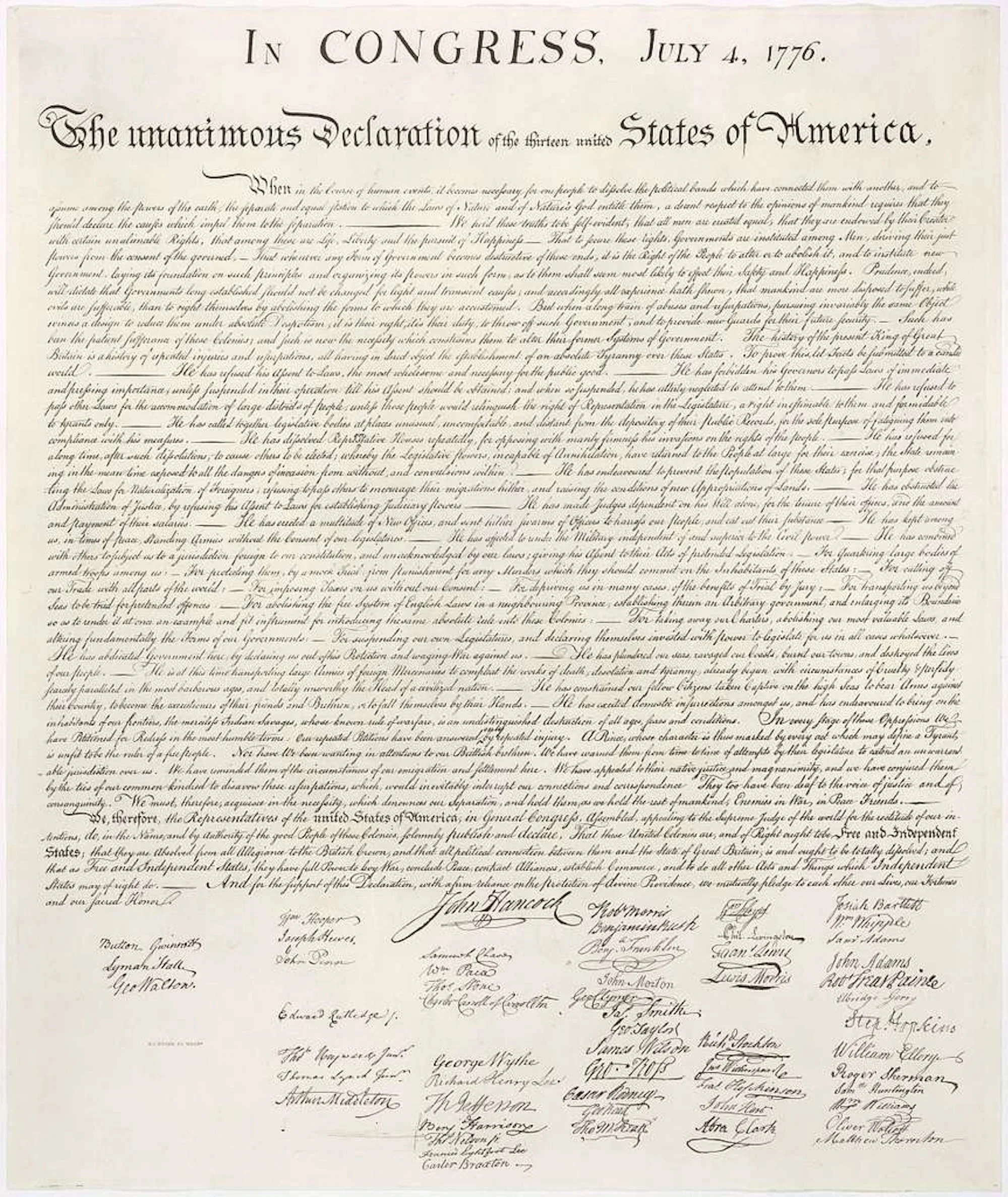
“WHEN in the Course of human Events, it becomes necessary for one People to dissolve the Political Bands which have connected them with another, and to assume among the Powers of the Earth, the separate and equal Station to which the Laws of Nature and of Nature’s God entitle them, a decent Respect to the Opinions of Mankind requires that they should declare the causes which impel them to the Separation.”
FREEDOM!!! Mans’ Nature has always been to be able to choose to think, believe, live and act freely. God designed us that way - we are born with a Free Will – an innate desire to make our own choices. We take it for granted in today’s society where we enjoy such extraordinary Freedom that we often get confused with how to even handle it.
But 250 years ago, the original Thirteen Colonies of the New America were so threatened with the loss of the Freedom they had forged amongst themselves that they declared to the world that they would no longer live under the forceful control of the British Empire. They wanted Freedom and after two years and a series of contentious legislative gatherings to find common ground, fifty-six delegates from all Thirteen put their desires into action and on July 4, 1776, they adopted a one-page, 1,337-word document titled “The unanimous Declaration of the Thirteen United States of America.” The document itself is just written words, but the principles its language bestows changed the future of mankind.
“We hold these truths to be self-evident, that all men are created equal, that they are endowed by their Creator with certain unalienable Rights, that among these are Life, Liberty and the pursuit of Happiness.”
Step back to the 16th Century almost 200 years before the Declaration was written. History tells us that settlement of the New World was anything but easy. English chartered endeavors to Roanoke Island (North Carolina) in the 1580s and the Popham Colony (Maine) in 1607 failed outright. Most of the settlers died from disease or starvation. Jamestown (Maine), also founded in 1607, was reduced from 214 souls to just 60 survivors within two years.
Remember the story of the Pilgrims, Thanksgiving hats, turkeys and cornstalks; of the Mayflower sailing into Plymouth Harbor in 1620? They were in search of a place where they could enjoy the Freedom to worship their God. The New World was no kinder and half of them died during their first winter.
North America was destined though, not only for colonization but eventually for vast settlement. By 1775, 2.4 million Europeans had journeyed across the Atlantic Ocean to seek a better life. Thirteen separate Colonies had been established along the Eastern Seaboard stretching from Maine to Georgia and all of it was part of the great British Empire.
The Thirteen Colonies grew and matured into a diverse geographically contiguous economic system that was largely self-sufficient. All Thirteen considered themselves to be separate Sovereign Colonies but all maintained a shared allegiance to England and remained under full or partial control of the British Crown.
By the 1700s most of the Colonies had adopted governments that legislated through elected officials chosen by the people to protect their rights and interests. Though all Thirteen legislative bodies were independent, all came to believe in one key principle - the “right of self-governance”, or the right to govern themselves as they so chose.
“That to secure these rights, Governments are instituted among Men, deriving their just powers from the consent of the governed,”
Britain, the richest and most powerful Country in the World, was constantly having its authority challenged and the growing movement toward independence by the Thirteen Colonies was no exception. Through the mid-1700s, in an ever-increasing attempt to control and benefit from the American Colonies, Britain imposed multiple new taxes and passed several Parliamentary Acts directed at the Colonies to restrict their freedoms, to follow their own adopted governments, grow and prosper economically, expand geographically and conduct their religious beliefs.
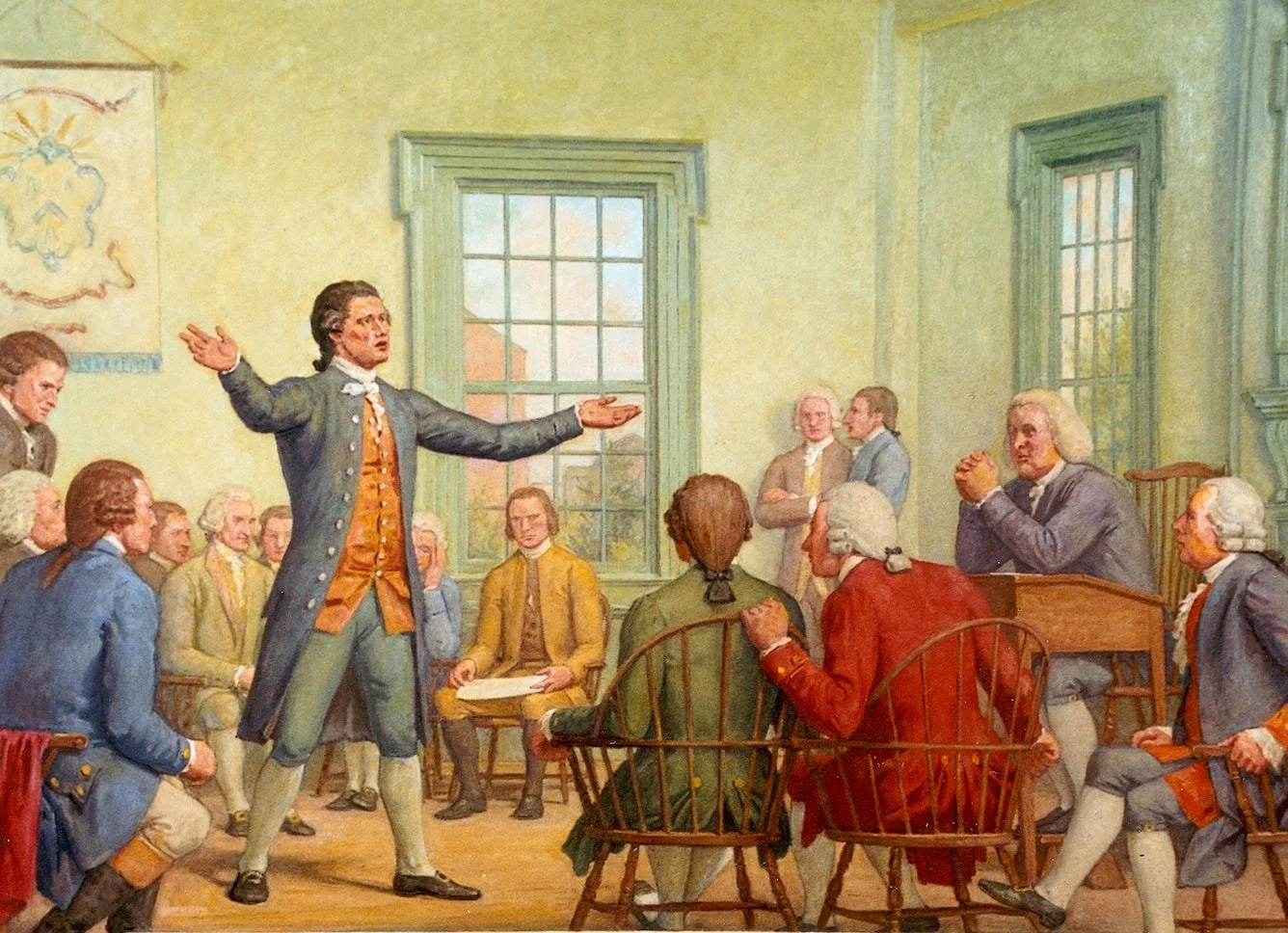
Out of this growing discord, Delegates from twelve of the Thirteen Colonies gathered in Philadelphia, Pennsylvania on September 5, 1774, to decide on a response to Britain’s aggressions. This came to be known as the First Continental Congress, and during this convention the Delegates drafted a formal Declaration of Rights and Grievances and sent it Britian.
One of this declaration’s most notable points was that “it strictly denounced taxation without representation”. More importantly, the Colonies emerged from this Congress as a unified body intent on resisting Britain’s rule.
“That whenever any Form of Government becomes destructive of these ends, it is the Right of the People to alter or to abolish it, and to institute new Government, laying its foundation on such principles and organizing its powers in such form, as to them shall seem most likely to affect their Safety and Happiness.”
So began a movement that turned into a revolution with leadership rising up that would shape a new nation. All the delegates should be considered as Founding Fathers, but the more notable include - George Washington, Thomas Jefferson, John Adams, Benjamin Franklin, Alexander Hamilton, James Madison, and John Hancock.
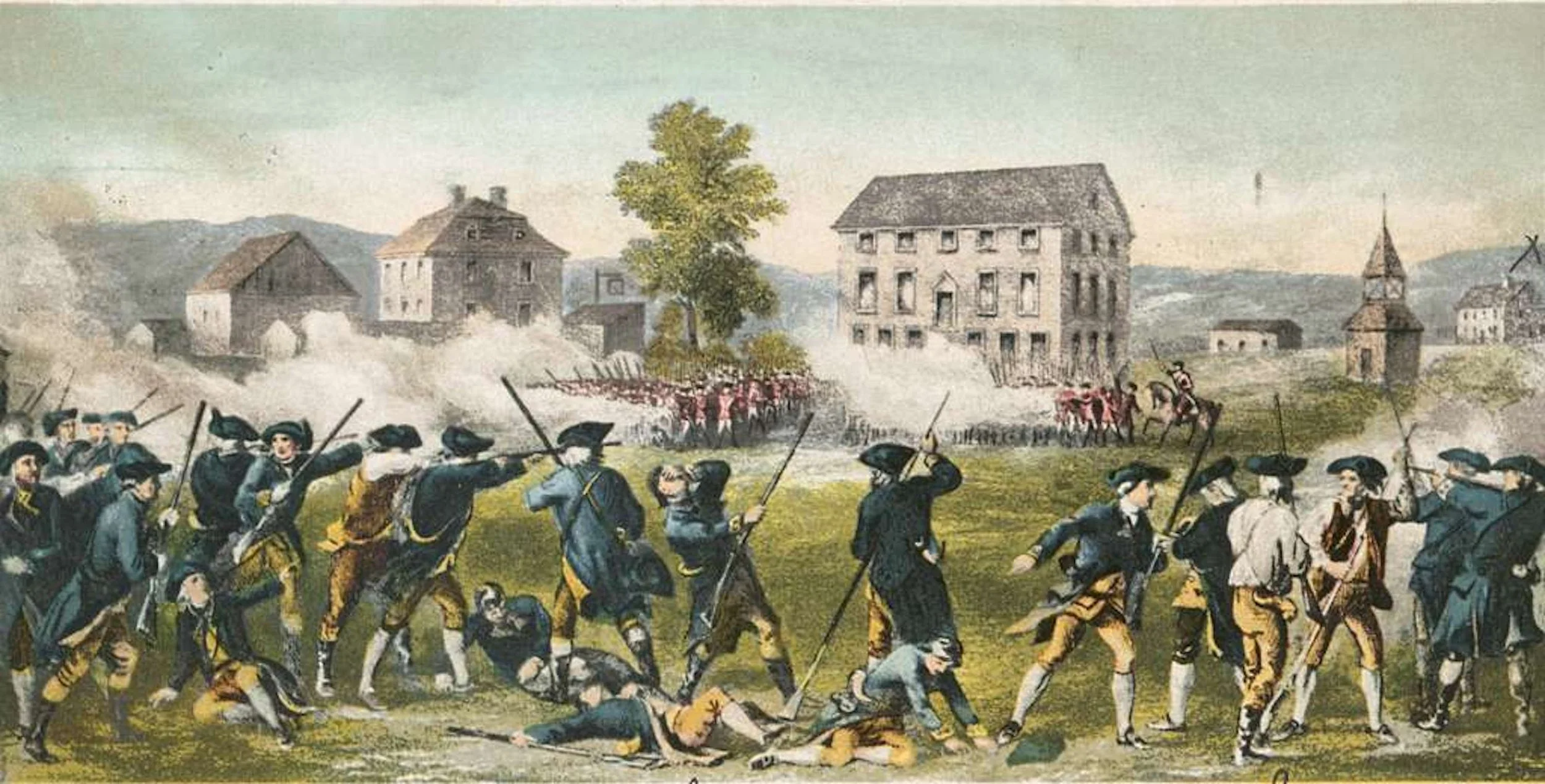
By the following year, 1775, with no reconciliation with Britain, the Colonies were prepared to take action. Military skirmishes took place at Lexington and Concord in April. A Second Continental Congress convened a month later on May 10 to organize their insurrection. Over the next year, the Delegates struggled with both the political and military needs of their cause. Caution was inevitable given the boldness of their endeavor.
“Prudence, indeed, will dictate that Governments long established should not be changed for light and transient causes; and accordingly all experience hath shewn, that mankind are more disposed to suffer, while evils are sufferable, than to right themselves by abolishing the forms to which they are accustomed. “
SUFFERING! Mankind has an incredible ability to tolerate suffering, be it emotional and/or physical. The Declaration contains the word three times to describe the Founders’ feelings. All 56 delegates to the Second Continental Congress came to the same conclusion that it was not only their right to end their suffering, but also their duty. They must act!
“But when a long train of abuses and usurpations, pursuing invariably the same Object evinces a design to reduce them under absolute Despotism, it is their right, it is their duty, to throw off such Government, and to provide new Guards for their future security.--Such has been the patient sufferance of these Colonies; and such is now the necessity which constrains them to alter their former Systems of Government.”
By the Spring of 1776 the Delegates of the Thirteen Colonies had assumed the authority to act as their own government. They formed a continental army, created their own currency, sent emissaries to other countries to try to gain alliances and sent another petition to England to try to resolve their differences. The Crown refused to even receive the petition.
Fate took its course and on July 2, 1776, Congress voted to approve the Lee Resolution, also known as the Resolution for Independence. Proposed by Richard Henry Lee (Virginia) on June 7, this Resolution contained three main parts: a Declaration of Independence which asserted the Colonies‘ right to be free and independent states; the Formation of Foreign Alliances which recommended the Colonies secure international support; and a Plan For A Confederation, which proposed a framework for uniting the states under a cooperative government.
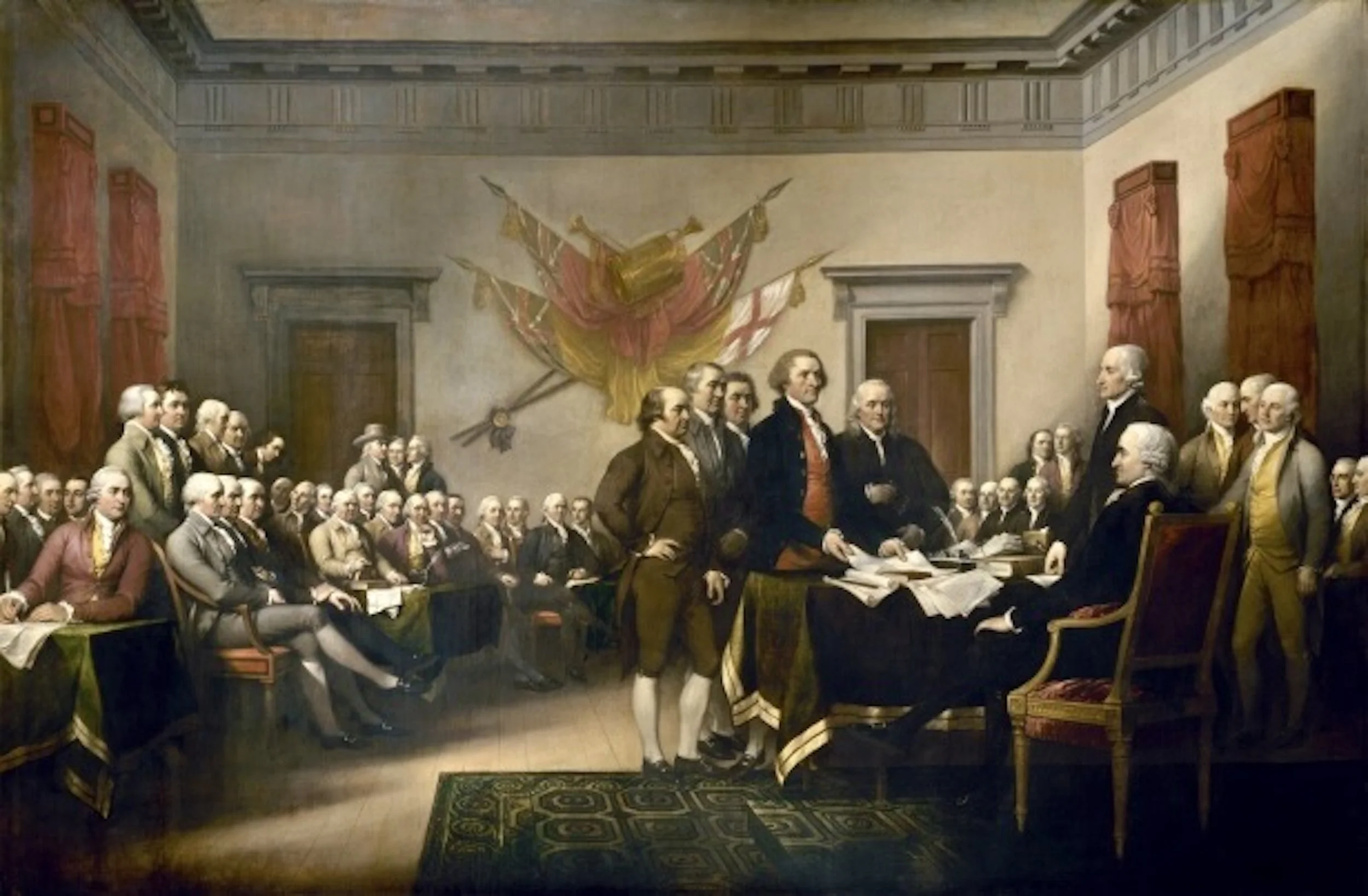
In support of Lee’s Resolution, Congress appointed a committee of five delegates, John Adams, Thomas Jefferson, Benjamin Franklin, Roger Sherman, and Robert R. Livingston, to draft a formal written document declaring the Colonies’ separation from Great Britain and the reasoning for it. Primarily penned by Thomas Jefferson, the committee’s draft of the Declaration was submitted to Congress in late June.
July 4, 1776! After all the debates and revisions of the original work, the day had come to vote and all 56 Delegates of the Second Continental Congress from the Thirteen Original Colonies adopted the text of their Declaration of Independence. A day that changed the course of history.
“We, therefore, the Representatives of the United States of America, in General Congress, Assembled, appealing to the Supreme Judge of the world for the rectitude of our intentions, do, in the Name, and by Authority of the good People of these Colonies, solemnly publish and declare, That these United Colonies are, and of Right ought to be Free and Independent States; that they are Absolved from all Allegiance to the British Crown, and that all political connection between them and the State of Great Britain, is and ought to be totally dissolved; and that as Free and Independent States, they have full Power to levy War, conclude Peace, contract Alliances, establish Commerce, and to do all other Acts and Things which Independent States may of right do.”
A PLEDGE FOR PROVIDENCE! In reading the Declaration, there is no confusion that the Founding Delegates of this Country believed their actions were being overseen by a Greater Power. The Declaration’s final statement embodies that trust with such resolve that all the signers were willing to pledge their very existence to each other.
“And for the support of this Declaration, with a firm reliance on the protection of divine Providence, we mutually pledge to each other our Lives, our Fortunes and our sacred Honor.”
God Bless America, and Happy Birthday!