The Old North Trail
Historical Trail Stretchs Thousands of Miles
Central Montana
Written and Photographed by Amy Grisak
Summer Issue - 2026
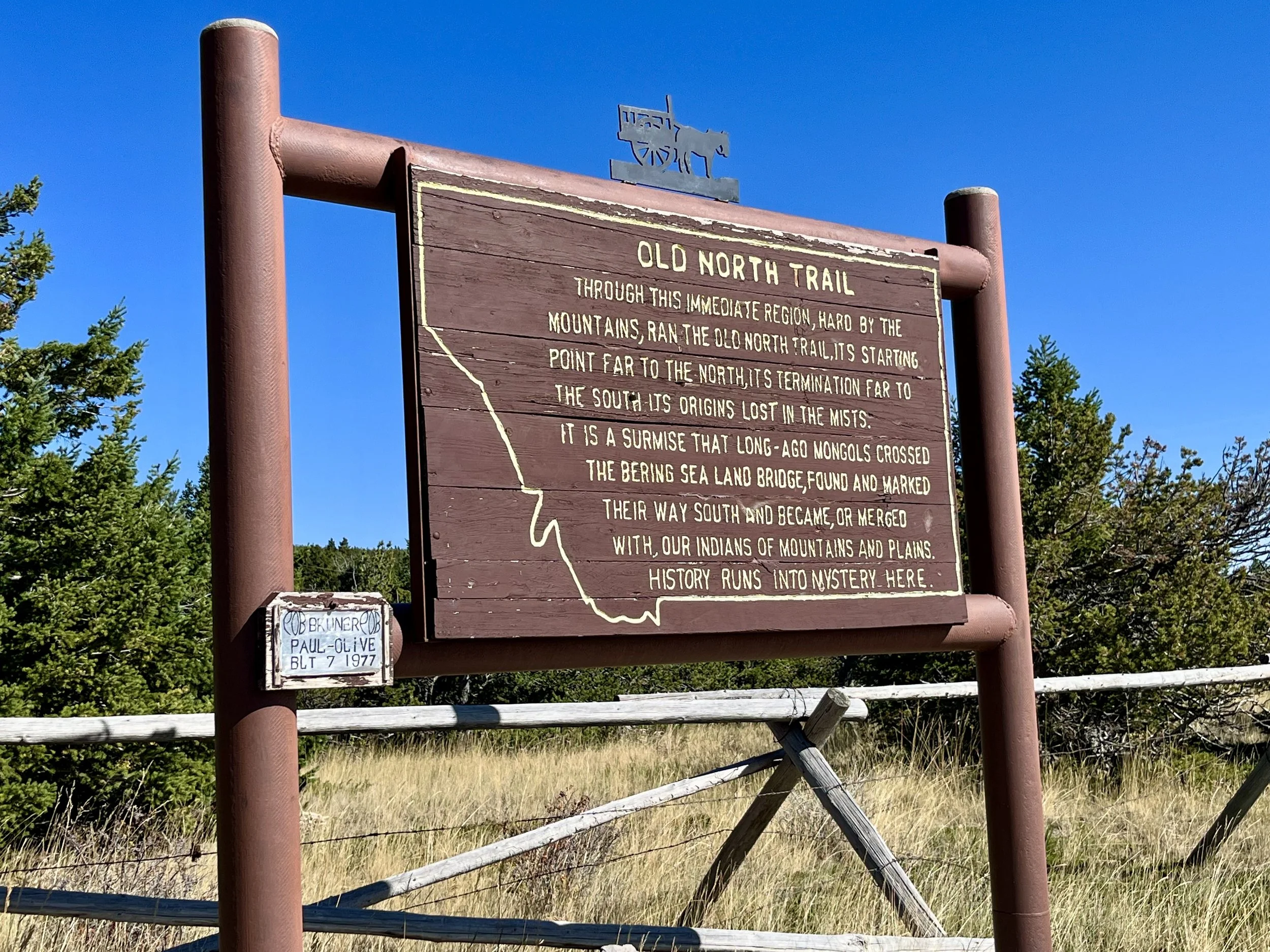
"There is a well-known trail we call the Old North Trail. It runs north and south along the Rocky Mountains. No one knows how long it has been used by the Indians. My father told me it originated in the migration of a great tribe of Indians from the distant north to the south, and all the tribes have, ever since, continued to follow in their tracks. The Old North Trail is now becoming overgrown with moss and grass, but it was worn so deeply, by many generations of travelers, that the travois tracks and horse trail are still plainly visible,”
~Brings-down-the-Sun, a prominent Blackfeet/Pikuni elder in Walter McClintock’s 1910 book, The Old North Trail.
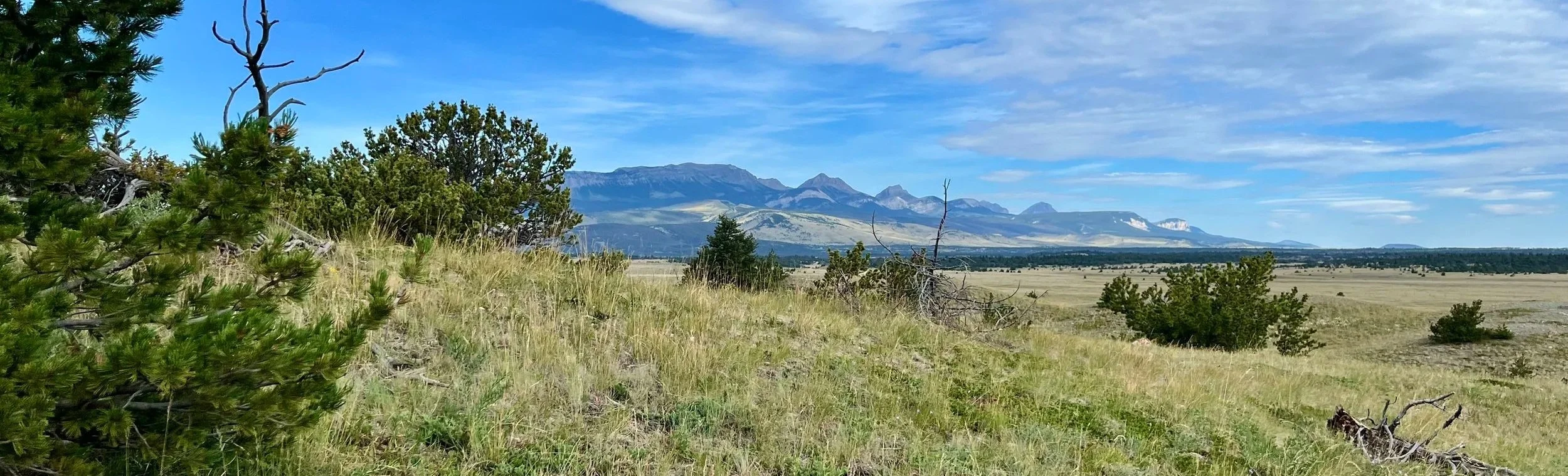
The Rocky Mountains—the Mistakis as the Blackfeet call them— rose across the western horizon as we walked the Old North Trail, the path worn into the earth over thousands of years by generations of Native People. Dave Shea, naturalist and retired Glacier National Park backcountry ranger, led our group along the foothills.
“The origin of the Old North Trail is one of the good, old-time mysteries, kind of lost in the mists of time,” Dave said. “The prevailing theory for the trail’s origin is that during the last Ice Age, the first humans crossed from Asia on the Bering Land Bridge, which at that time was about 55 miles wide because of the lower seas."
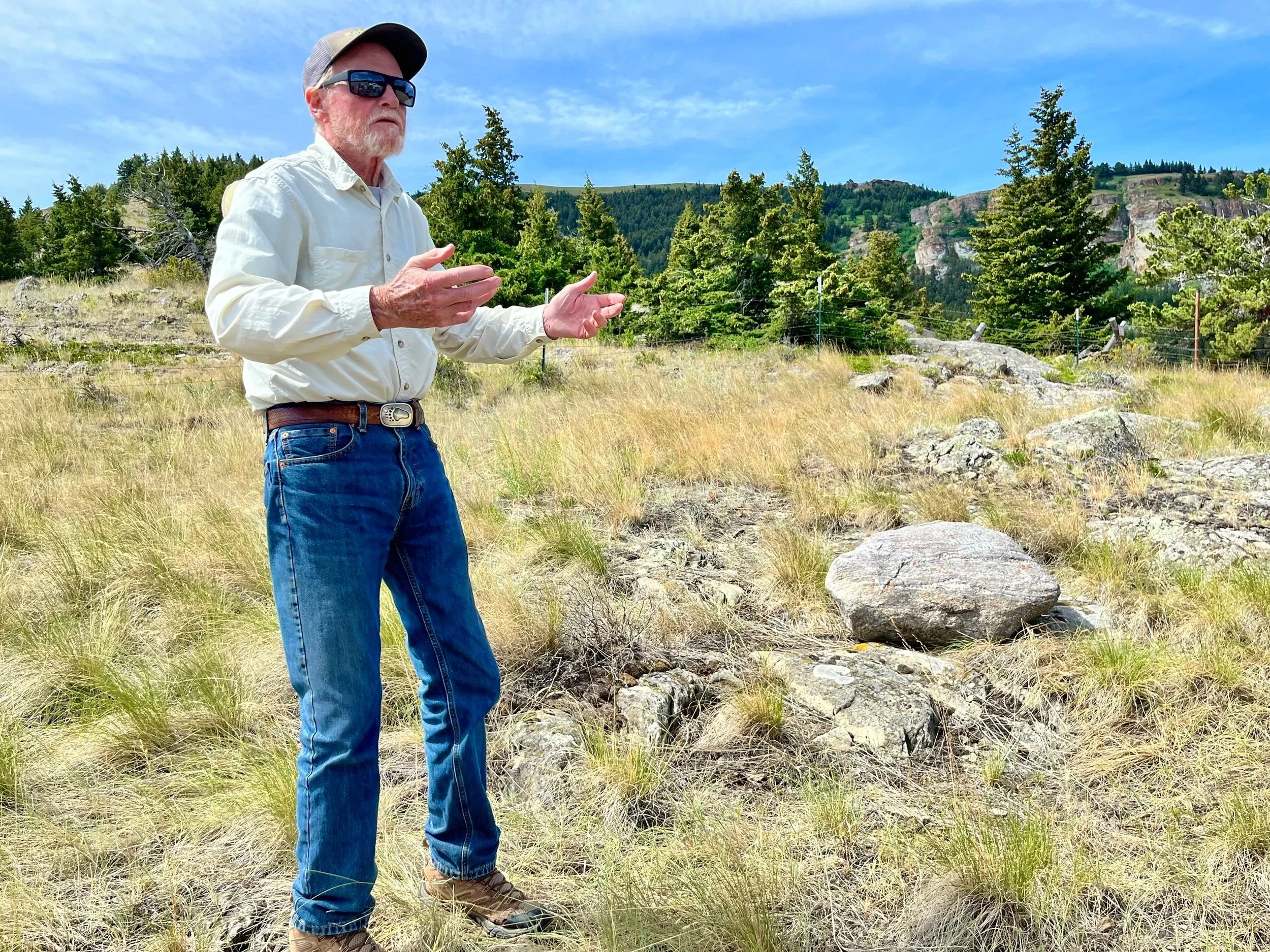
DAVE SHEA
Speculation abounds on potential routes early people chose including possible ocean courses for at least part of the way. The paths brought people to food, trade, and battle. Sometimes it led them to visit family or to avoid persecution, such as the Métis people fleeing Canada in the late 1800s.
"The Métis were Cree, Chippewa, French, and Scottish mixed blood, and were driven from Canada after the Riel Rebellion in the late 1880s,” said Dave. “West of Choteau is the site of the South Fork of the Teton Métis settlement that was occupied from about 1872 to 1925.” A nearby cemetery memorializes these families.
More than anything, the trail connected the continent. There are Blackfeet legends of exploring far to the south on multi-year journeys. Often returning with artifacts such as shiny, black obsidian used for knives and projectile points, as well as other finds.
In 1940, an authentic Roman bronze coin was found in a tipi ring near the Old Trail. The coin dates back to the reign of Emperor Hadrian, 117 to 138 AD. Dave questions how this coin, originating so far away and from such ancient times, came to rest along the Old North Trail. This discovery adds intrigue to the trail's long and mysterious history, though the exact story behind the coin remains unsolved.
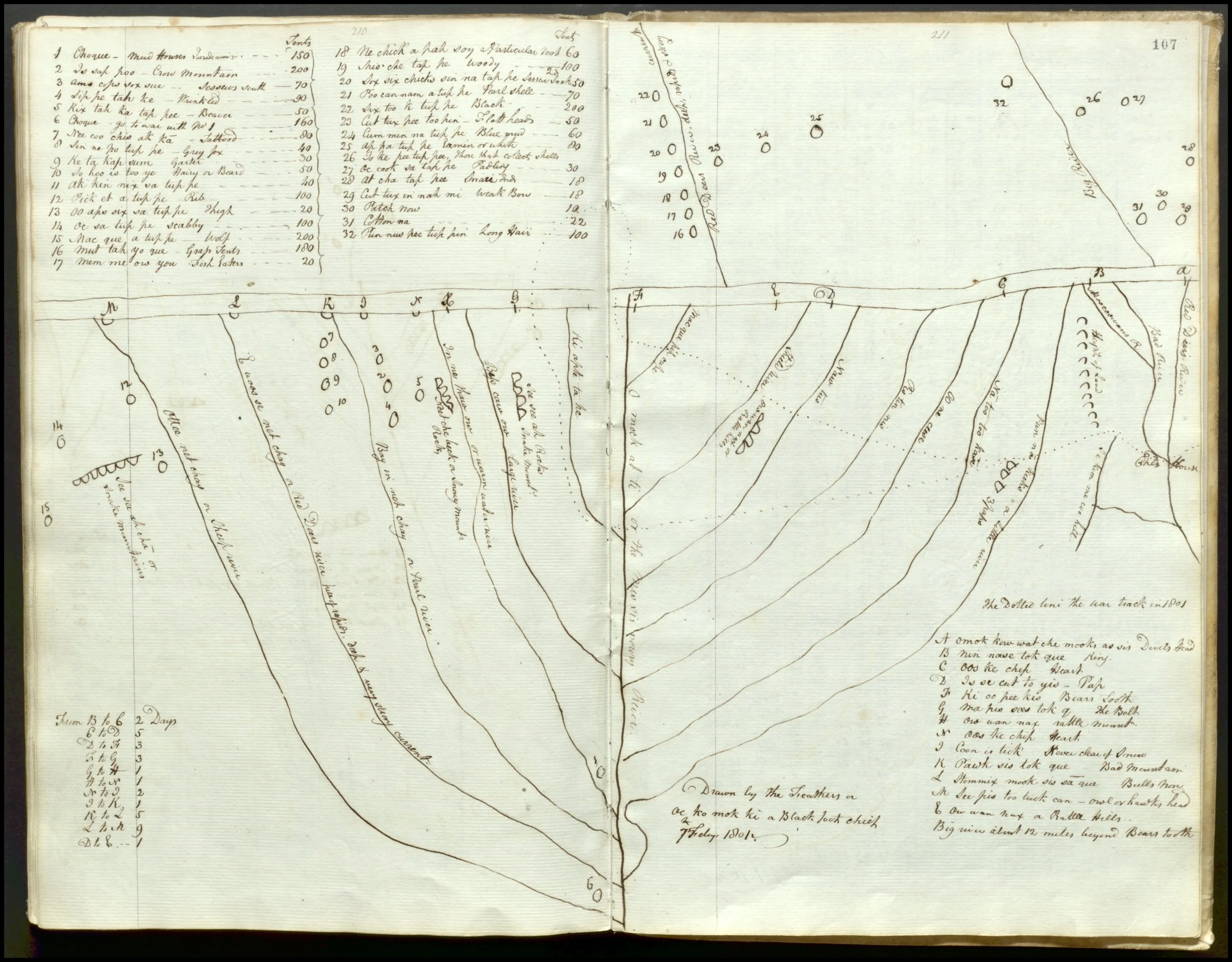
While much of the trail, stretching thousands of miles to the north and south, has been plowed under or paved over, remnants remain, a tangible reminder of life long ago. Good sections of the Old North Trail are still evident in Canada, Montana, and to the south, and have been traced both from the air and on the ground. Good travel tracks are still visible in some places, as are many tipi rings and cairns. Through Teton County, the original trail runs over 40 miles and has been relatively undisturbed by erosion, livestock, vehicle travel, or agriculture because much of the area is rocky alluvial ground.
In 1997, a group of locals formed a committee to trace out the remains of the trail through the county before it was lost forever. Because of their effort and continued coordination with the Old Trail Museum, the opportunity to explore this ancient path and learn its rich history remains. Twice a year, during the summer, tours are available: a northern route to Antelope Butte or a southern stroll through the foothills, across the South Fork of the Teton River, and a jaunt to Pine Butte.
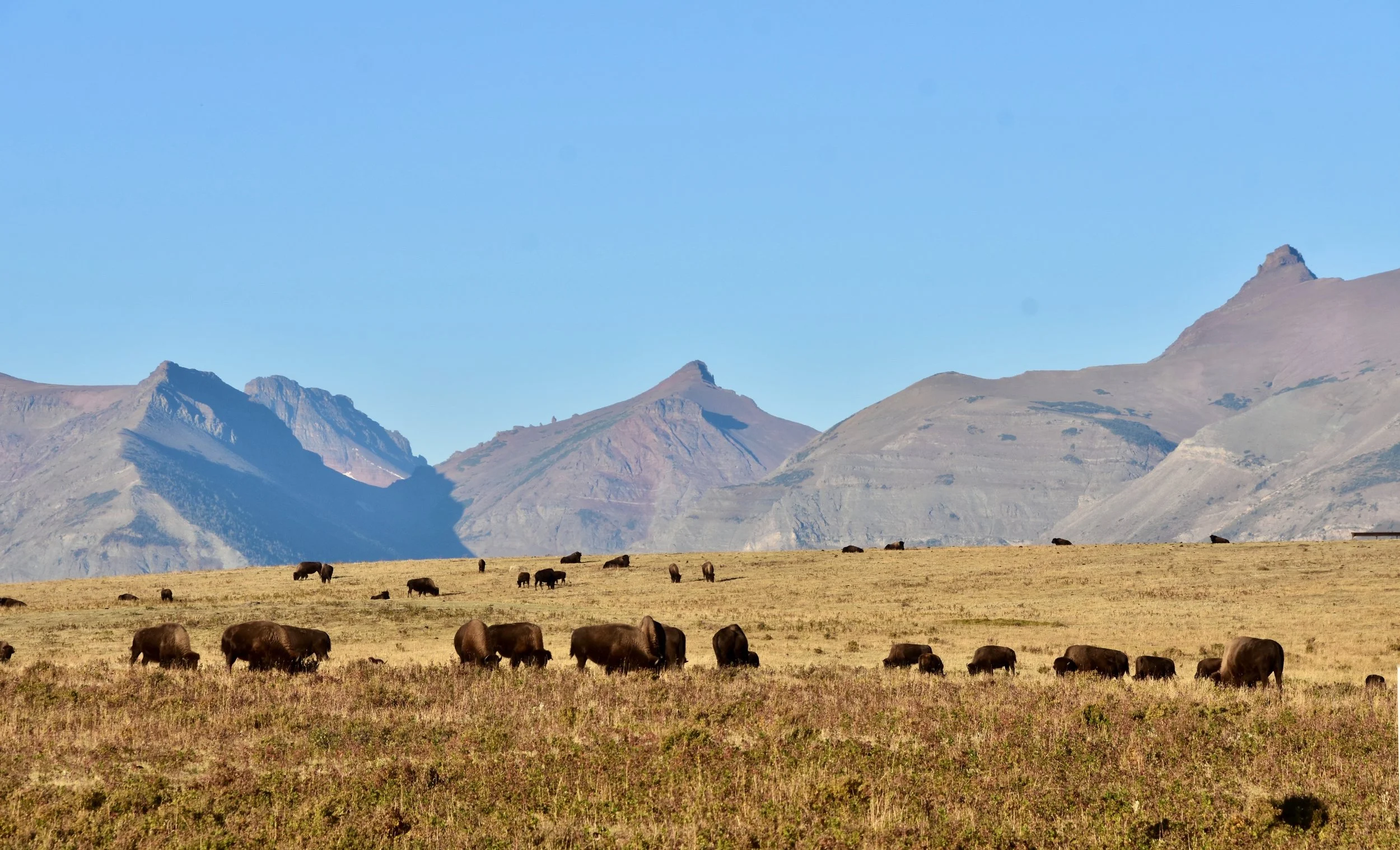
The Northern Tour begins along the Teton River and heads north to Antelope Butte. Much of the section is on private land, but visitors can see a turtle effigy, tipi rings, as well as 43 ancient cairns that mark a distinct path. No one really knows why they chose to build cairns in this section, and initially, there was concern that it might be a potential burial area. But Dave pointed out that they’have all been vandalized, and no bones or other materials have ever been found.
The Southern Tour focuses more on the foothills and the influence of the Métis. Both paint a beautiful picture of the landscape and the trail’s history.
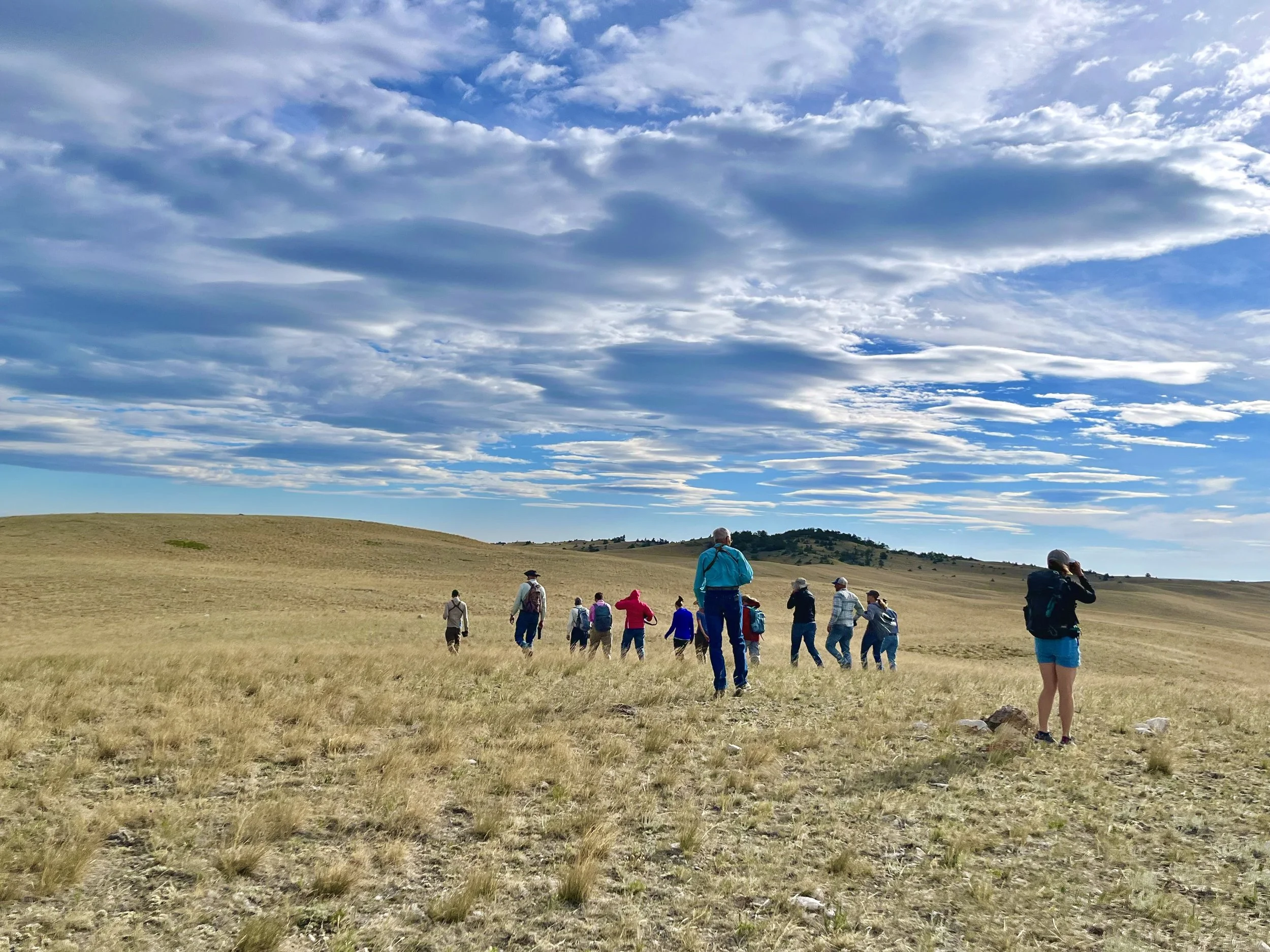
The wind howled as our group explored the features of the southern route. We walked past massive glacial erratics—large boulders left in the prairie when the Laurentide Ice Sheet receded—that are worn smooth in spots from thousands of bison using them as scratching posts. From there, it was an easy walk along the foothills that led us to a pishkun—a buffalo jump off the cliff. Dave pointed out the stacked rocks that create drive lanes on the ridge, which aided in forcing the animals over the edge into a corral where hunters waited.
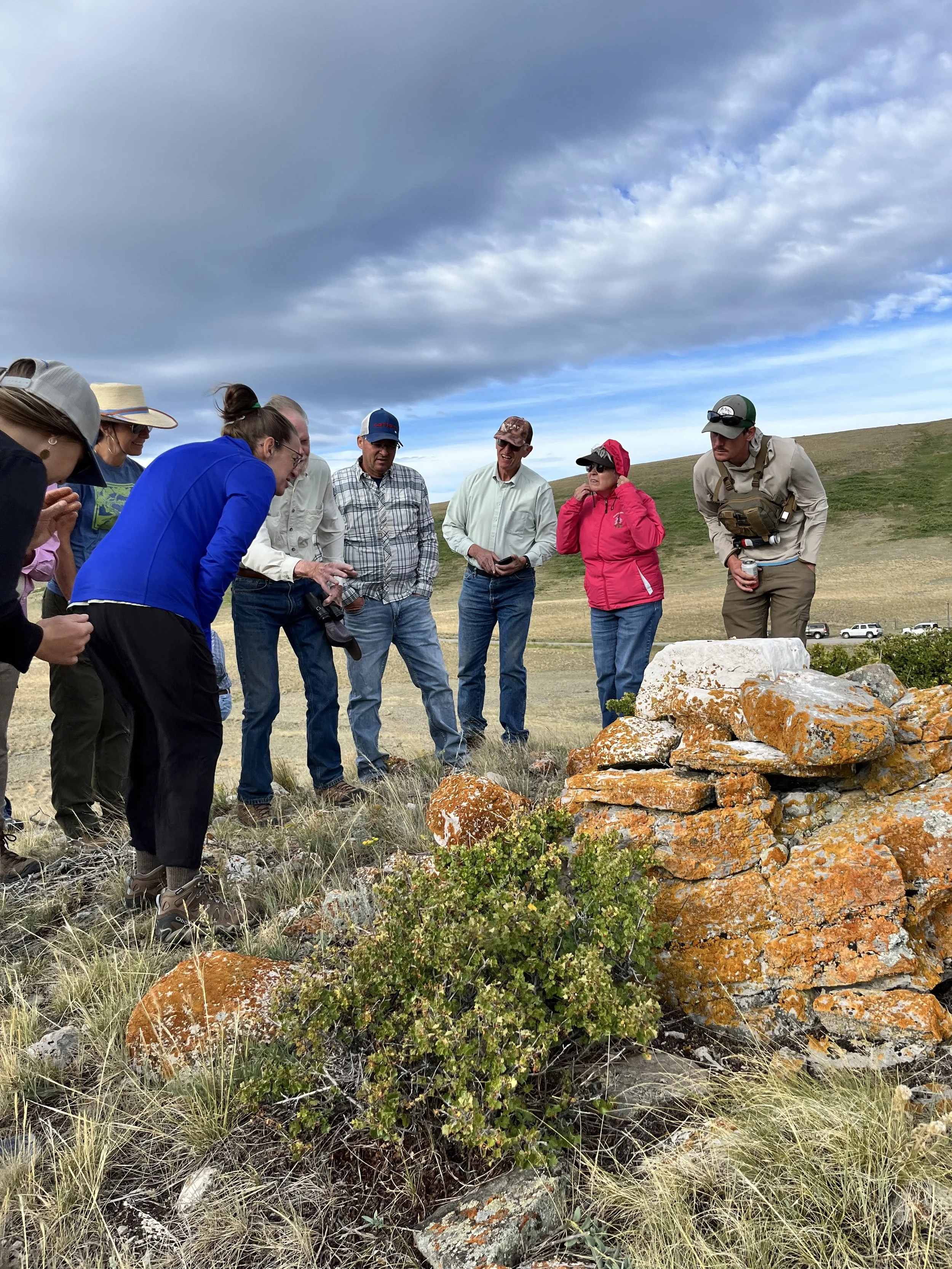
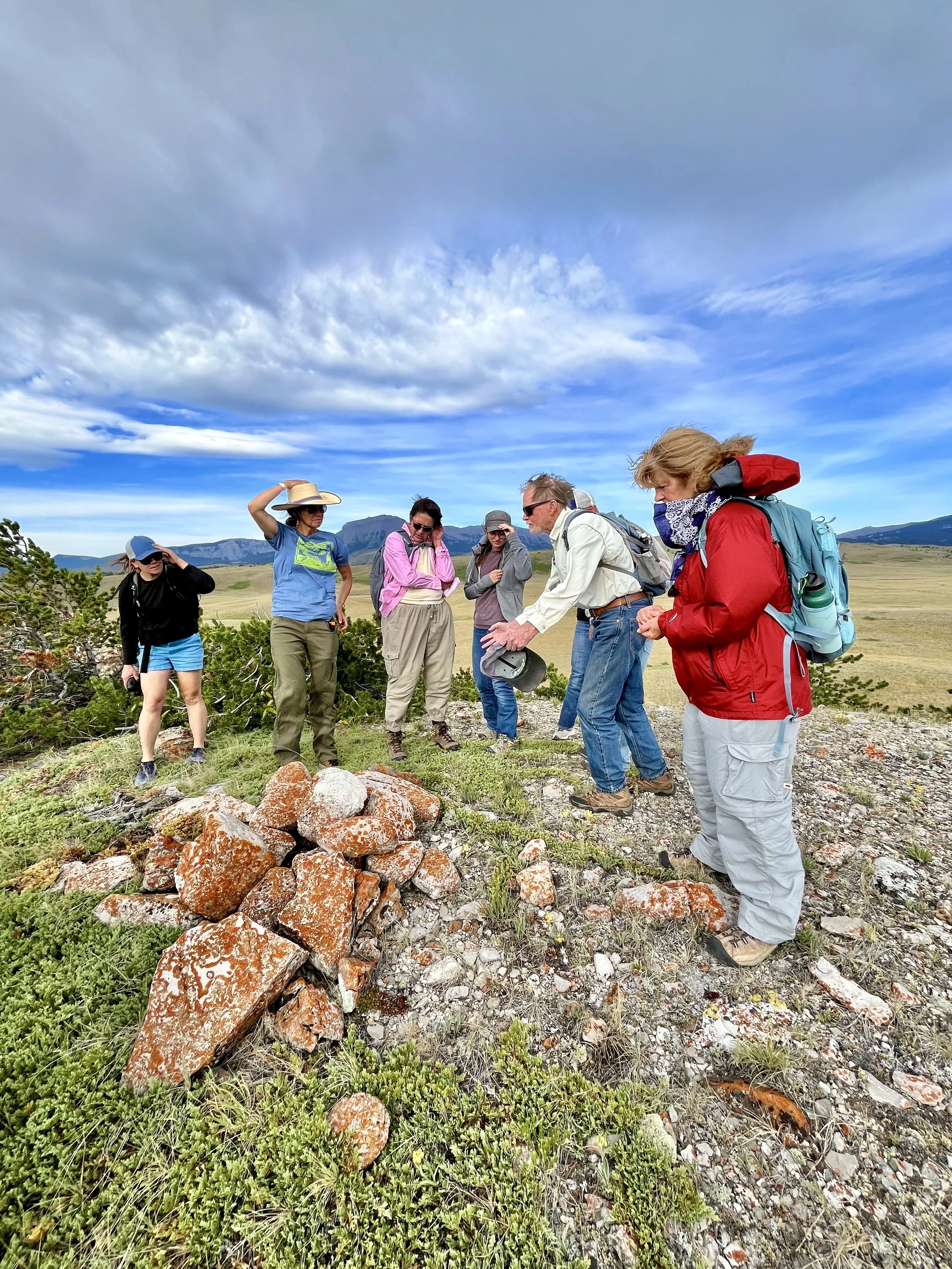
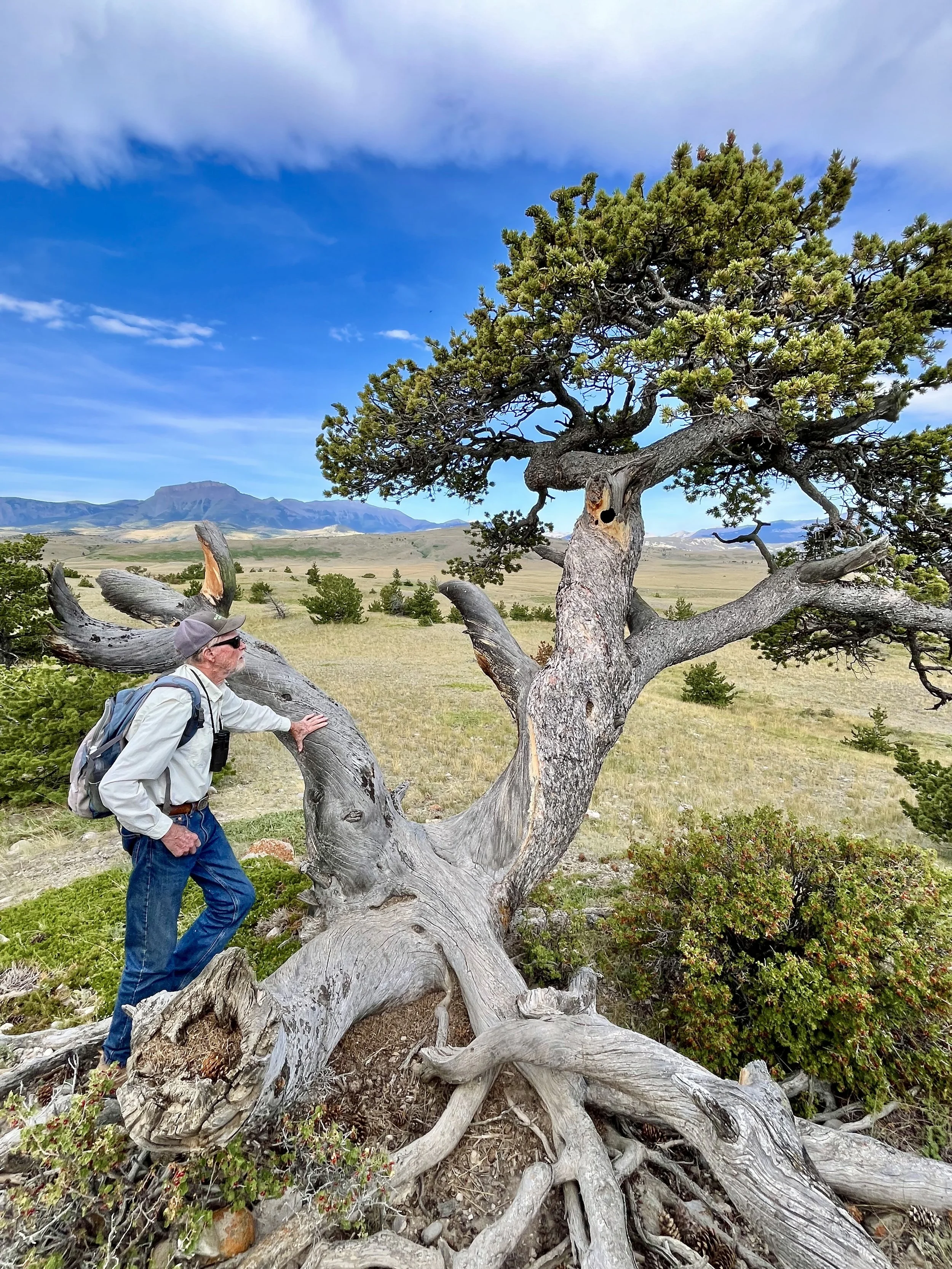
Farther along the trail, Dave told us about eagle traps often located on high points in areas along the route where eagles migrate in the fall. To prepare for this important, albeit dangerous, task, the hunter would purify himself beforehand, as eagles, both bald and golden, were highly revered and killing one was never taken lightly.
In this instance, Dave pointed out the scattered stones along the top of the ridge. What looked like a rubble pile was once an eagle trap, created to hide the hunter beneath a covering of sticks. Bait, such as a dead rabbit, was placed on top of the camouflage, and when an eagle landed on the structure, with lightning-fast motion, the trapper reached up and grabbed a leg of the bird, dragging it down to dispatch it.
As we traveled to another section of the trail, we walked across a bridge on the South Fork of the Teton River in an area experts determined has long been used as a crossing. On the other side was a large, granite marker with the words “Old North Trail” carved upon its face. This is one of 23 markers the community effort created decades ago to guide future generations. Dave noted that the granite boulders were collected east of the area, and because there is no granite in the area, they most likely originated in Manitoba, but were moved by ice.
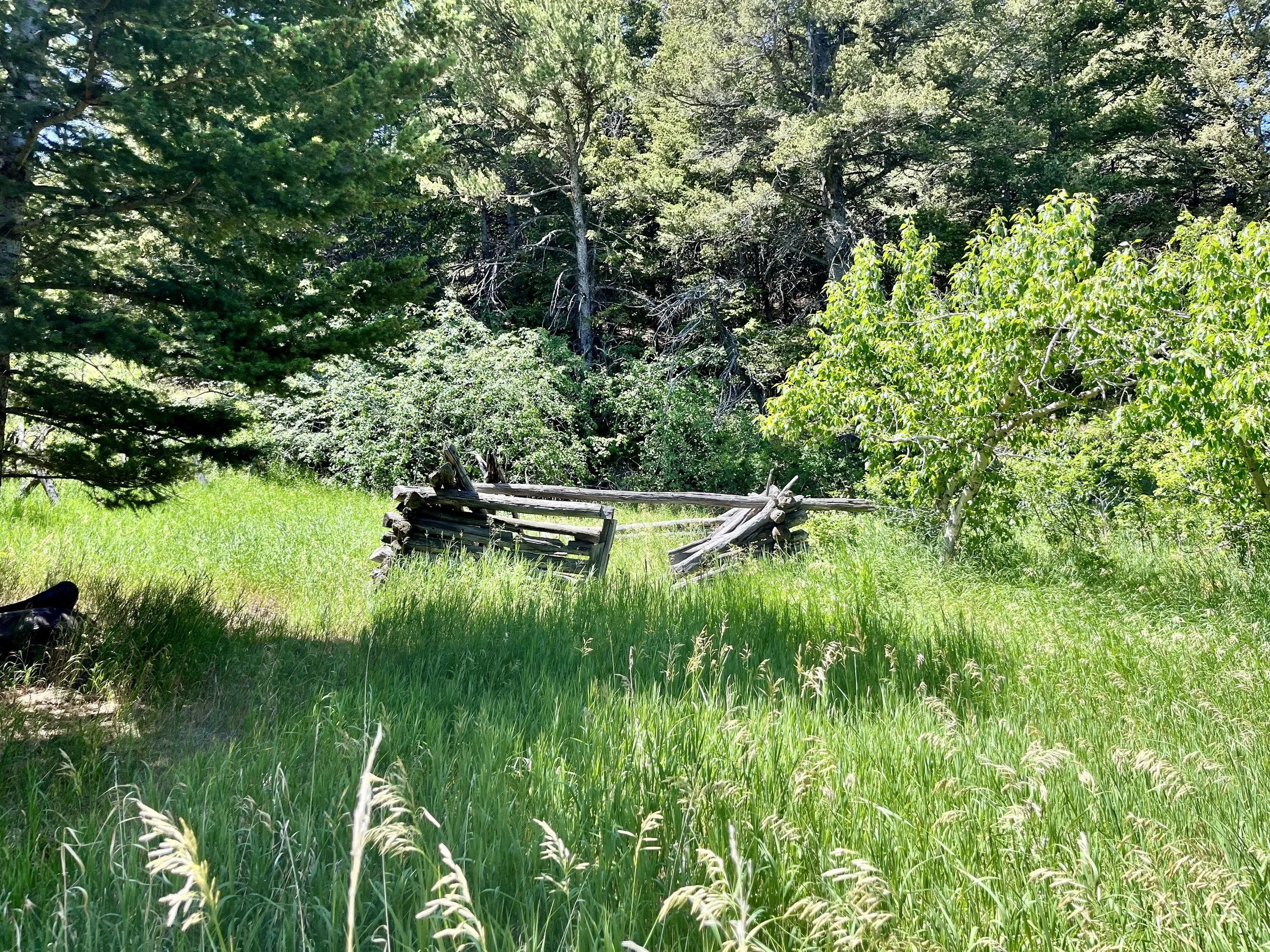
Following Dave’s lead, we discovered the remnants of a small cabin built in the late 1800s or early 1900s by Big Bear, a local Métis man who preferred living away from the settlement. The cabin was cozy and it was interesting to follow the path through the thick forest to the water, where Dave showed us Big Bear’s homemade cooler submerged in the cold water.
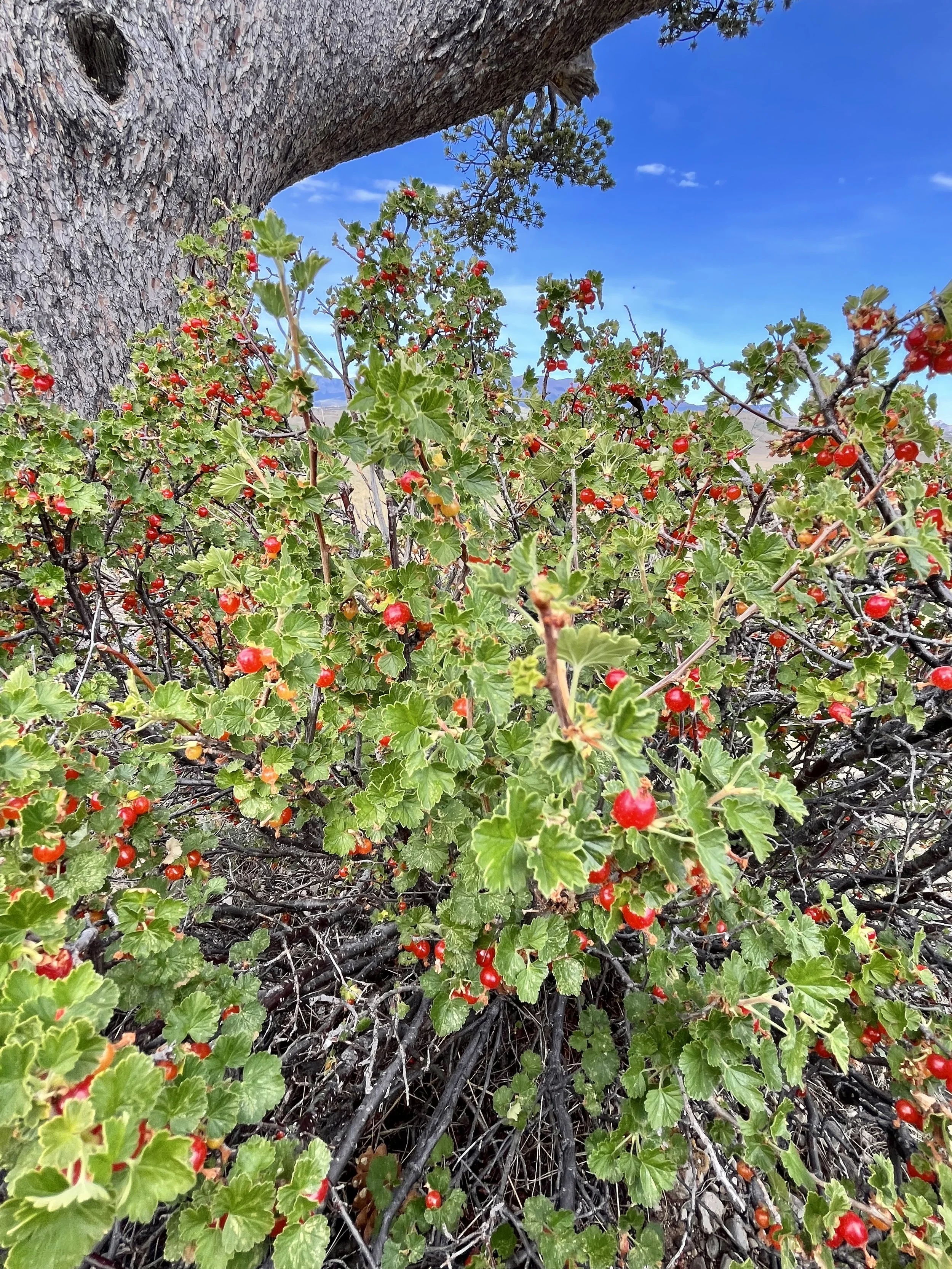
Throughout the tour, he pointed out the resources people need. “In Teton County, (the trail) passes through the foothills — limber pines, aspen, cottonwood ecosystems —and underneath is the mixed short-grass prairie,” Dave explained. “Consequently, there is much plant and animal diversity and many potential food sources.
Big game abounds, and there are many chokecherries, service berries, and huckleberries, as well as camas root, an important food source, biscuit root, rice grass, and kinnikinnick, which was used for tobacco. Dave explained which plants are used for medicine and which are for food and pointed out the calls of birds in the foothill ecosystem.
In the bigger picture, Dave said, “Just to the north and west of here, the trail passes near three sacred vision questing sites — Chief Mountain, Heart Butte, and Ear Mountain (outside of Choteau). All three are still considered sacred and used for ceremonies.”
The trail is a natural history lesson as much as a historical walk and deepened our understanding and appreciation of the people who used this trail.