Rural Veterinarian Relishes Vocation
Dr. Katie Rein DVM
Harlowton, Montana
Written by Cyd Hoefle
Photography by Stu Hoefle
Winter Issue - 2026
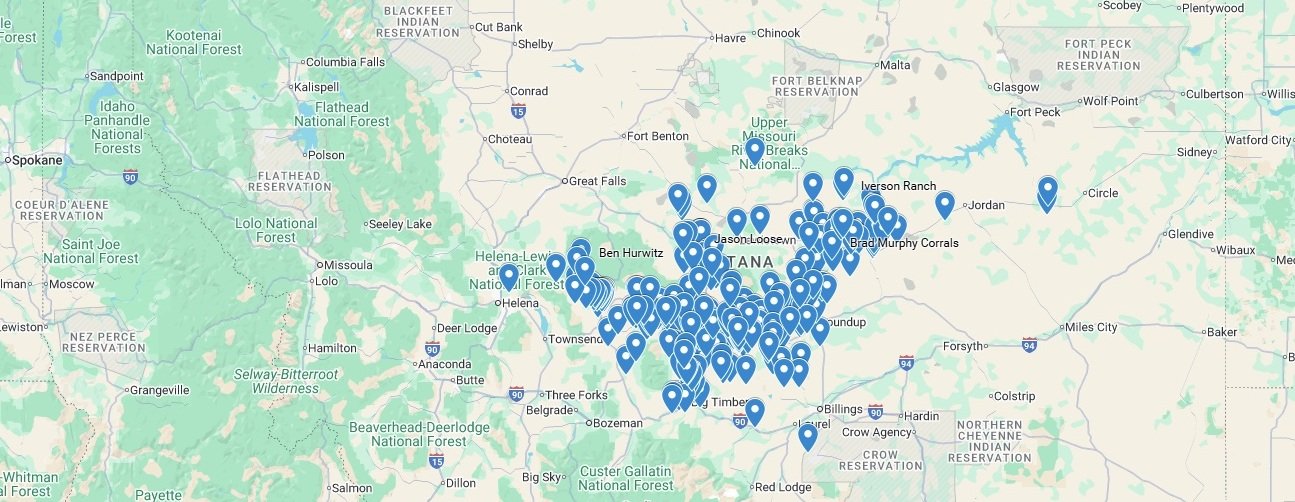
“It’s a great day for preg testing,” Dr. Katie Rein said recently on a cloudy, 40-degree afternoon. “Cows do better when there are no shadows, so, it should go well.”
Katie was pregnancy testing around 200 cows for one of her many clients. She’d driven from her clinic in Harlowton to the Sargent Ranch south of Shawmut. Everything was ready when she arrived.
With their calves freshly weaned, the cows had been separated into a holding corral ready to be worked. As they were pushed through the narrow alley into the squeeze chute, Katie performed a transrectal palpation on each one and read the ultrasound to determine if they were pregnant.
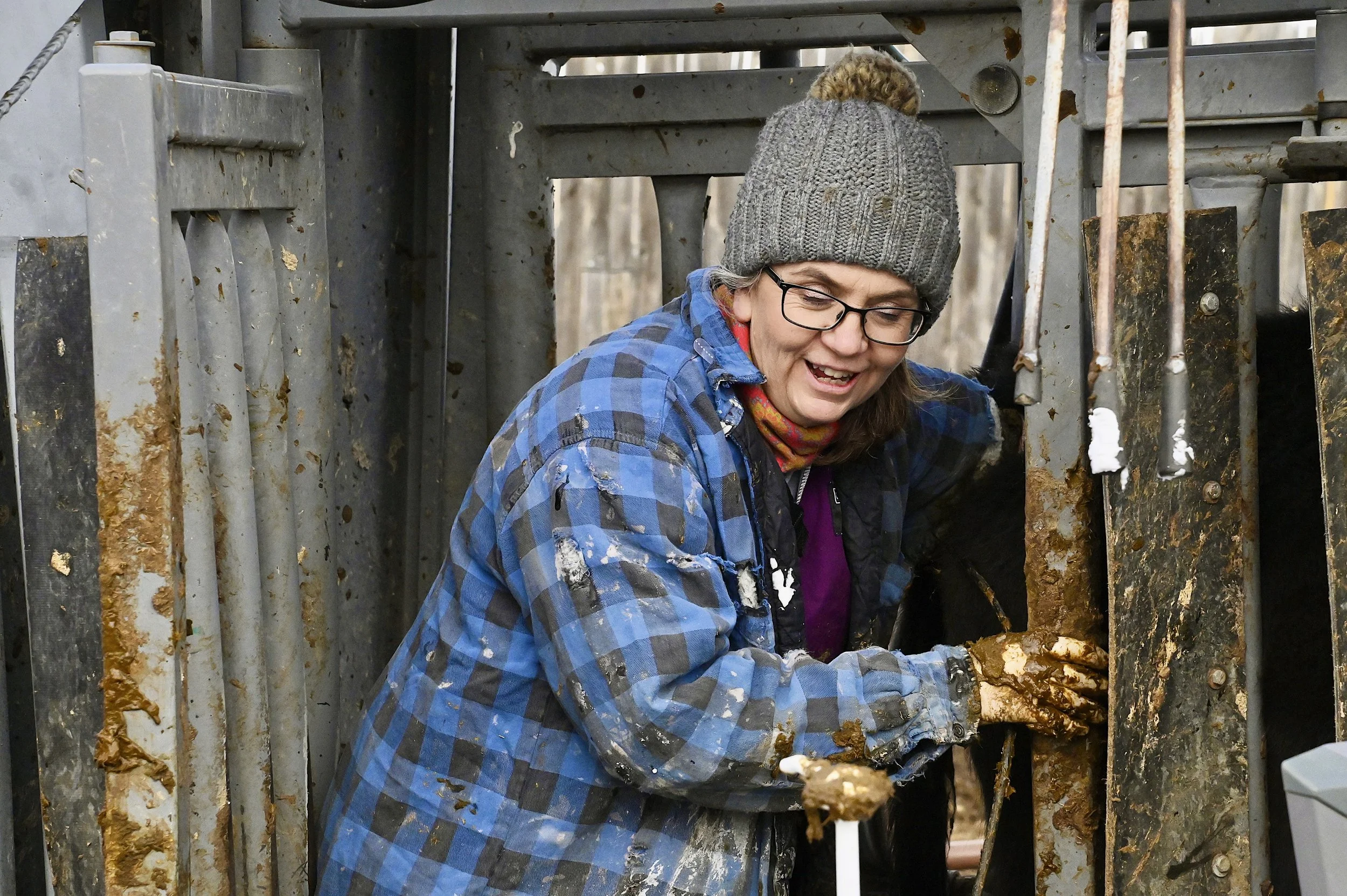
“Bred” or “Open,” she called out after she tested each cow. She paused long enough to explain what to look for on the ultrasound. On the small black and white screen, once Katie pointed it out, it was easy to see a head, a leg, even the heartbeat. The cows were only about 100 days into gestation, but with the technology being used, even an inexperienced eye could see the dark movement inside the uterus. For Katie, reading the results took less than ten seconds. Having single-handily tested over 25,589 cows this year alone – it doesn’t take her long.
“Once the cow is in the chute, it doesn’t take but a few seconds,” she said. “It helps when there’s a good crew working.”
Katie showed up alone in her well-used, four-wheel drive flatbed pickup truck. From the outside it looked like an ordinary farm truck. But inside she had a plethora of tubs and kits, bottles of vaccines and medications, blankets, tools and a portable table. She set up her temporary exam room as close to the end of the squeeze chute as she safely could and donned a pair of coveralls, an old jacket and a long pair of rubber gloves.
Greeting the crew around her, Katie joked with them as the cows were pushed up the alley. From the camaraderie and exchange of lighthearted teasing, it appeared that it would be an easy day.
“Some ranches are just better run,” she explained. “This one is one of my favorites. I’ve known the Sargents since long before I was a vet. Our families go back three generations.”
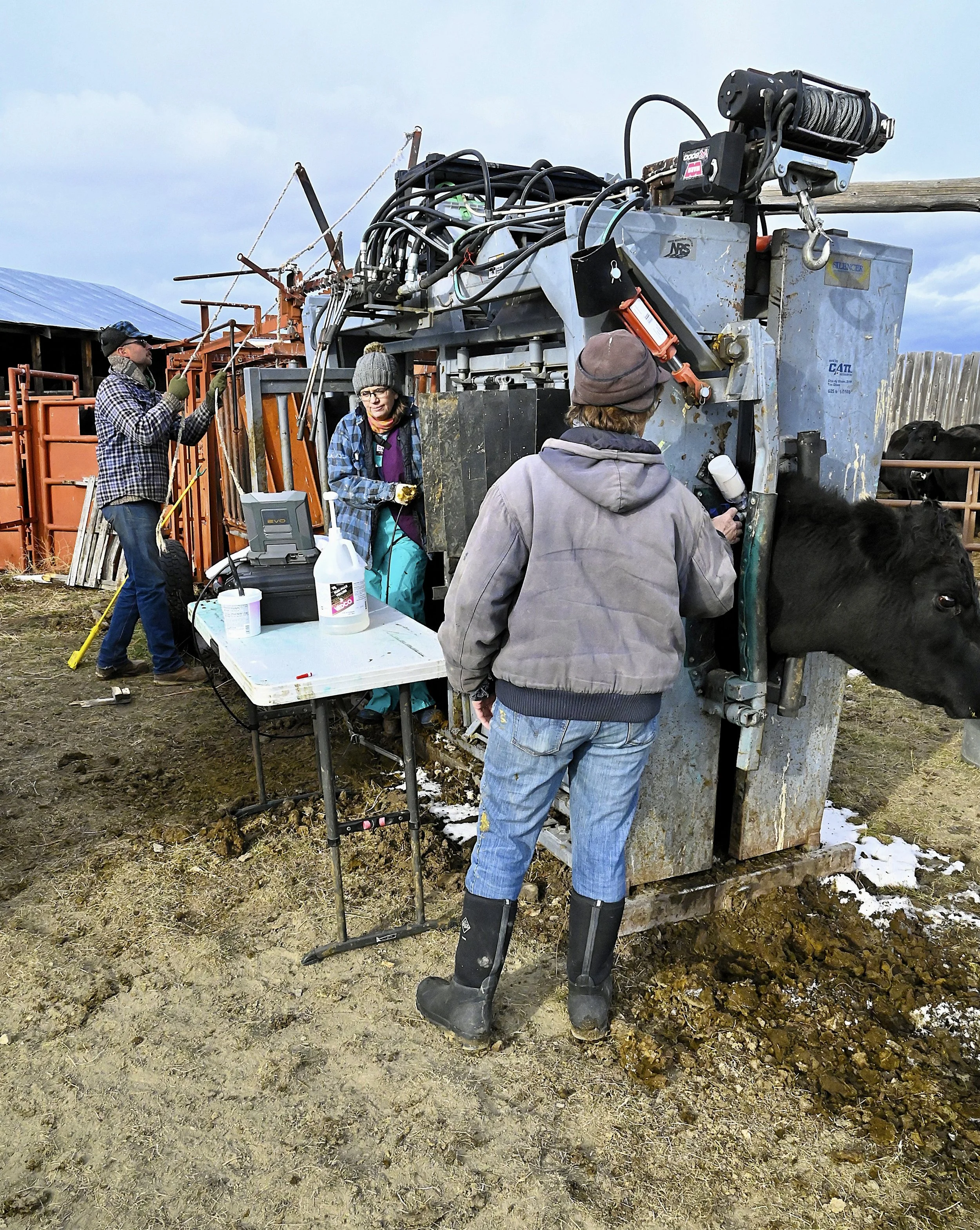
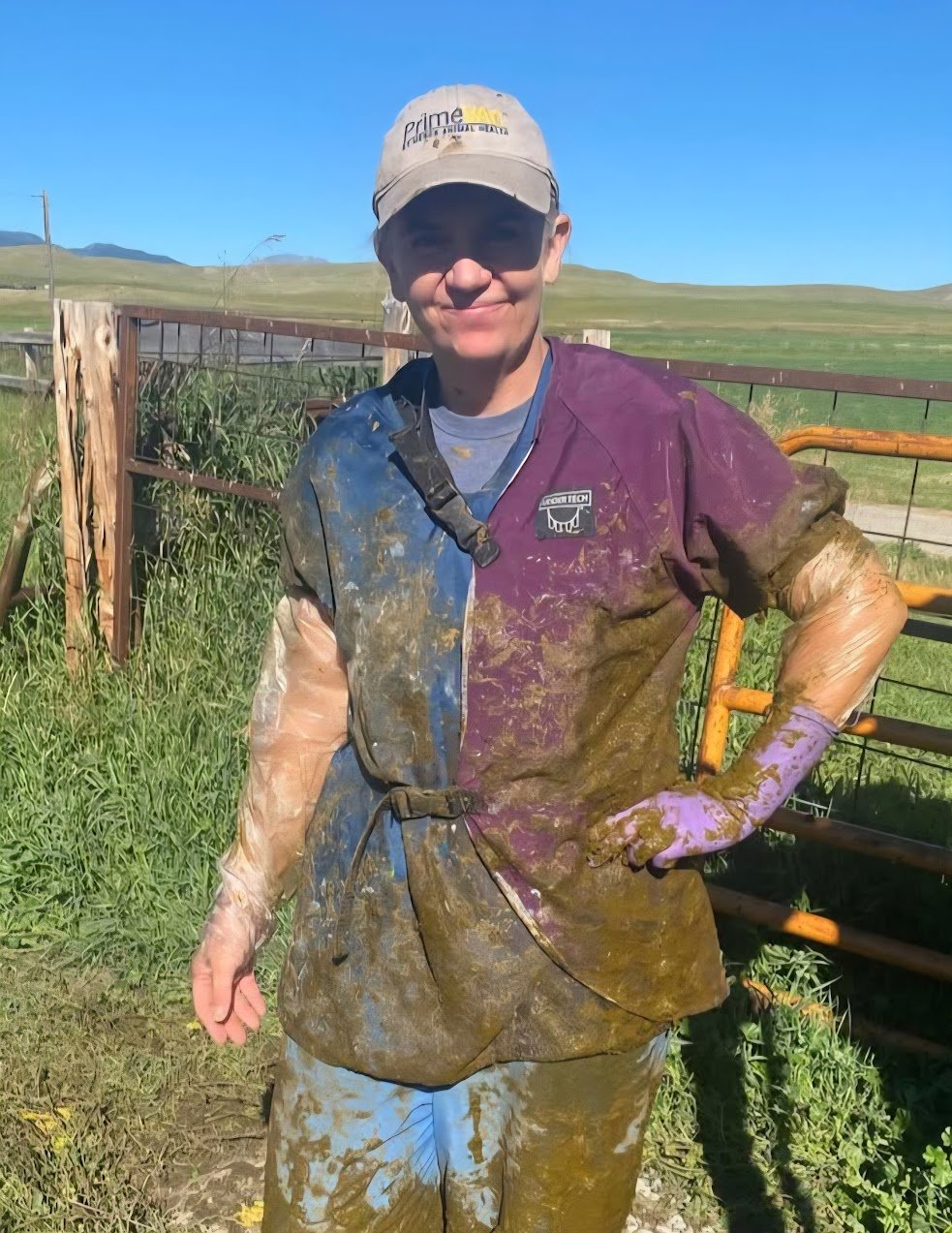
The Sargent crew worked efficiently as cows were pushed from the holding pen, through the alley and into the chute. In addition to being pregnancy tested, they were also vaccinated and treated for parasites. As the day wore on, Katie’s clean coveralls became covered in loose, liquid cow excrement. “That’s why I wear coveralls,” she laughed. “It’s all part of the job.”
A veterinarian for twenty-one years, Katie’s love of animals began long before she made the decision to attend veterinary school. She graduated from Sweet Grass County High School in Big Timber and was considering a career in engineering but changed direction as a senior.
“Two things happened that changed the course,” she said. “One was an assignment of building a tower out of cards – I couldn’t imagine enjoying that for the rest of my life. The other was a trip I took to Denver with the Livestock Judging Team.”
That trip included a stop at the School of Veterinary Science at Colorado State University. “It just excited me,” she said. “I remember asking my friends if it didn’t make them want to be a vet – but they didn’t get it. I guess it’s not for everyone!”
As a high school student, Katie owned a herd of about 20 head of cows that she ran on her parents’ ranch at Melville. “I could run three head rent free,” she explained. “After that, we had to pay to have them there.”
Katie cultivated a love of ranch life while working with her herd and caring for her animals in 4-H and FFA. She attended Montana State University, then transferred to veterinary school at Washington State University before doing an internship at Texas A&M. After returning to Montana, she worked at a vet clinic in Harlowton before starting her own practice, Crazy Mountain Veterinary Service (CMVS).
Singlehandedly running the business for seven years, Katie covered every facet of the business and was one of the only large animal vets in the area. She covered a lot of ground too. Traveling from White Sulphur Springs to Lewistown and down to Big Timber kept the young vet on the road a great deal of time.
She still travels thousands of miles a year but, since the early days, she’s expanded exponentially with clinics in Harlowton and White Sulphur Springs serving ranches and animal owners across Central Montana and surrounding communities. Her staff now includes six veterinarians.
“Eighty percent of students attending vet school are women,” Katie said. “All of our vets are women.”
As Katie and her team of veterinarians travel around Montana, they are recognized as one of the top clinics in the state. This year alone, they have pregnancy tested 76909 cows.
“Preg testing season is definitely our busiest,” Katie said. “Calving season is a close second.”
Rushing to ranches during difficult deliveries that require pulling the calf, c-sections or prolapses keeps the team busy through the calving season.
“Some days, we’re in our trucks for a long time,” Katie said. She recalled one winter when she made three trips to White Sulphur Springs in a 24-hour period enduring bad roads and a blizzard. That’s when she decided to open her second clinic there and employ a full-time vet.
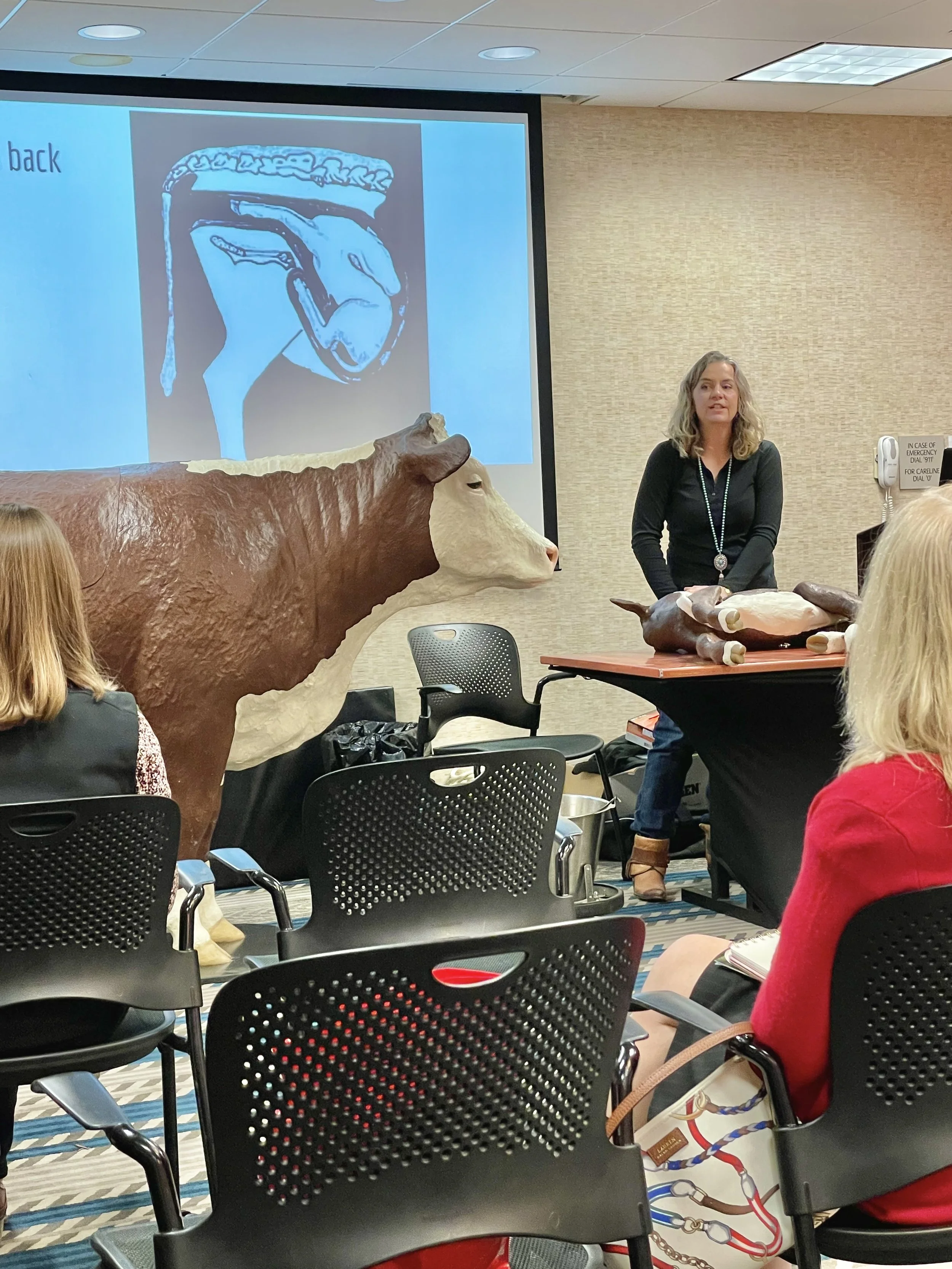
Agriculture is currently experiencing a rural vet shortage. In answer to the need to fill that shortage, Katie holds calving workshops for ranchers, focusing on first generation producers.
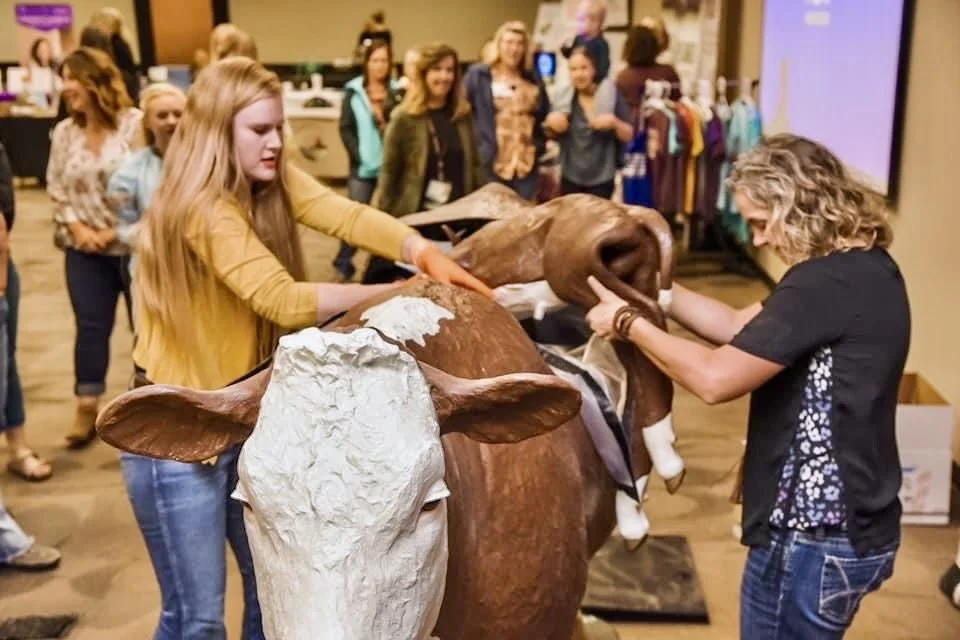
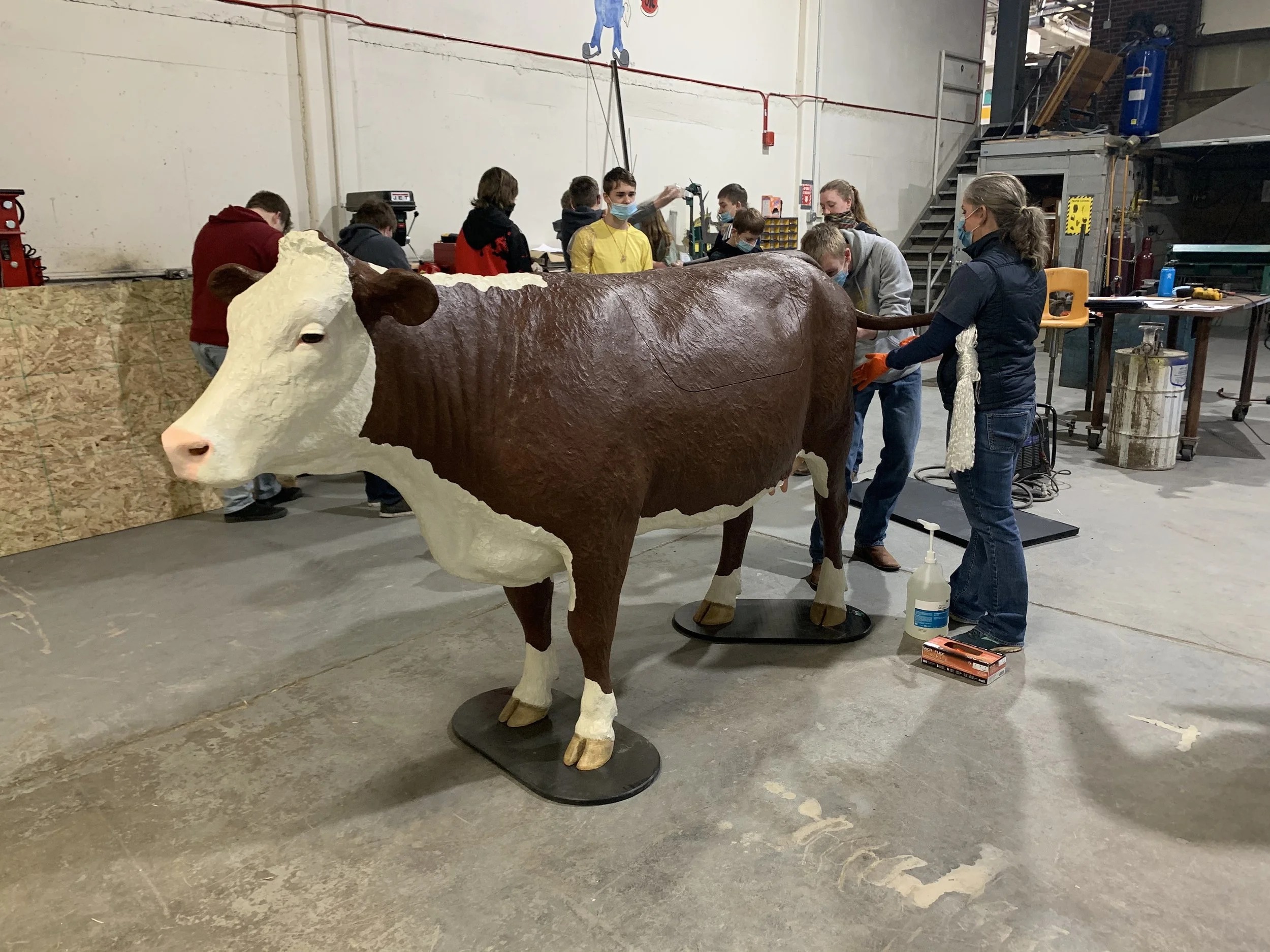
CMVS received a grant to buy a full-size fiberglass model cow to help display calving techniques. The cow and unborn calf model are hauled to functions and Katie demonstrates different things that can go wrong while calving and ways to overcome the problem.
“Stella is our traveling bovine, and she’s very realistic,” she said, “We try to teach ranchers things they can do on their own to avoid calling a vet, but also to know when it’s absolutely necessary to call. Ranchers learn a lot from it.”
She enjoys taking the cow to the Farm Fair in Big Timber and other functions so elementary school students and kids are given an opportunity to experience birthing a calf.
“When I ask at the end of the presentation if anyone wants to help pull a calf, 99% of the kids raise their hands,” she laughed. She believes the exposure also plants an interest in veterinary science in some of the students.
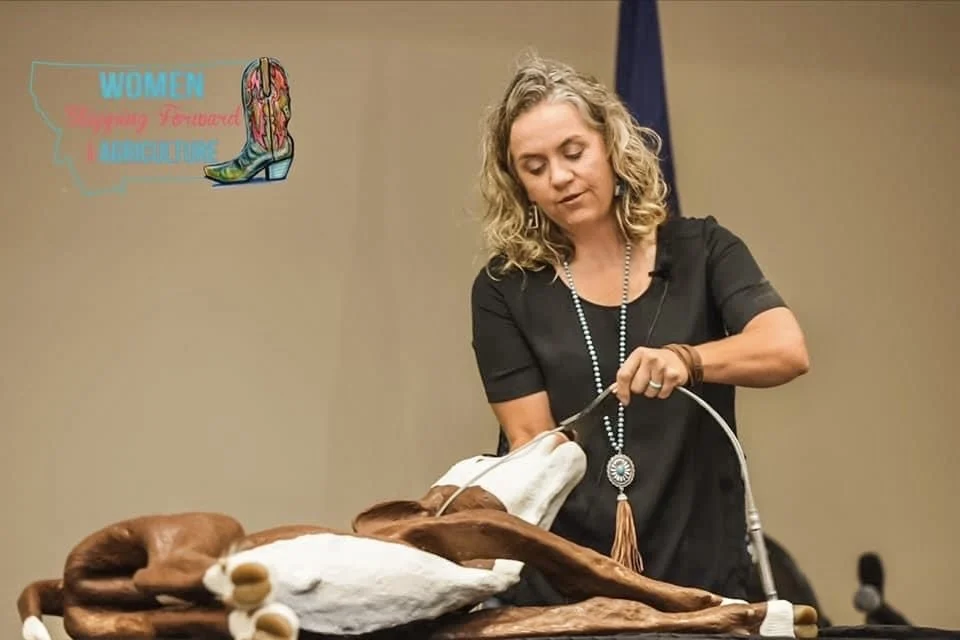
DR KATIE DEMONSTRATES STELLA AND HER NEWBORN CALF
Like anyone involved in agriculture, burnout is an issue that Katie does experience.
“When the days are full and long, when I’m exhausted, it can be hard,” she said. “Sometimes my hands and arms ache. But the satisfaction of what I do far outweighs it.”
Growing up in an agricultural community and knowing so many ranchers, Katie has a great appreciation for the lifestyle. A generous woman, she gives back to her community in tangible ways as often as possible, including scholarships, student internships and veterinary tech apprenticeships and one of her favorites: CMVS’s annual customer appreciation golf tournament.
“It’s an opportunity that we take to give back to our customers,” Katie explained. “Plus, it’s a whole day of a lot of fun.”
Katie understands the importance of family and many of her employees have young families. In addition to flexible schedules, she also offers health insurance.
“It’s not unusual for someone to need to bring one of their kids to work,” Katie said. “We work around that.”
Katie is quick to attribute her success to her team of veterinarians, office managers, support staff and her husband, Jason Loose, whom she says only ranches part-time because “he’s usually busy fixing something one of us broke, building something or using his muscle.”
“I can’t think of anything that would fulfill me more than being a vet,” Katie said. “I live in the community where I grew up, I’m close to friends and family and I have the best team surrounding me. I really do love what I do.”