The Lewis & Clark Expedition
Truly a “Corp of Discovery”
Across Montana
Written and Photographed by Amy Grisak
Summer Issue - 2026
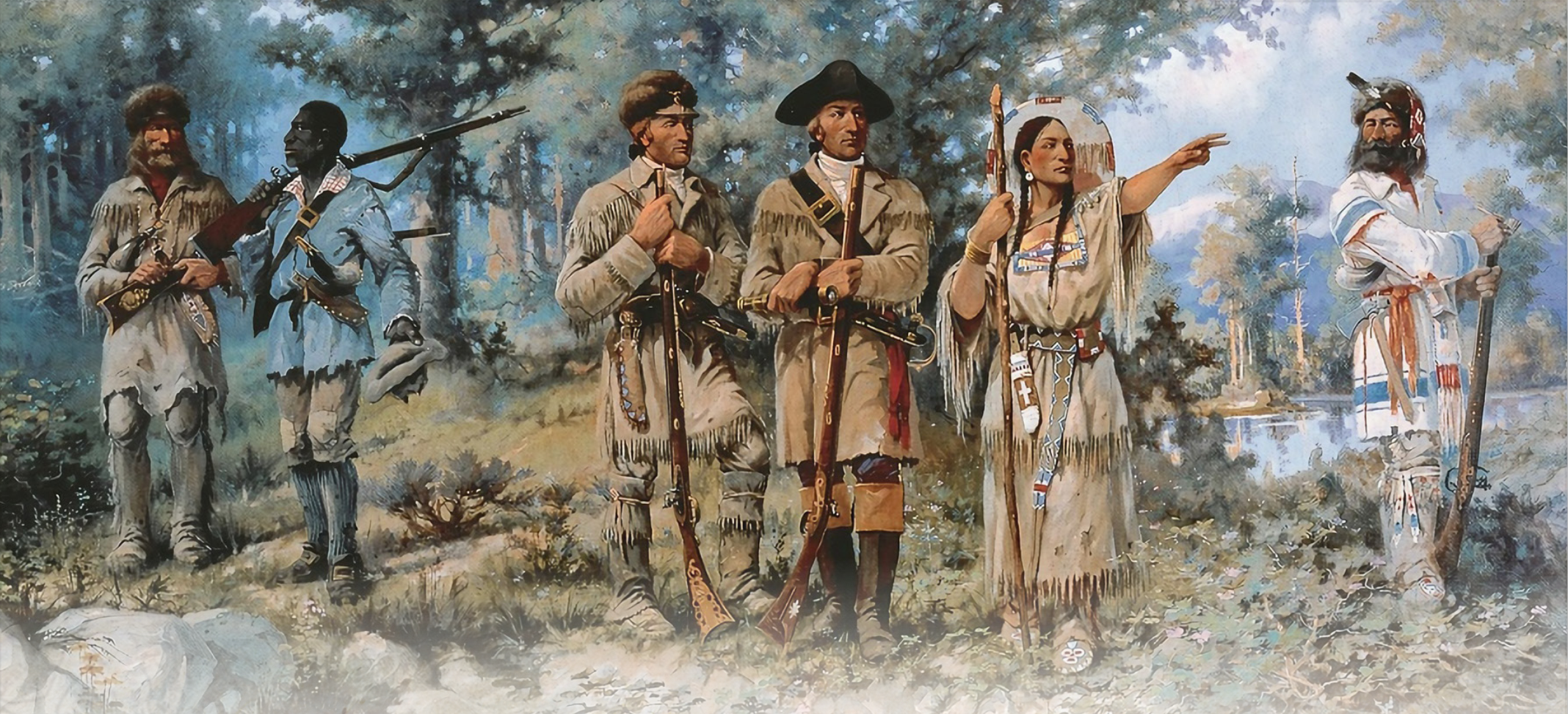
The Lewis and Clark Expedition was far more than just mapping the land. Each day of the adventure brought new discoveries, and Montana became center stage as the Corp of Discovery spent more time here than anywhere else on their 8,000-mile journey. While we know the main stories, some details of the journey may surprise you.
Dino-Hunters
While President Thomas Jefferson tasked Captains Meriwether Lewis and William A. Clark with finding a navigable route to the West Coast and cataloging flora and fauna, he was especially interested in discovering unknown species, including prehistoric ones. Jefferson, fascinated by ancient life, and an avid fossil collector, had acquired mastodon bones from a site along the Ohio River in 1792 and believed they still might roam the west.
This desire partly arose from an academic, yet intense, feud with renowned French naturalist, Georges-Louis Leclerc, Comte de Buffon. Buffon claimed America was too cold and wet to produce anything of worth, including the landscape, animals, and people. Jefferson found this insulting and sought to prove Buffon wrong, hoping the Corps would find living mastodons or other evidence of prehistoric creatures.
While the Expedition members were not able to capture a mastodon, they made notable fossil discoveries. In South Dakota, Sargeant Patrick Gass found what appeared to be fish remains, which were later identified as those of a plesiosaur; an ancient reptile resembling a crocodile.
Along the Yellowstone River, six or seven miles below Pompey’s Pillar, the team pried a three-foot-long fossilized rib from a cliff. Experts now believe this may have been from a Triceratops, or Tyrannosaurus Rex. Unfortunately, the fossils were lost when the boat they were in tipped on the Mississippi during their return.
White Bears
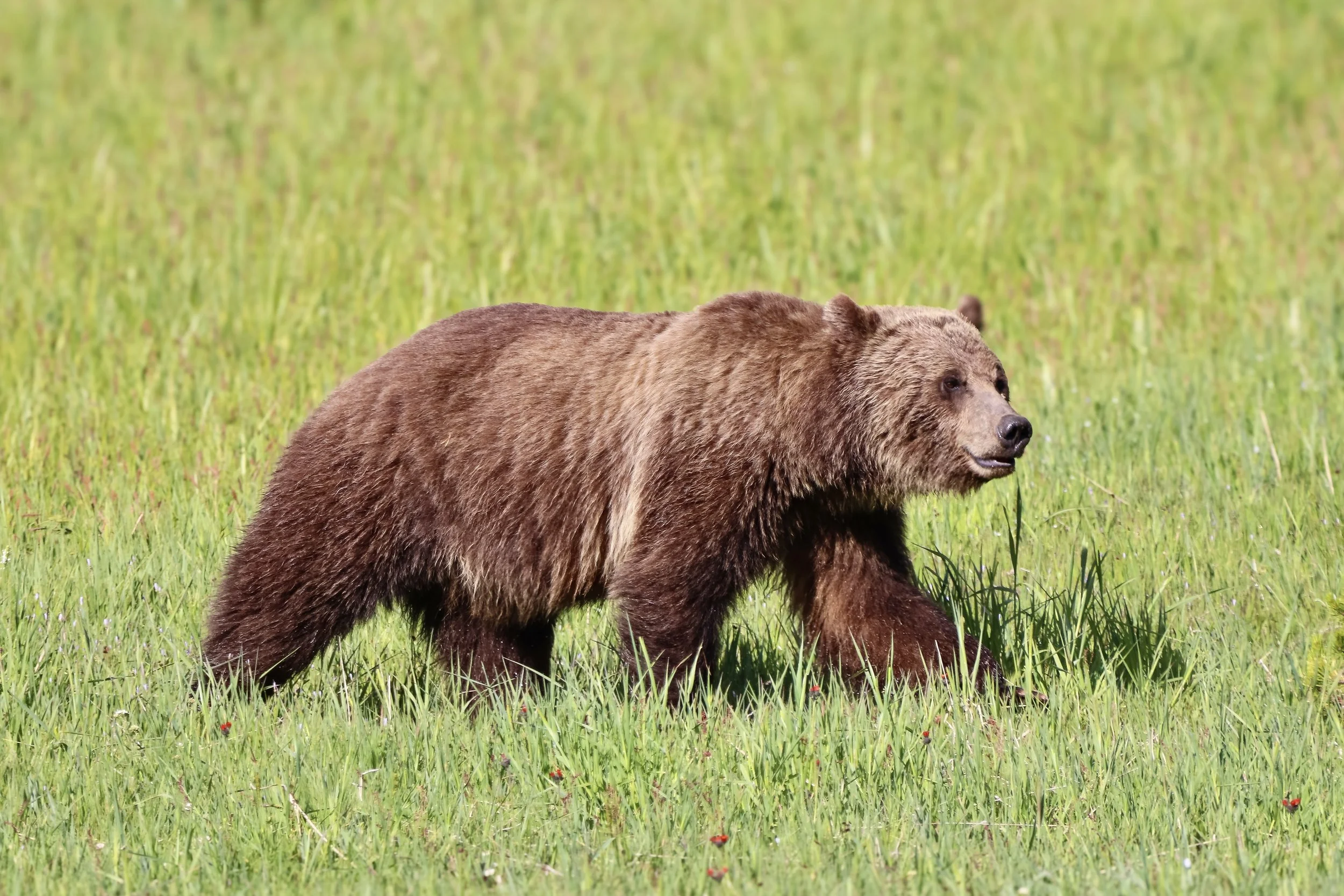
While the Corps spent the winter at Fort Mandan, North Dakota in 1804, the Mandan people warned Expedition members of the “great white bear” that dominated the eastern plains ahead of them. Captain Lewis noted that the Mandans "give a very formidable account of the streng[t]h and ferocity of this anamal, which they never dare to attack but in parties of six eight or ten persons; and are even then frequently defeated with the loss of one or more of their party.”
It is not hard to imagine the trepidation they felt when, in the spring of 1805, two days after crossing into Montana, they encountered a pair of grizzlies near what is now Culbertson. They didn’t wait for a confrontation and immediately shot and wounded one bear and killed the second. Captain Lewis wrote that it was a juvenile male weighing approximately 300 pounds and it was much more formidable than a black bear.
But he was not impressed. "The Indians may well fear this animal, equipped as they generally are with their bows and arrows or indifferent fuzees, but in the hands of skillful riflemen they are by no means as formidable or dangerous as they have been represented." He recanted those words a week later.
On May 5 near present-day Wolf Point, Captain Clark and George Droulliard killed a “tremendious looking animal”that impressed the captain by taking 10 shots and not dying immediately. This bear was estimated to be 500 pounds, and the hide was so heavy that it took three men to carry it.
After several more harrowing encounters, the grizzlies earned their respect as Captain Lewis wrote, “these bear being so hard to die reather intimedates us all; I must confess that I do not like the gentlemen and had reather fight two Indians than one bear.”
On June 14, the day after the Expedition discovered the Great Falls of the Missouri, Captain Lewis was scouting the river to locate the other falls and shot a bison near what is now Riverside Park. Engaged with the hunt and waiting with an emptied rifle for the bison to die, he didn’t notice a grizzly 20 paces away. With no rifle and no trees, Lewis ran for the river, thinking that if he could make it in deep enough, the bear would also have to swim, giving him a chance to fight with his espantoon, a type of spear he was carrying. He bolted 80 yards with the grizzly in hot pursuit, but thankfully, after he made it to waist-deep water and turned around, the grizzly paced along the shore, just 20 feet away, then left.
As the corps labored to portage around the Falls, they learned that the entire region was prime grizzly feeding ground due to the washed-up carcasses from bison that lost their footing while crossing the Missouri and were swept over the falls. For safety, the captains enacted a rule that no one was to be out alone. Of the 103 grizzly encounters, 88 were within Montana, making these experiences an indelible part of the journey.
Bighorn Sheep
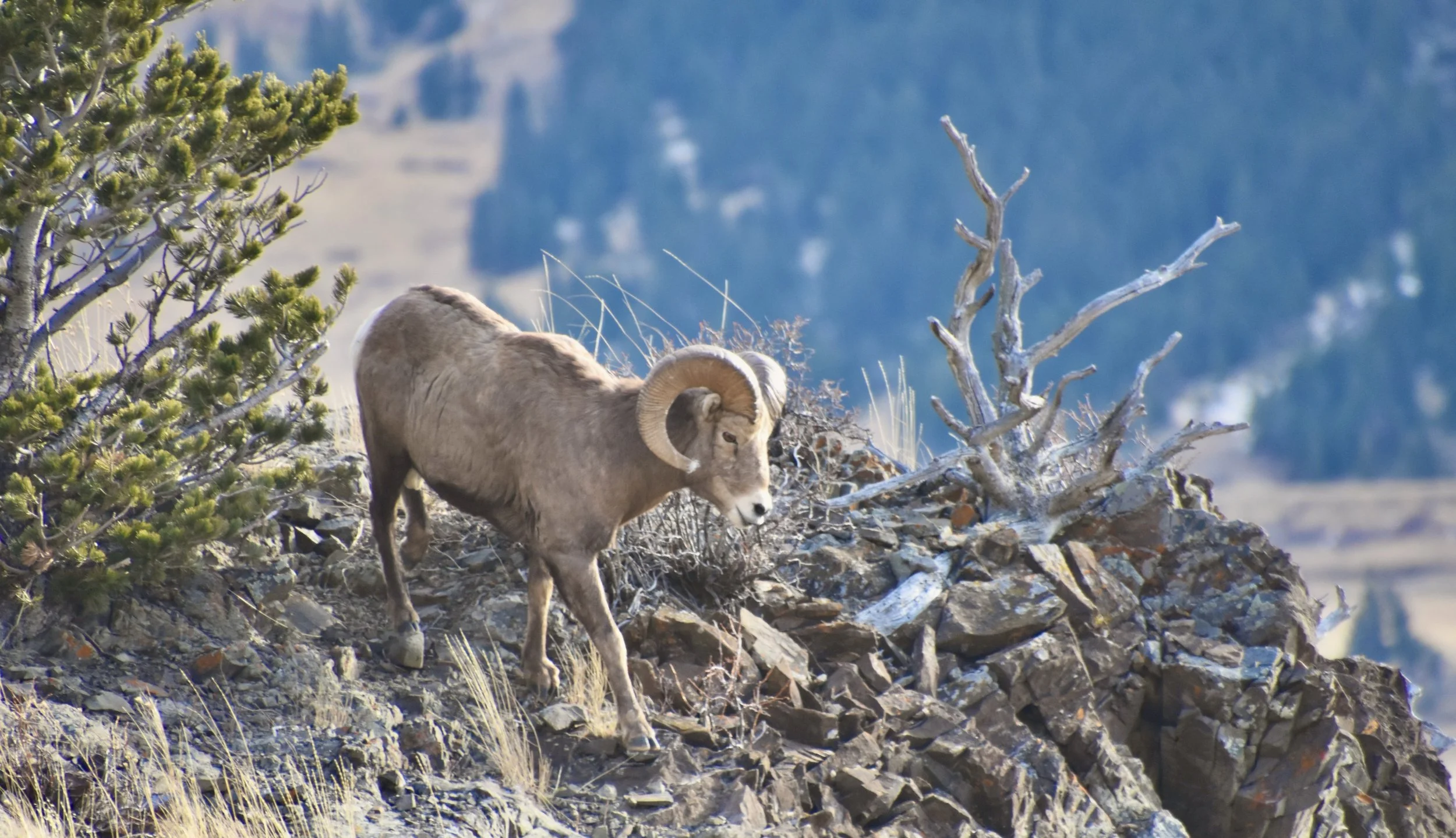
Members of the Expedition most likely knew of bighorn sheep from second-hand information from early fur traders, but Sacajawea already recognized these majestic animals from her Shoshone homeland. On April 29, 1805, the group made a key discovery and recorded sighting the species for the first time.
Sargeant Gass records that they saw the sheep on high bluffs above the Missouri and tried to kill some, but were unsuccessful. Two days later, they spotted more along the cliffs above the river, and Clark noted, “Those animals run & Skiped about with great ease on this declivity & appeared to prefur it to the leavel bottom or plain.”
The group shot the first specimen of these “rock mountain sheep,” as they initially called them in the Missouri Breaks, roughly five miles upstream of the White Cliffs, near present day James Kipp. Throughout the journey, hunters killed thirty-five bighorns, including one that rolled downhill to them on Captain Clark's birthday, providing an excellent meal for the celebration.
Coyote
On May 5 near Wolf Point, Captain Clark recorded a significant first: he shot a “Prarie Wollf, about the Size of a gray fox bushey tail head & ear like a wolf”, now known as the coyote. This was the first documented encounter with the species. Coyotes were native to the Great Plains and western range of the continent, not the east, so this was their first look at one.
Other coyote sightings were rare during the expedition, because wolves effectively displaced coyotes in the landscape. With ample bison, the wolves thrived, but coyotes were scarce.
Swift Fox
On July 6, 1805, near Great Falls, the Expedition encountered a notable new species, a diminutive fox with long claws and a black-tipped tail, now known as the swift fox. Lewis described it in detail after one was shot two days later, though its novelty was only realized later. The swift fox thrived on the Plains, feeding on bison carcasses and living in prairie dog colonies.
Bushy-Tailed Woodrats
Though not as iconic as bighorn sheep or grizzlies, the Expedition made the first documented discovery of the bushy-tailed woodrat near Great Falls on July 2, 1805. Fondly known as the packrat, it was captured and described by Captain Lewis, who noted both its physical features and abundant food caches in trees and rocks.
Cutthroat Trout
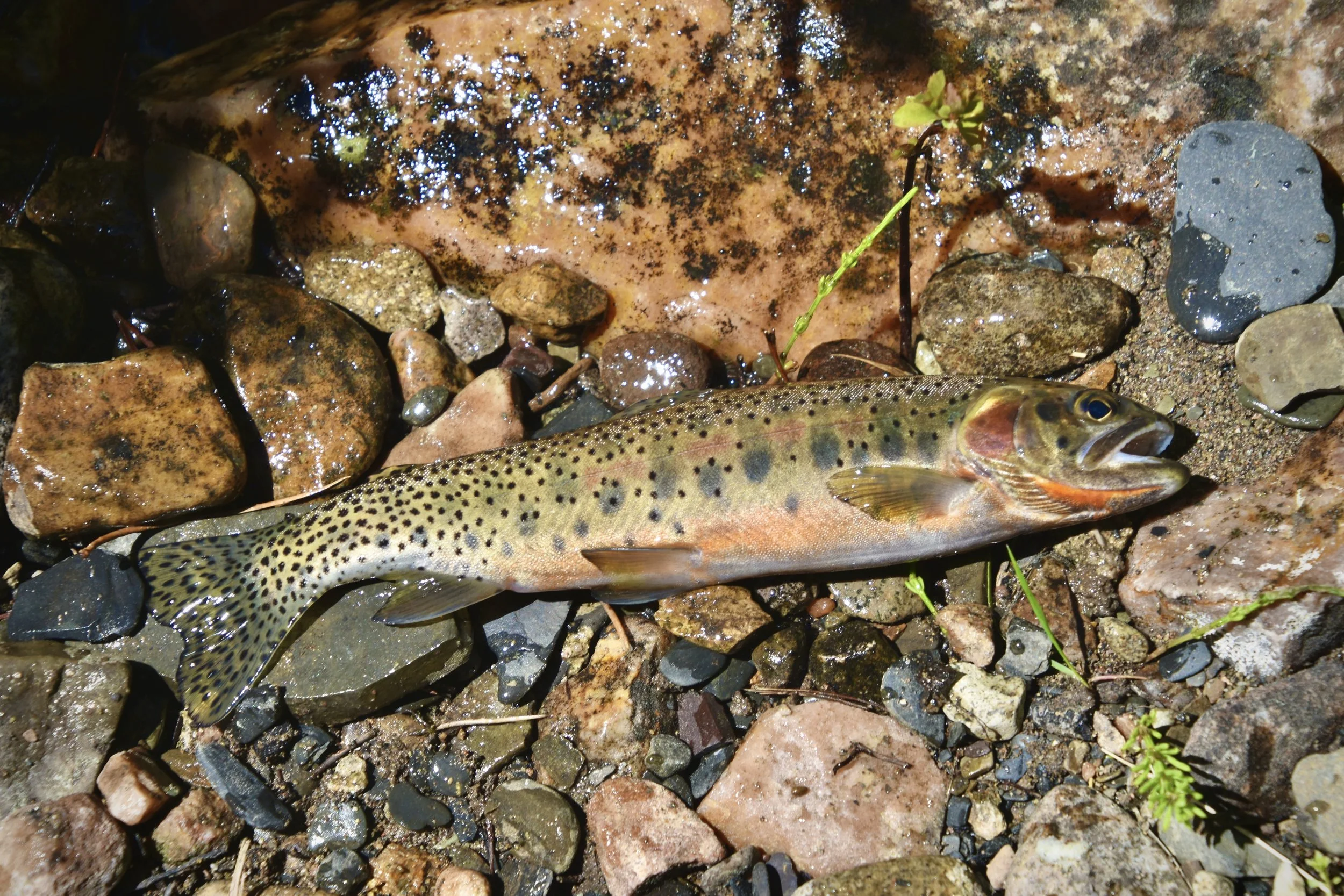
Cutthroat trout, first recorded by the Expedition on June 15, 1805, when Private Silas Goodrich caught six at the Great Falls. Additionally, new species like sauger and goldeyes were found in the Missouri River between the Marias River and Great Falls—fish that seemed familiar to Lewis but were later recognized as a new species.
Plant Life
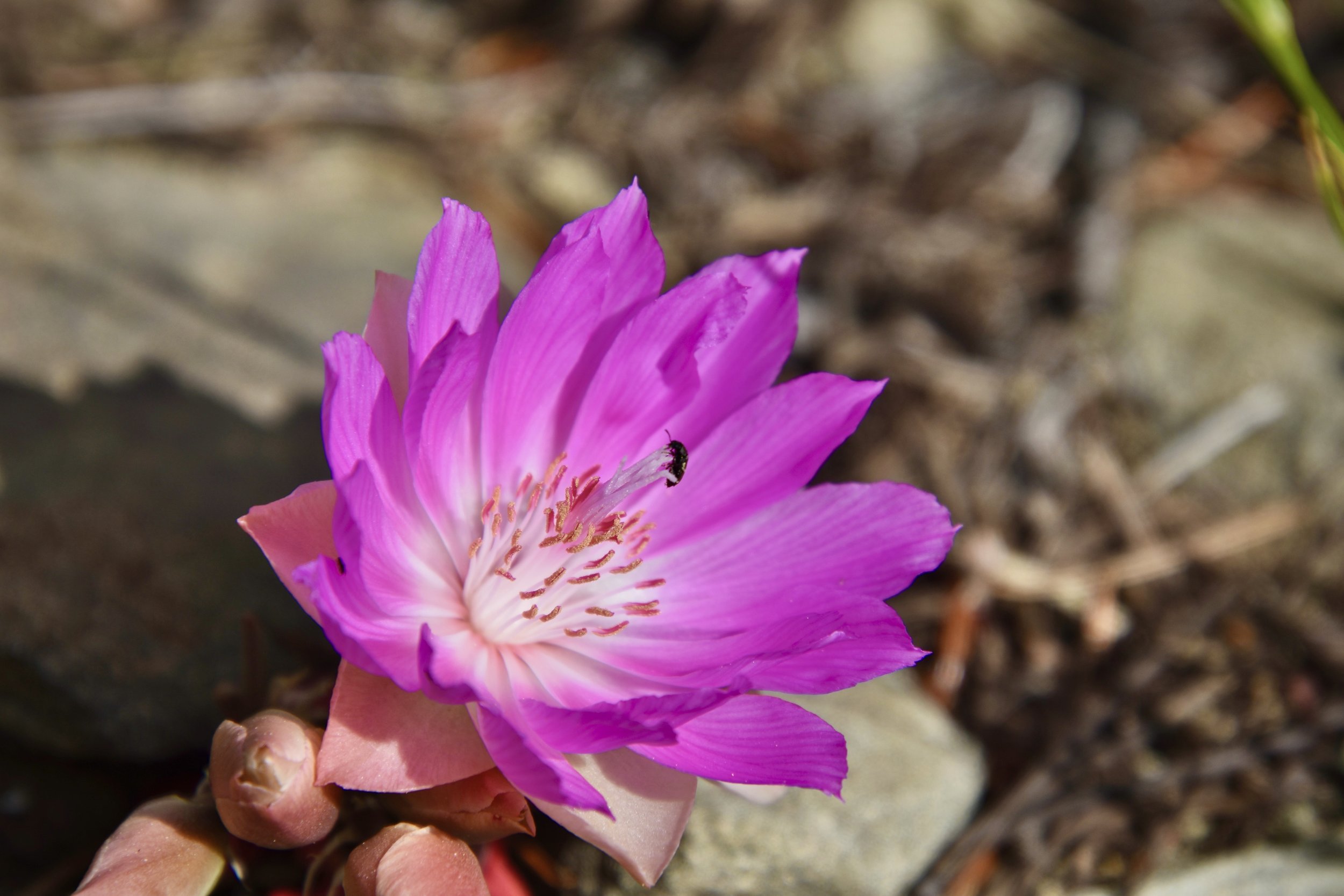
Of the 260 plants described in Captain Lewis’ journals, it’s estimated that 30 species discovered in Montana were new to science. The most famous among these is the bitterroot flower (Lewisia rediviva), named for Captain Lewis. It later became Montana's state flower. Other notable plants include the vibrant arrowleaf balsamroot, western serviceberry, and golden currant.
One of the greatest tragedies of the trip was when the Corps built a cache on White Bear Islands near Great Falls, where they stored at least 200 of their plant specimens, along with other artifacts. Everything was destroyed the following year by floodwaters.
Birds
The Expedition identified several bird species in Montana for the first time, including sage grouse at the mouth of the Marias River and along the Missouri. They also took special note of the melodious meadowlark near Great Falls, later adopted as our state bird.
Each of these discoveries marks a first for the Lewis and Clark Expedition, and Montana’s landscape remains central to many of them.