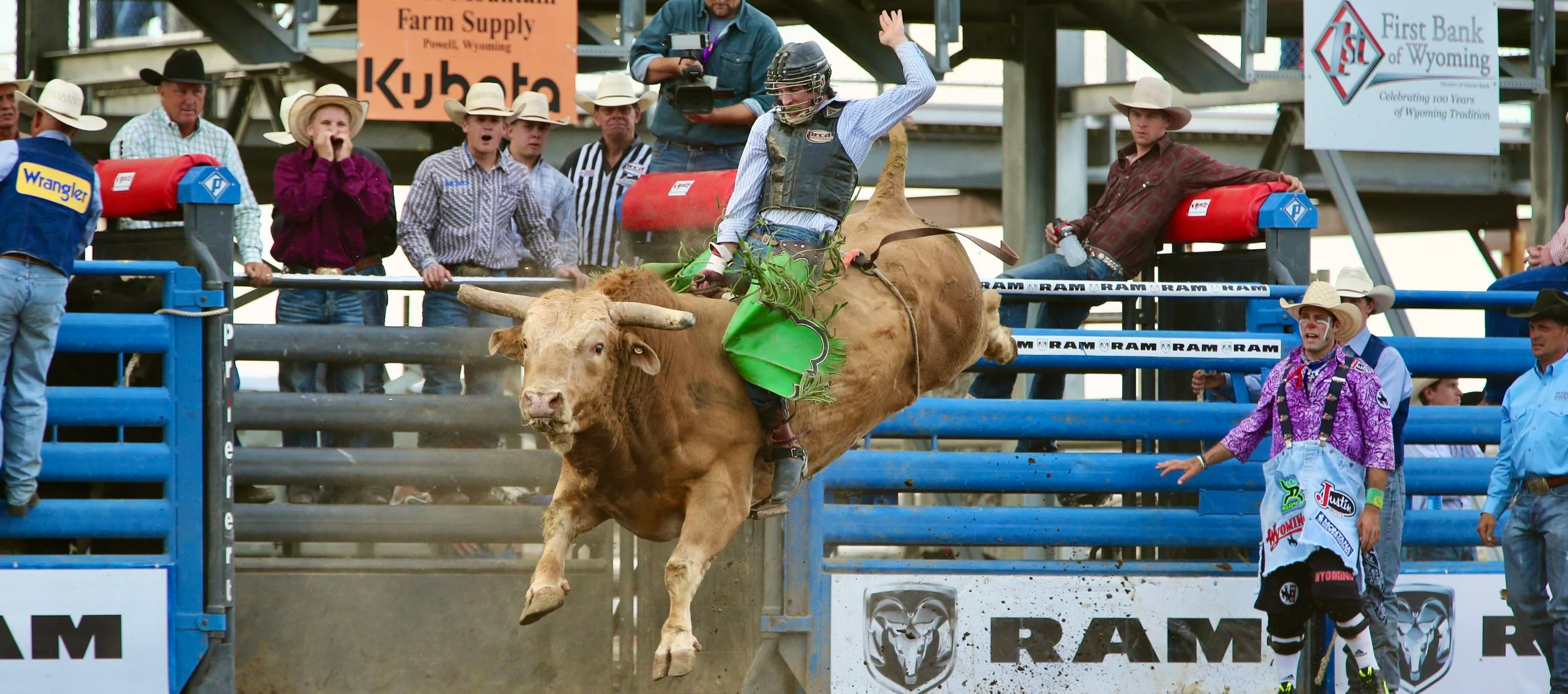
The Spirit of Stampede Park
How Cody Became Rodeo Capital of the World
Cody, Wyoming
Written and Photographed by Jane Gilvary
Summer Issue - 2026
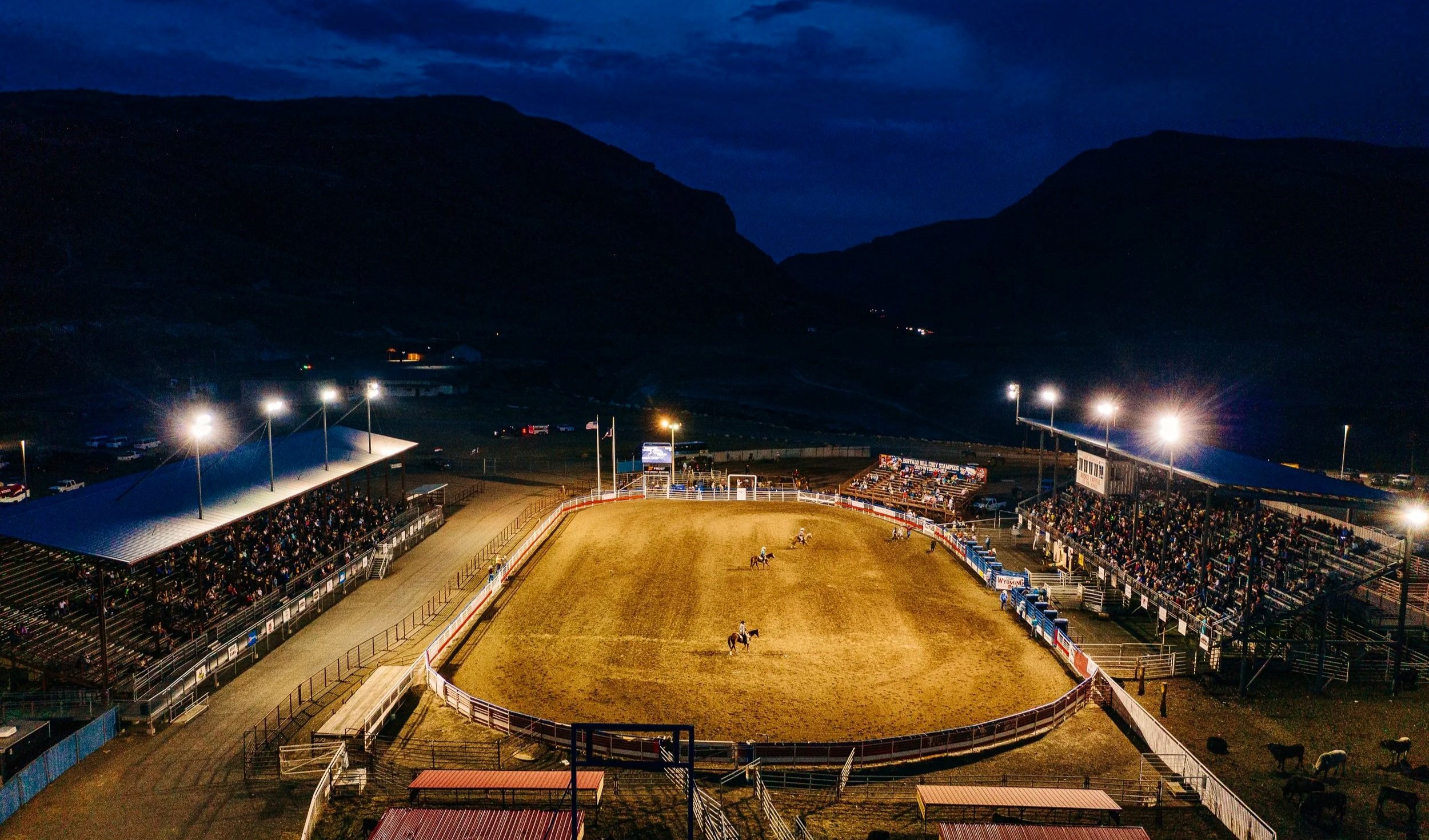
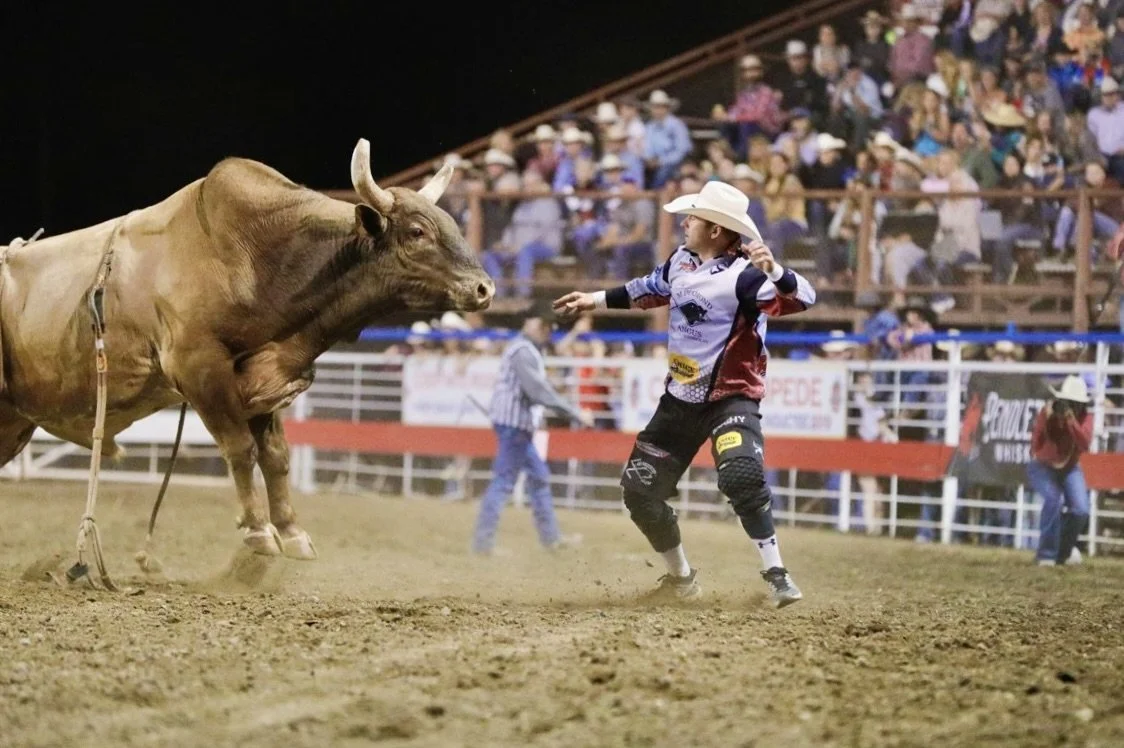
It's summer in Cody, Wyoming and the sun has begun its slow, arcing dip behind Rattlesnake Mountain. Dusk has surrendered to the bright stadium lights at Stampede Park and the familiar smell of fried dough and popcorn wafts through the crisp mountain air. Dust clouds rise in the back pens and chutes as the cowboys prepare the horses and bulls for another night of competition. An electric excitement fills the air as rodeo clowns pose near the ticket booths for photos and stoke the crowds. It's a Chris LeDoux song come to life, a cowboy-style religious awakening.
Welcome to the Rodeo Capital of the World—the only place in America that rodeos every night, all summer long. And it all began over one hundred years ago with a man named William F. Cody.
Colonel Cody, also affectionately known as Buffalo Bill, founded Cody, Wyoming in 1896, but years before this he enthralled America and the world with an early iteration of rodeo entertainment: his traveling Wild West Show. While not a traditional rodeo in the modern sense, the Wild West Show featured all manner of cowboy competitions such as bronc riding, roping, and trick riding. Cody held auditions for the show in the lot behind his now historic Irma Hotel, still located on Sheridan Avenue in downtown Cody.
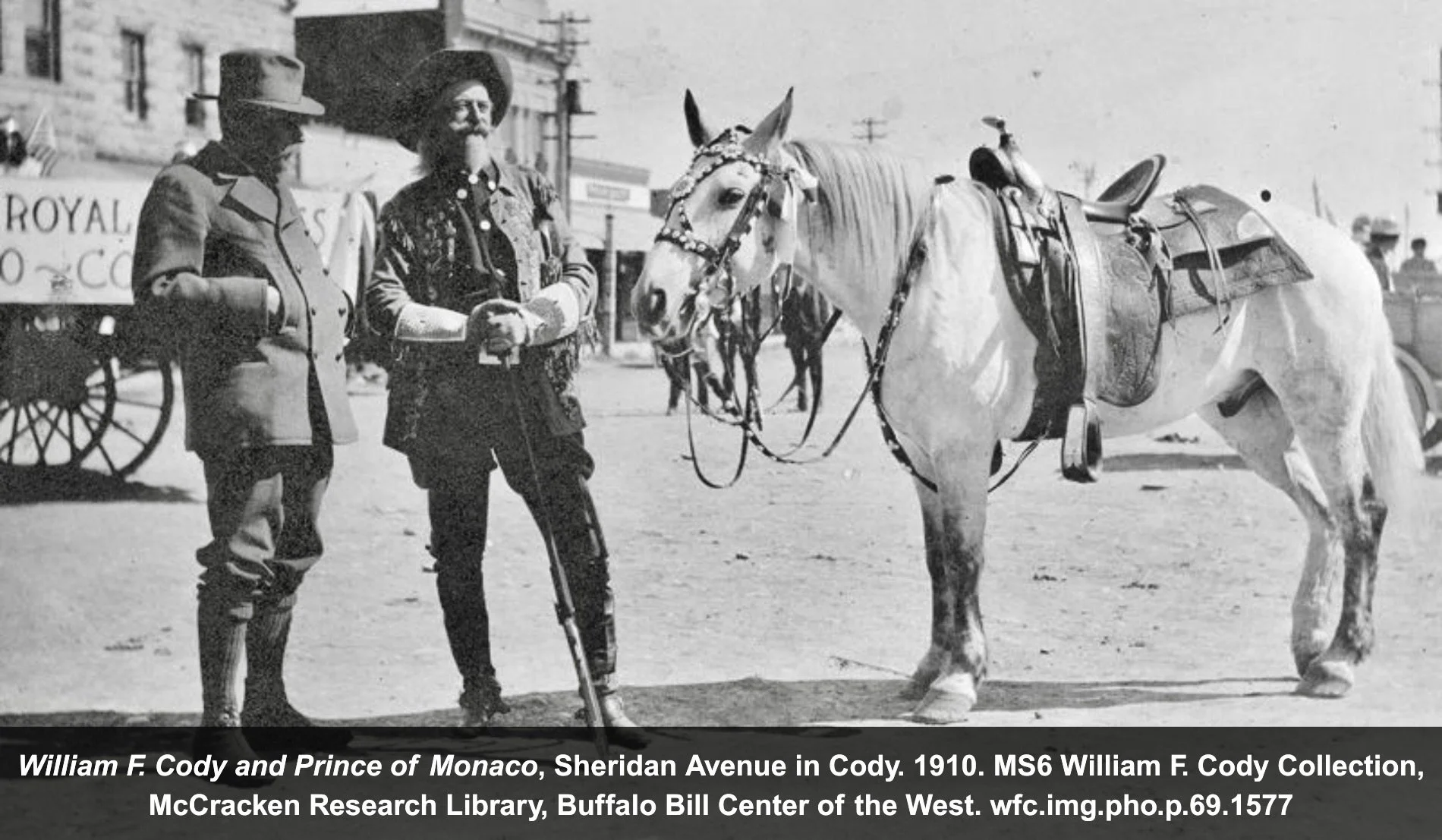
Then in 1913, Colonel Cody hosted the Prince of Monaco at the Park County Fair, a sort of precursor to the first Cody Stampede. Cody had invited some of the best riders in the world to showcase what the late Jeremy Johnston, former curator of the Buffalo Bill Museum at the Center of the West termed "the then-emerging global popularity of the American Cowboy." Johnston also noted that Colonel Cody and the Prince "enjoyed a grand review of Wild West riders led by arena director Johnny Baker, followed by horse racing and bucking contests." The event even included Chief Plenty Coups of the Crow Nation leading a parade of Indians, accompanied by performers from Buffalo Bill's internationally renowned Wild West Show.
After Buffalo Bill's death in 1917, local businessmen and civic leaders sought to honor Cody by preserving the spirit of the West that he had so passionately cultivated over the years. That spirit is alive and well thanks to Mr. Clarence Williams, a former stagecoach driver on the route from Cody to Yellowstone National Park. Williams organized the first rodeo, shrewdly timed to coincide with the first ever opening of Yellowstone's East Gate to automobiles on June 23, 1919.
Mentioned in many historical accounts as a "local booster," Williams sought to enshrine Colonel Cody's legacy after his death and safeguard the cowboy way of life that Cody so earnestly espoused. The "Entrance Day Rodeo," a three-day event that included rodeo clowns, Crow Indian dancers, horse races, and bucking horse competitions, marked the beginning of the rodeo in Cody, Wyoming.
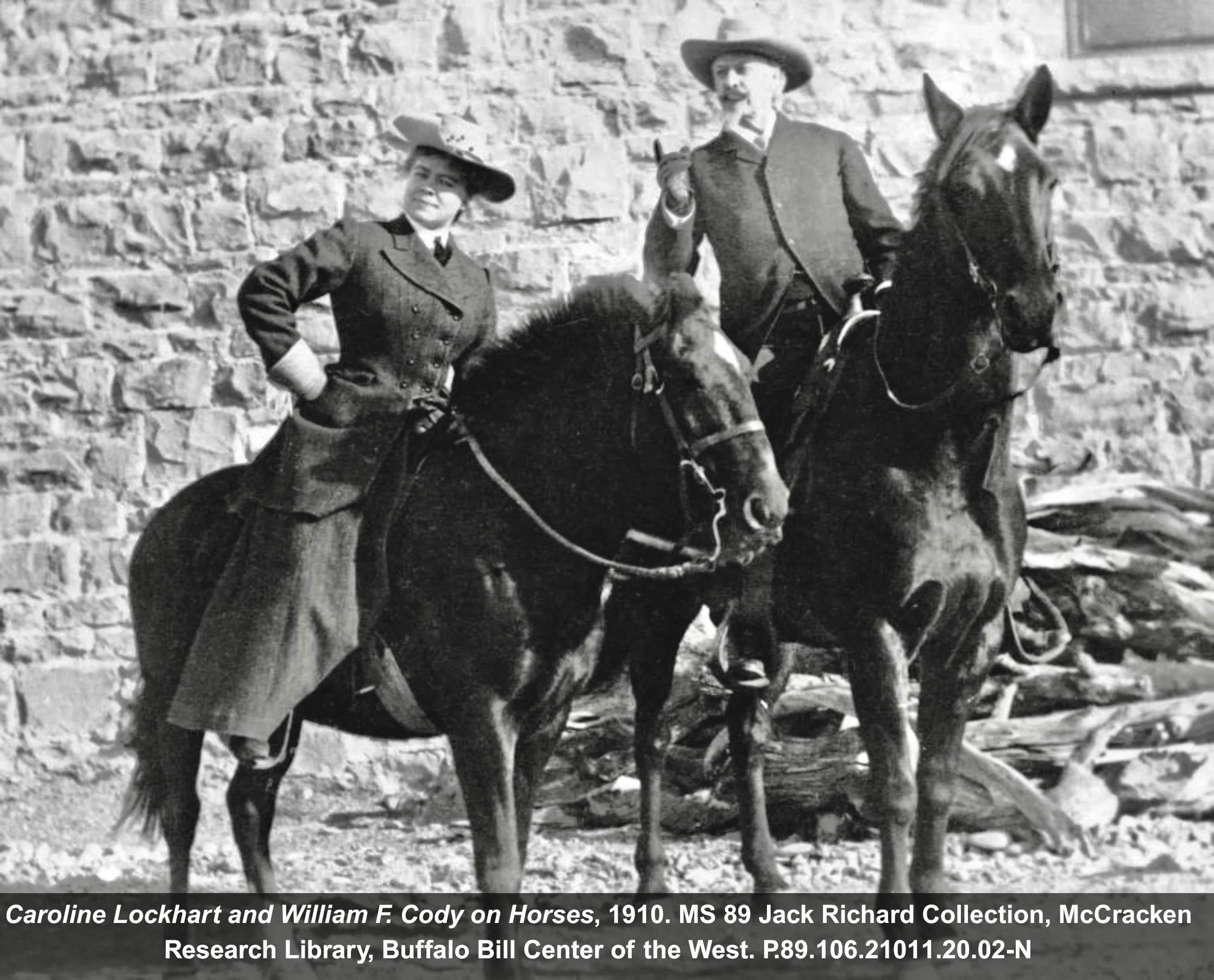
A year later, Caroline Lockhart, local western author, rancher, and publisher of the Cody Enterprise desired to create a larger-scale Independence Day celebration to honor western heritage, showcase local ranches, and sustain the frontier way of life.
With foresight, Lockhart foresaw the winds of progress slowly eroding western traditions and the cowboy way of life. The bellwethers—rapid railroad expansion, electricity, telephones, and the rise of the automobile—suggested that frontier culture faced imminent decline. To curb this cultural atrophy, Lockhart invited local movers and shakers to her home, planning what became the enormously popular Cody Stampede which still takes place from July 1st to July 4th, entertaining sellout crowds eager to experience the West in all its cowboy glory.
The Stampede continued to grow, and by the 1930s, its enormous popularity drew visitors from across the West over Independence Day weekend. In 1938, with many tourists passing through Cody to visit Yellowstone via the East Gate, locals and business owners recognized the economic potential of a nightly rodeo at the Stampede grounds.
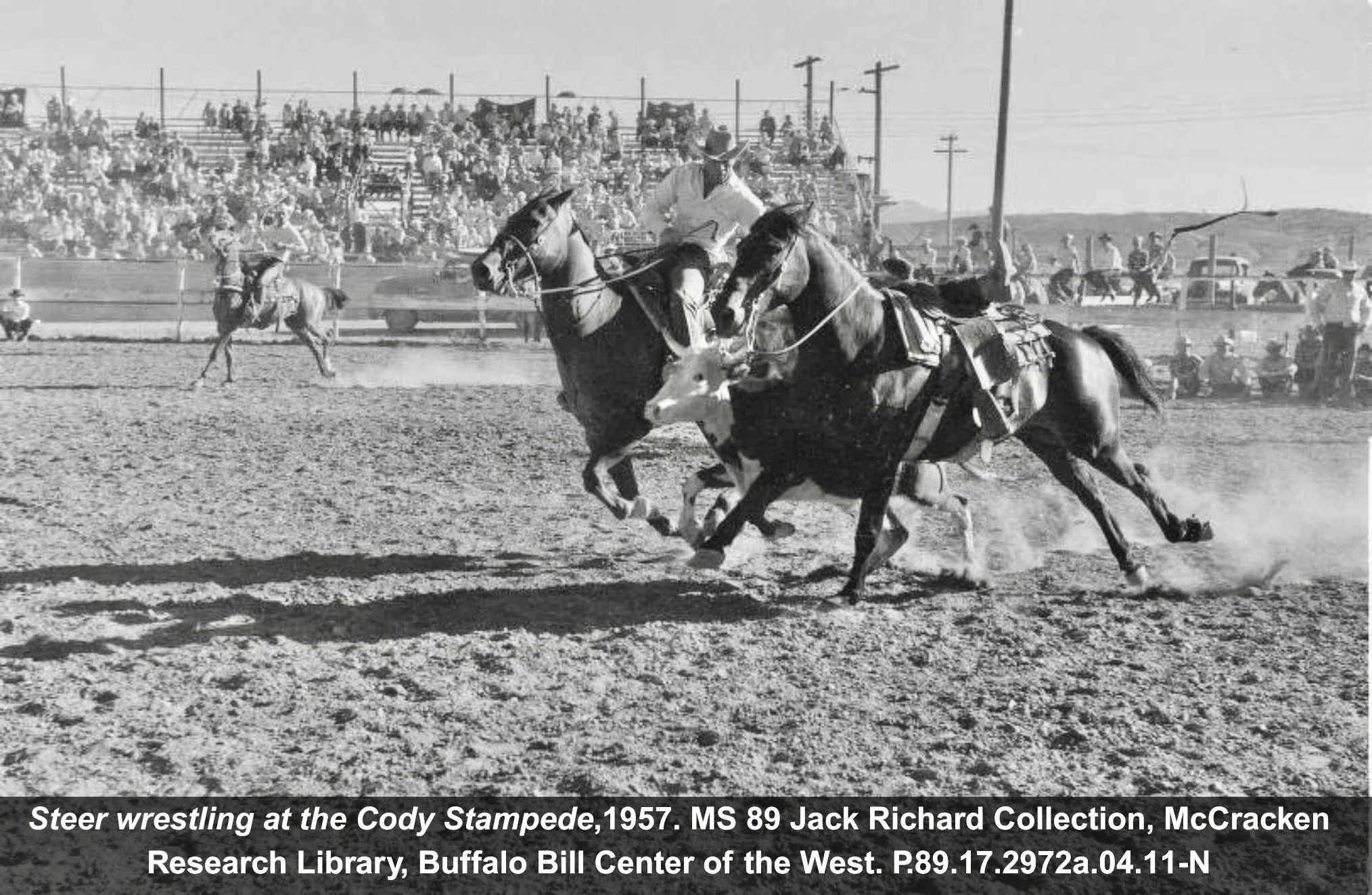
Enter Mr. Carly Downing, a former trick rider in Buffalo Bill's Wild West Show and owner of the Bobcat Ranch just outside of town. Wanting to sustain Wyoming's cowboy spirit and provide aspiring riders an opportunity to compete regularly, Downing established the nightly "Pup Rodeo." He positioned it as an amateur proving ground for the bigger, more competitive Stampede. The event's success warranted a more professional name—the Cody Nite Rodeo—coming to life each night on the banks of the Shoshone River at what would become known as Stampede Park.
Mr. Downing's vision turned dreams into reality for many famous rodeo stars who rose through the ranks at the Cody Nite Rodeo. Freckles Brown of Wheatland, Wyoming, the 1962 World Champion bull rider, cut his early cowboy teeth in Cody in the late 1930s. He later gained national recognition for riding the infamous Tornado - a bull that had tossed more than 200 professional cowboys before him - to the whistle.
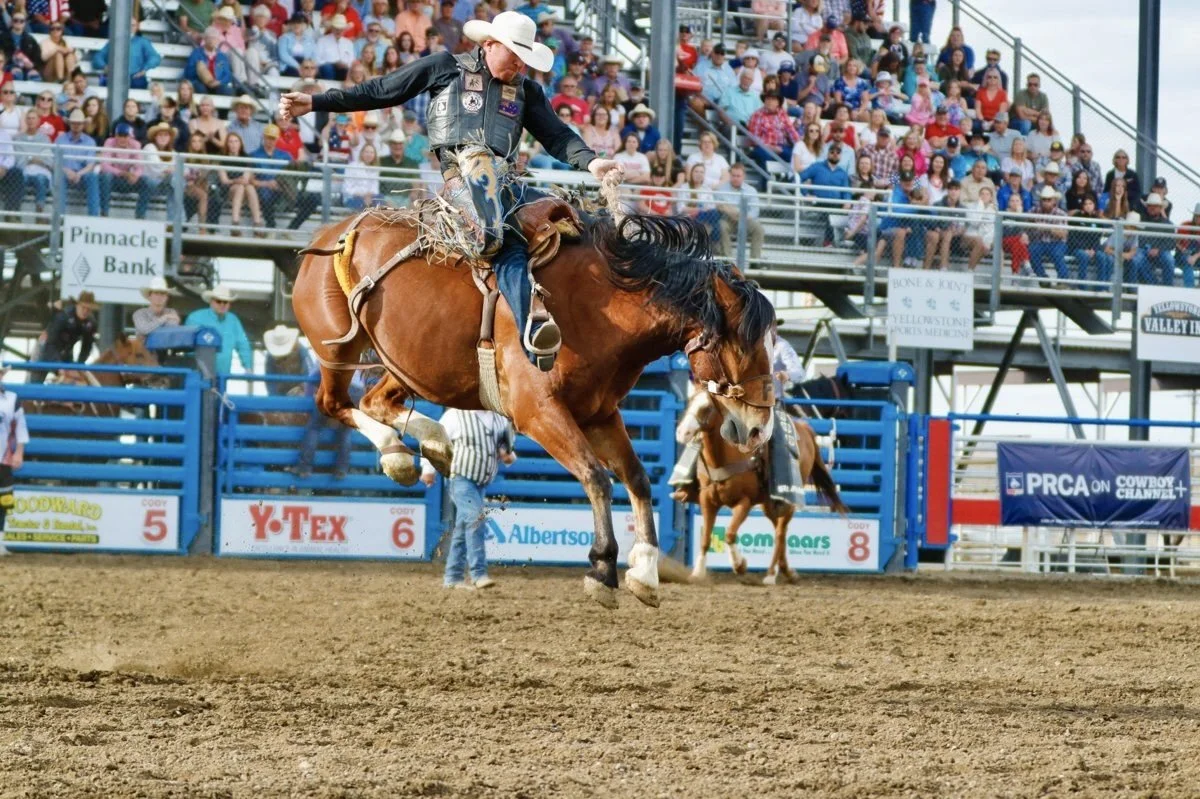
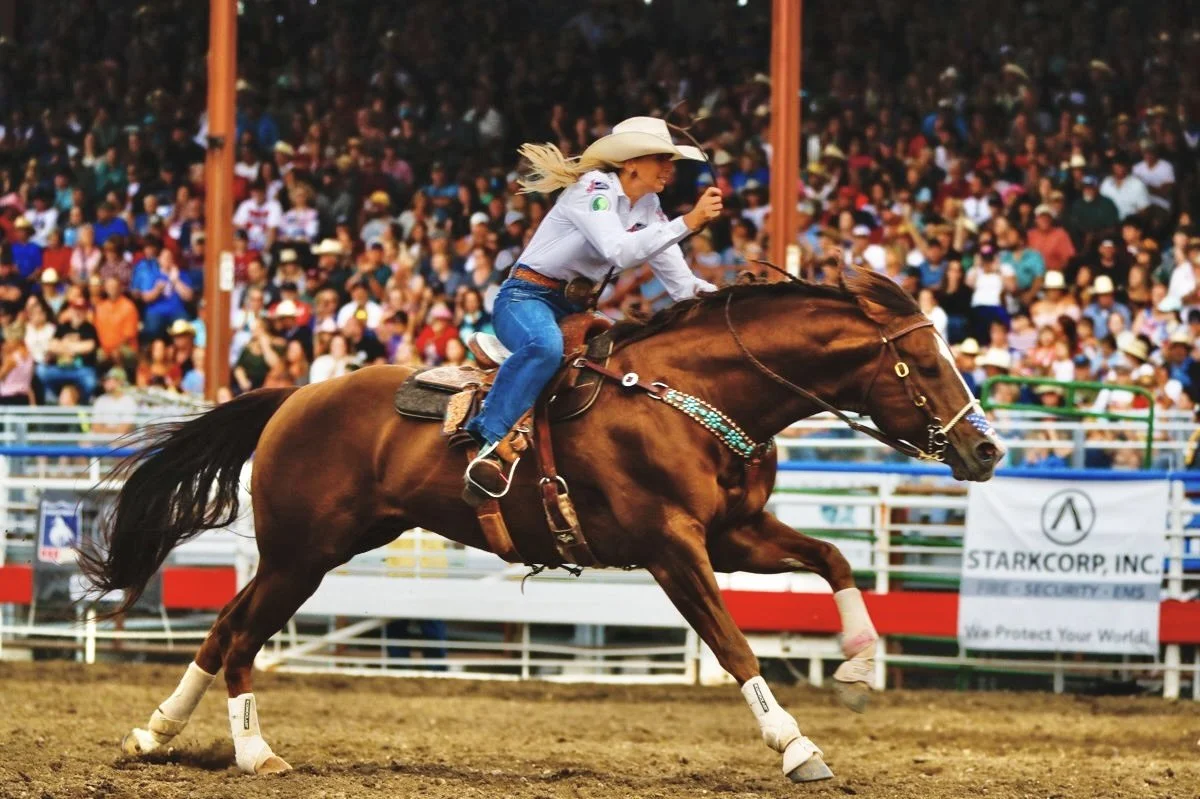
Other notable rodeo pros who competed in Cody include renowned saddle bronc champion and hall of famer "Cody Bill" Smith, and ProRodeo Hall of Fame Bareback rider Deb Greenough. These storied champions can indirectly tie their success to Carly Downing's enterprising vision of a nightly rodeo in Cody. They are among the thirty-some names in the Nite Rodeo's highly-esteemed Ring of Honor—established in 2016 to recognize Cody Nite Rodeo riders who matured into formidable rodeo professionals on the PRCA circuit.
Eighty-six years later, the Cody Nite Rodeo still draws substantial crowds from around the globe and continues to fulfill its long-time mission: providing opportunities for aspiring riders, preserving rodeo traditions, and boosting Cody's economy. The rodeo serves as a natural bridge between Buffalo Bill's early influence and the modern cowboy culture that endures in Cody today, making it the undisputed Rodeo Capital of the World.
General Manager Ed Bednarz explains how the rodeo's purpose has remained steadfast over the years, “The Cody Nite Rodeo is something this whole community takes pride in. It’s more than an event—it supports our local economy, brings people together, and gives visitors an authentic look at the western way of life here in Cody."