To Bee or Not to Bee
The Pollination Process of Native Bees Versus Honeybees
Across Montana
Written and Photographed by Amy Grisak
Spring Issue - 2026
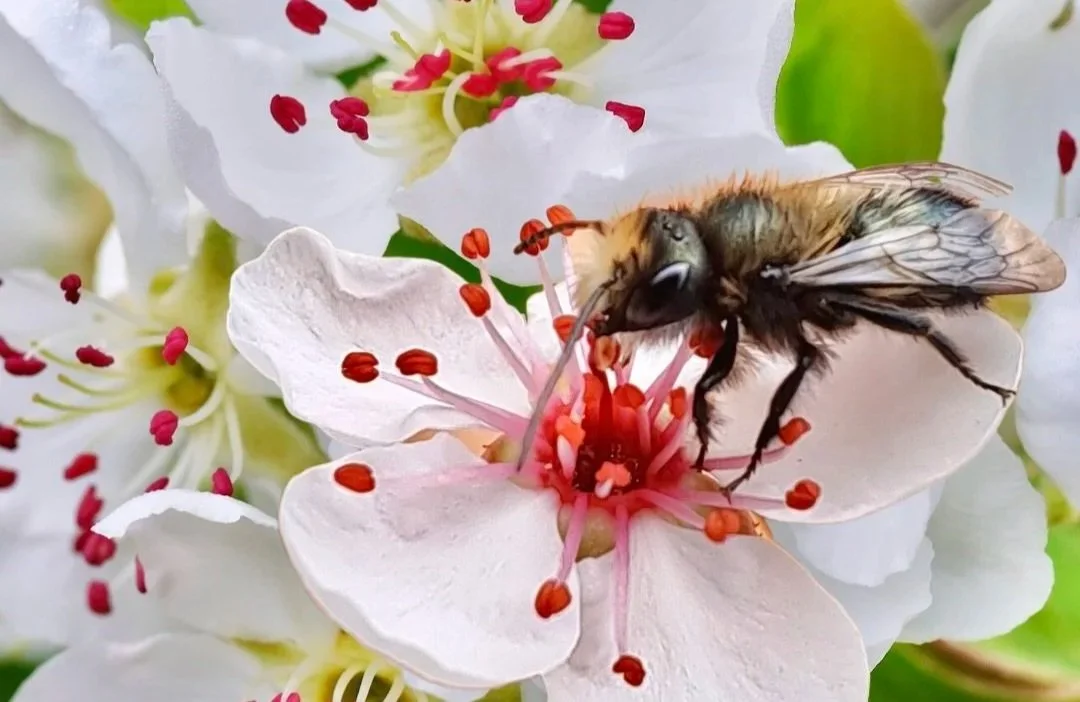
For over a decade, attention-grabbing headlines sounded the alarm about the decline of honeybee populations, implying an agricultural collapse if we didn’t have them. Yet, native fruits and vegetables have survived for over 300 years, since European settlers brought them to the New World in 1682.
According to Montana State University, North America is home to between 750 and 1,000 native bees and these perfectly adapted species have done a bang-up job of pollination for millennia. The good news is, with a little know-how, gardeners can host these gentle bees at home.
Native bees often go unnoticed. Small and shiny or big and fuzzy, species like mason bees and leafcutter bees, just to name a few, spend the season doing what they were born to do — pollinating flowers.
“Mason bees are champions in pollination,” explained Thyra McKelvie, Managing Director and Global Solitary Bee Educator at Rent Mason Bees. “They bellyflop on the flowers and are completely covered in loose pollen. Then, when they visit subsequent flowers, they pollinate each one as they go, boasting 95 percent efficiency. Three to five mason bees can pollinate an entire tree.”
They also tend to work in less-than-desirable conditions. “You’ll see mason bees out on a misty day, even if it’s cooler,” continued Thyra. “Even on chilly April mornings, it’s common to see native bees on Nanking cherry blossoms or early spring flowers, while the honeybees remain in their hives.”
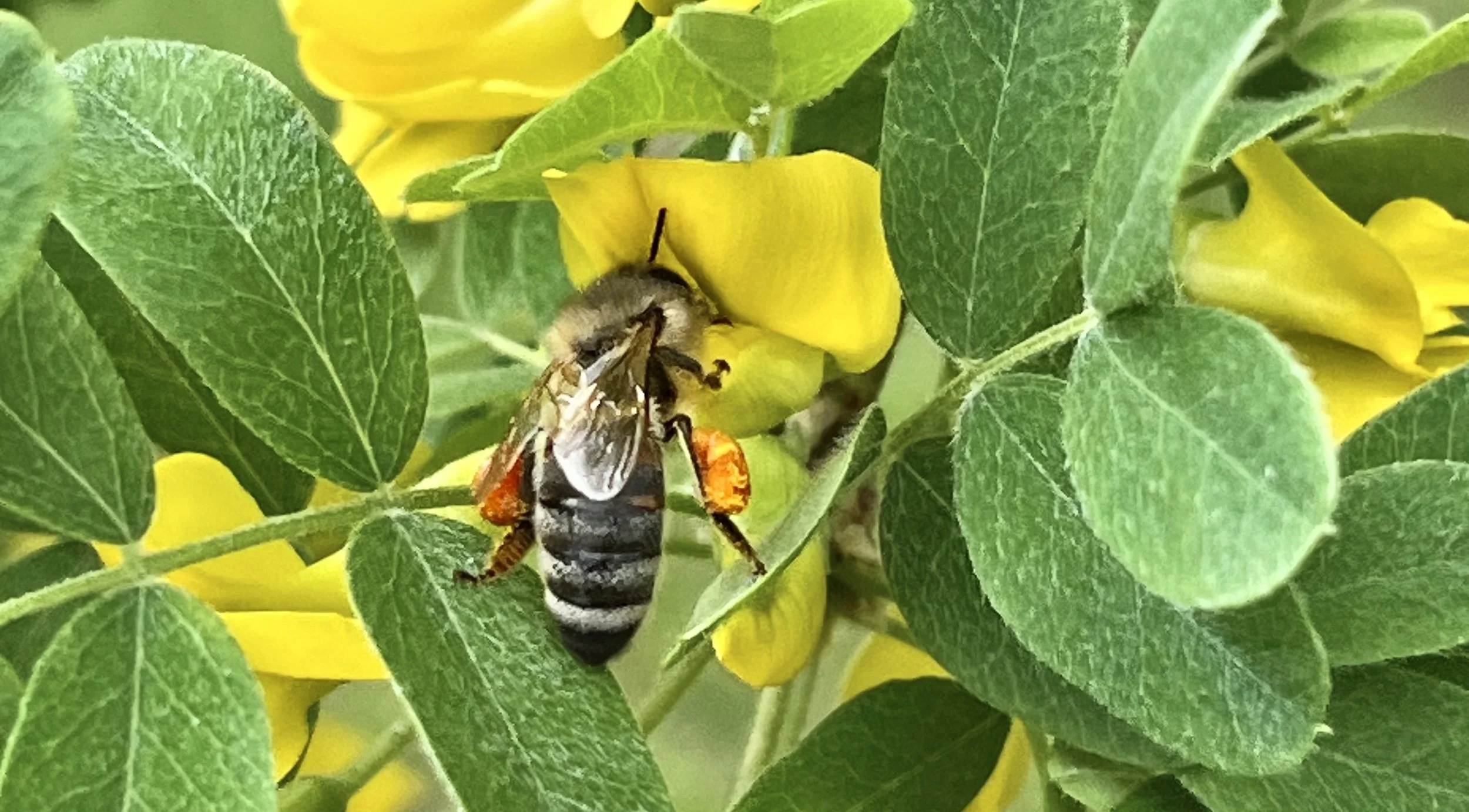
HONEYBEE WITH POLLEN SACKS ON ITS LEGS
Honeybees are not as efficient. When they visit flowers, pollen is gathered on the tidy little packets on their hind legs. As a result, not as much pollen reaches the necessary parts of the flowers. But, because of their sheer numbers, honeybees are the preferred means of commercial fruit or nut production, as upwards of 60,000 bees per hive provide a focused and efficient effort for large crops.
“However, farmers are now releasing solitary bees with their honeybees and it cuts the honeybees work in half,” Thyra said. “And not as many (honeybee) hives are needed.”
To survive, the honeybee colony must protect the queen and its honey stores. For mason and leafcutter bees, two popular solitary native bees, there is no hive to defend. The female native bee lays up to 15 eggs during her short lifespan. As a result, they exhibit no aggression, making them ideal backyard pollinators.
“Male bees do not have stingers at all,” noted Thyra. “And solitary bees do not have anaphylactic venom. Think of it like a rose bush with thorns. Solitary bees simply have small “pokers” used for protection.”
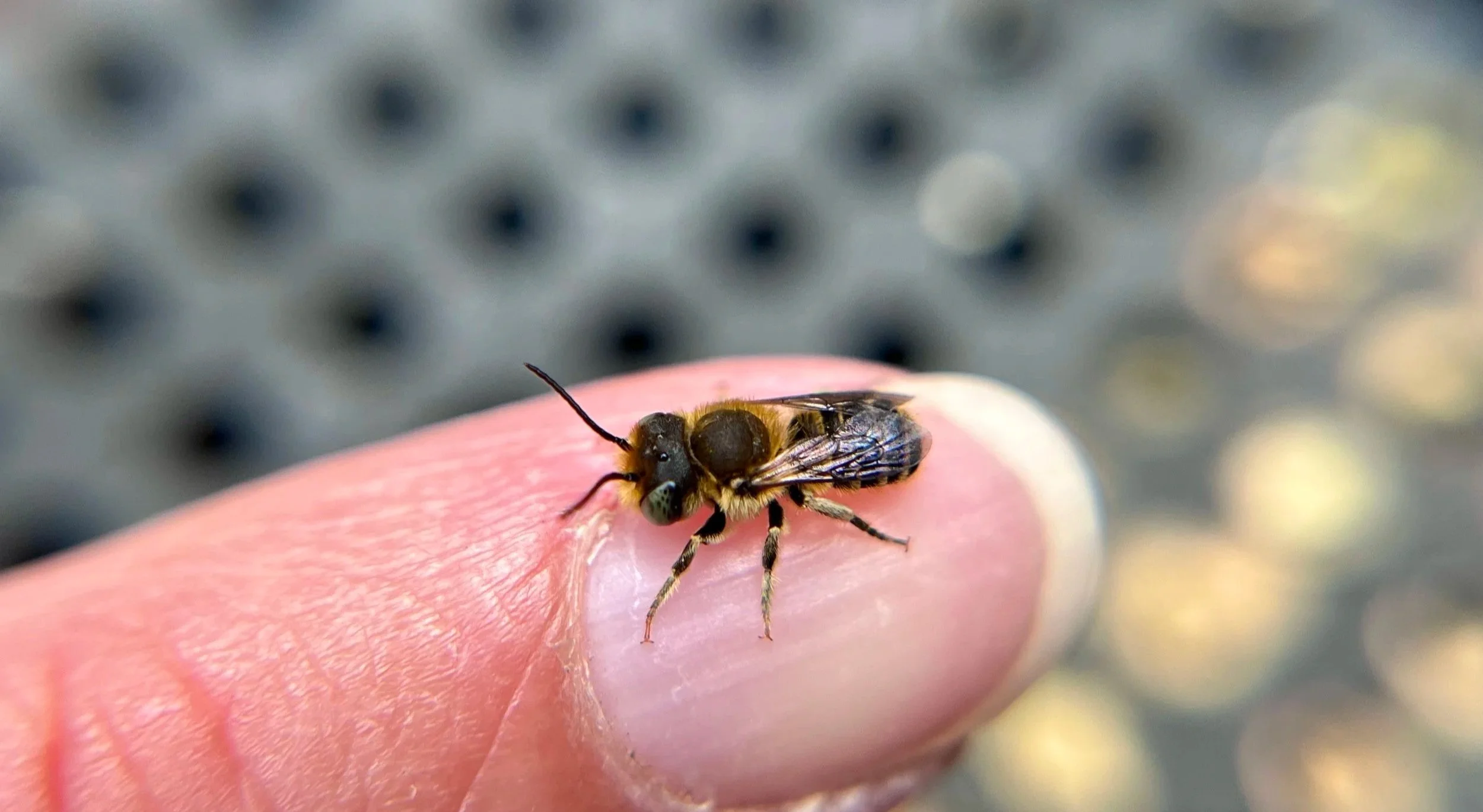
TINY LEAFCUTTER BEE
Mason and leafcutter bees are the most popular solitary native bee options for people to host in their home gardens, and the standard advice is to put up a “bee box.” These boxes, which might range from three inches square to four inches by 10 inches, are usually filled with bamboo straws or made from solid blocks with holes drilled to provide nesting chambers.
Unfortunately, this setup often leaves the eggs and larvae vulnerable to predators. In nature, (the nest chambers are camouflaged making it harder for predators to find them.
“Researchers who study parasites and predators have found that nesting materials that can be opened and cleaned are essential for healthy mason bee populations,” Thyra continued.
Using cardboard tubes and stacking trays that can be easily taken apart allows the nesting chambers to be opened, cleaned, and inspected so healthy eggs and cocoons can be harvested in the fall after the female has finished nesting. Once collected, they are refrigerated to keep them in hibernation until they are released outdoors the following spring.
Mason bees are early-spring pollinators, emerging when temperatures are above 55 degrees and are often seen on Nanking cherries, apple trees, strawberries, and honeyberries.
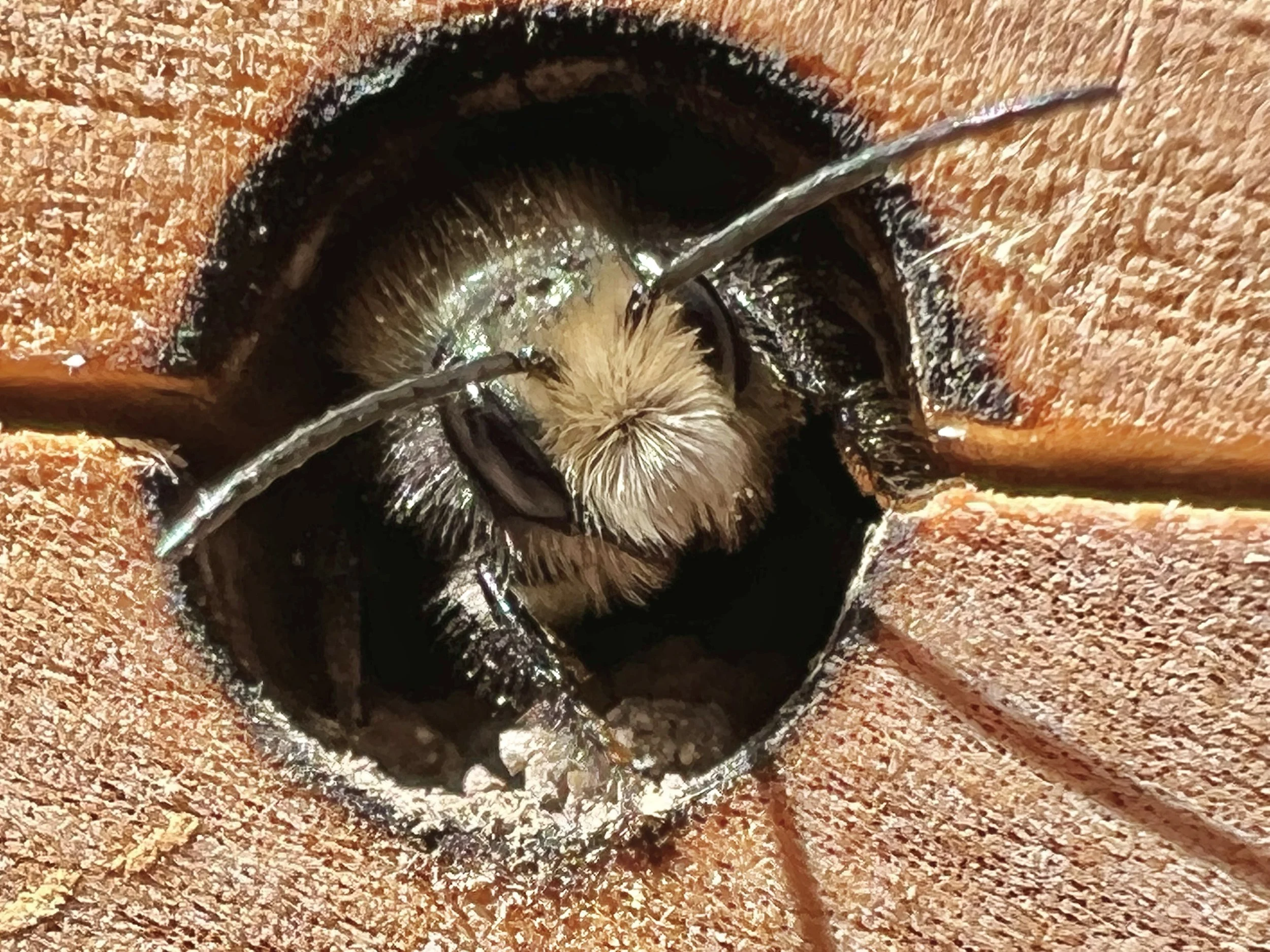
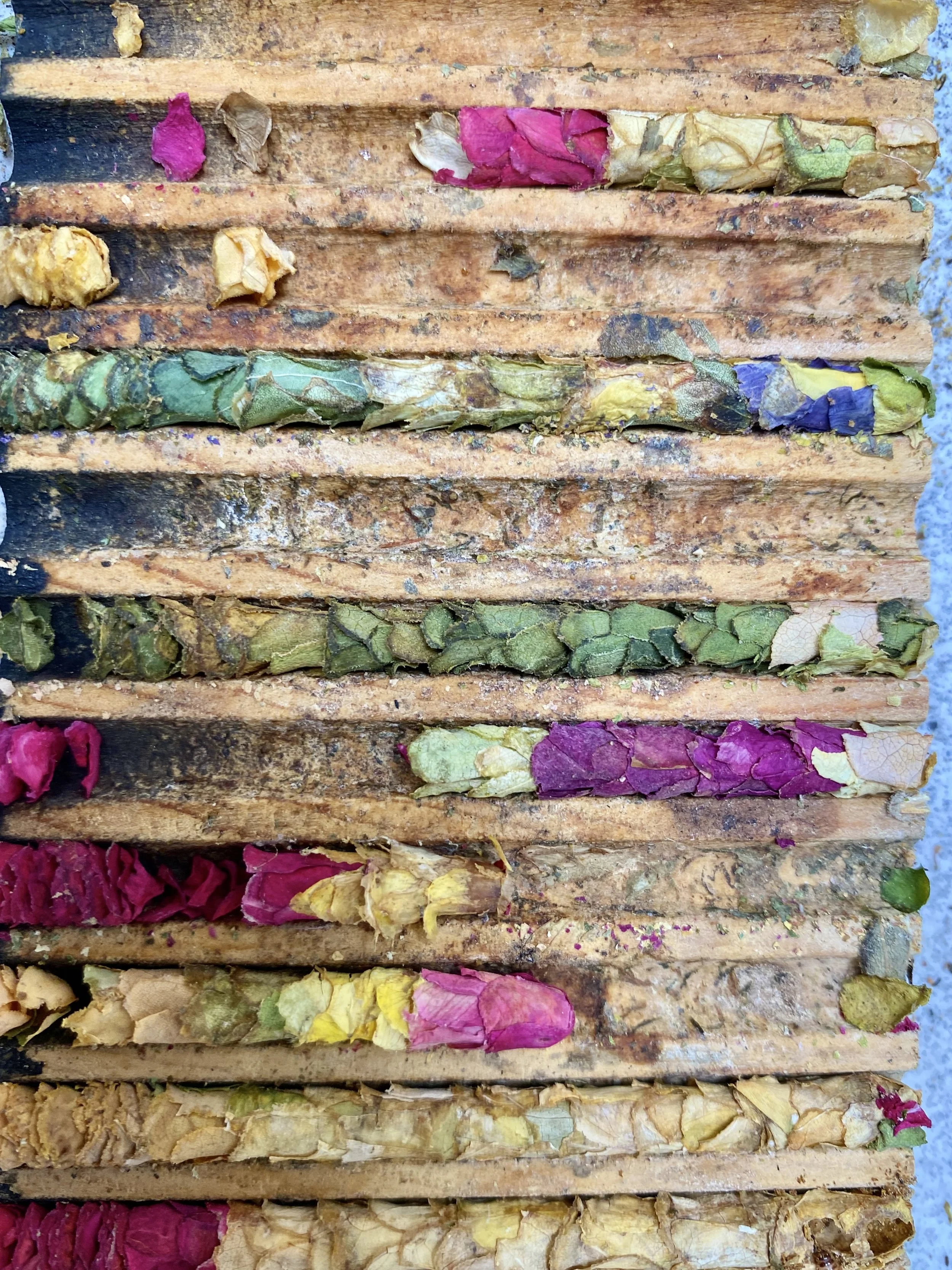
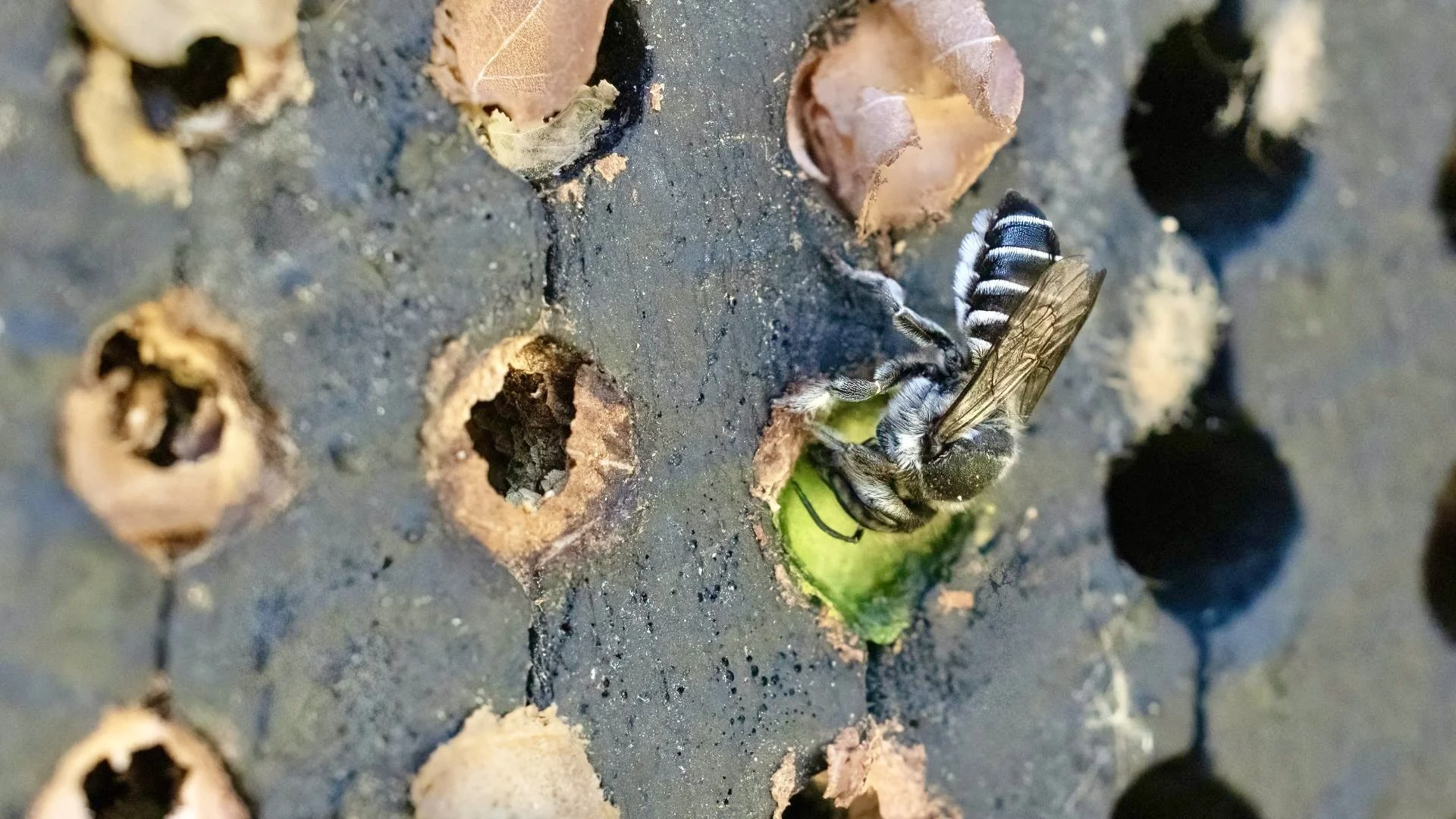
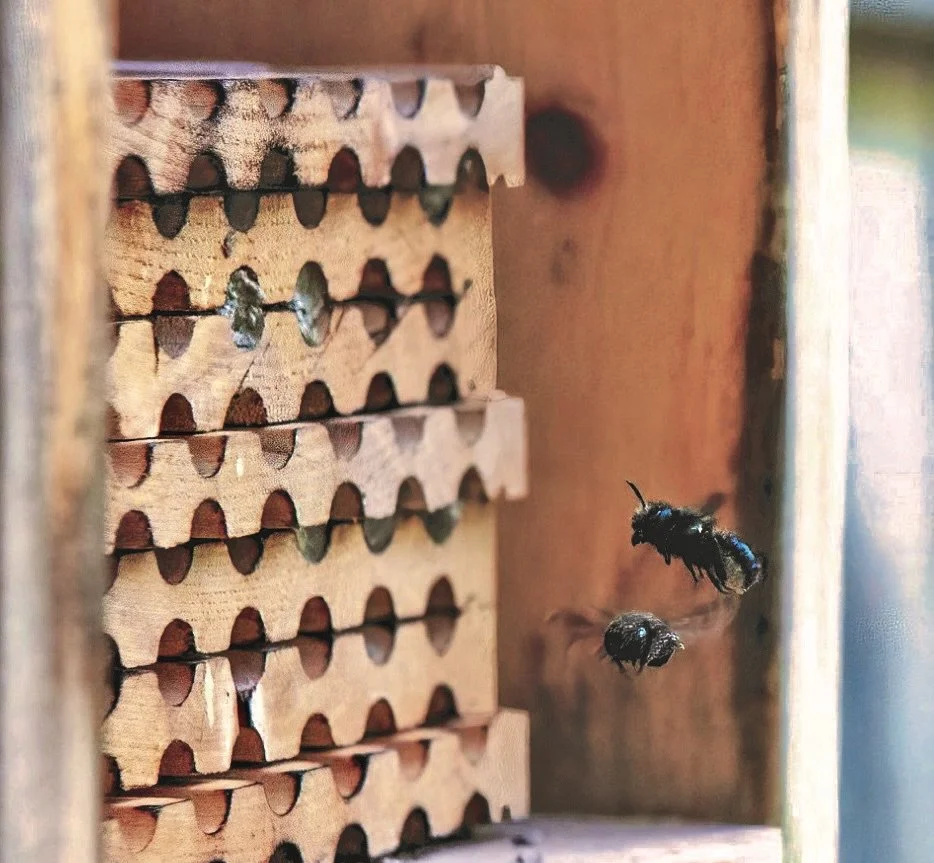
Mason bees use mud in their nest building, and unless nesting chambers are provided, they are often seen going into holes in a building, but they are simply taking advantage of the space.
The nesting chamber is a little larger than the mason bee, roughly one-half to three-eighths inch in diameter, and several inches long. The female adds mud, then creates a pollen loaf to add to the individual section. When she has enough food stored, she’ll lay the egg, then cap the cell with a mud plug. She’ll do this for five to seven eggs in each nesting chamber, laying the male eggs towards the entrance because they hatch a few days prior to the females.
The eggs remain in stasis for nearly nine months before emerging in the spring and beginning the process again. When all the bees have hatched, the males mate with the females. Within a few days, the females begin creating their nest and starting the process again.
Leafcutter bees are our summer pollinators and begin their lives when temperatures are above 75 degrees.
Instead of mud, the female cuts tiny pieces of leaves to line the nesting chamber, wrapping them in a little leaf sleeping bag. As with the mason bee, she’ll fit six to eight in a single chamber.
“Once the temperature is 75 degrees, they’ll perk up, eat the pollen, and will then take four to six weeks to metamorphosize and grow into a full-grown bee,” Thyra said.
Eggs hatch before the end of the summer, then they spin a cocoon, and spend the winter in the larval stage within the nesting chamber until the summer warmth coaxes them awake.
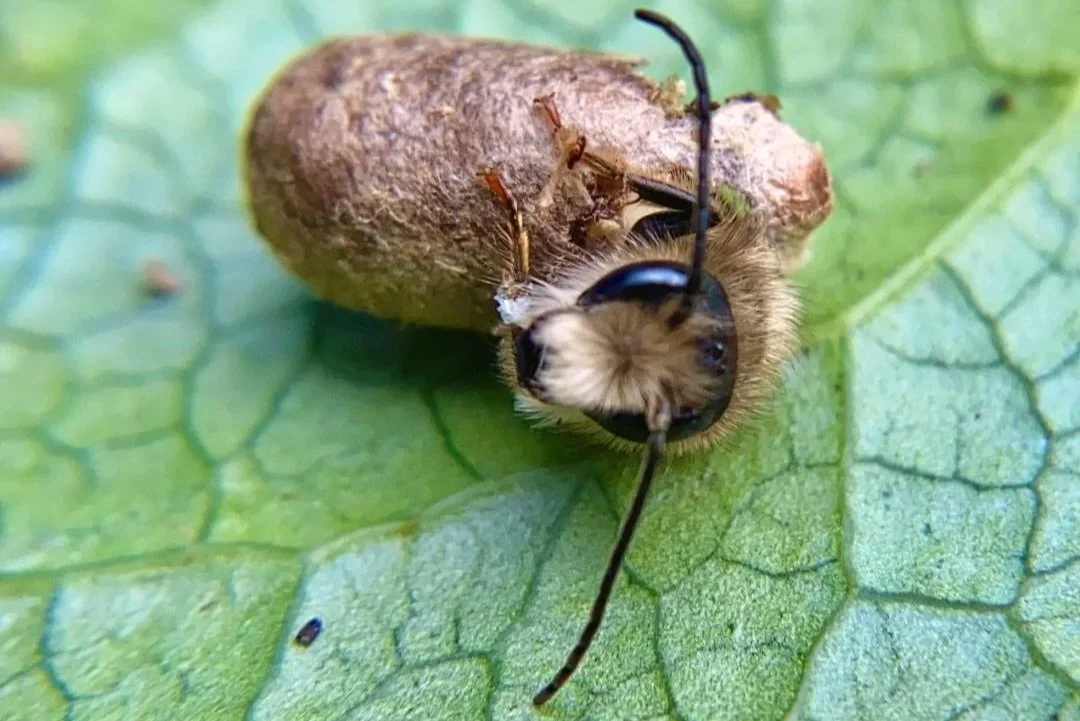
MASON BEE EMERGING IN THE SPRING
As with any of our beneficial pollinators, if we don’t provide a healthy habitat, they won’t be there. It’s important for all species to have a solid food source, which means making sure there are plants blooming from early spring to fall.
Water is critical, of course, and it’s always good to have a few muddy spots to give the mason bees working materials. A shallow saucer of water filled with stones or marbles is also helpful.
Reduce or eliminate pesticides in your landscape. Even when products are organic or natural, they still can have detrimental effects on bees, especially mason bees who use mud to make their nesting chambers.
Bees of all kinds are vital to agricultural production and our own gardens. If you want to have the top-notch pollinators visiting your fruits and vegetables this year, try your hand at keeping mason and leafcutter bees, along with creating a welcoming habitat for the hundreds of other native bees that need love, too.