
Up, Up and Away
Aero Pro Drone Solutions
Edgar, Montana
Written by Cyd Hoefle
Photography by Stu Hoefle
Spring Issue - 2026
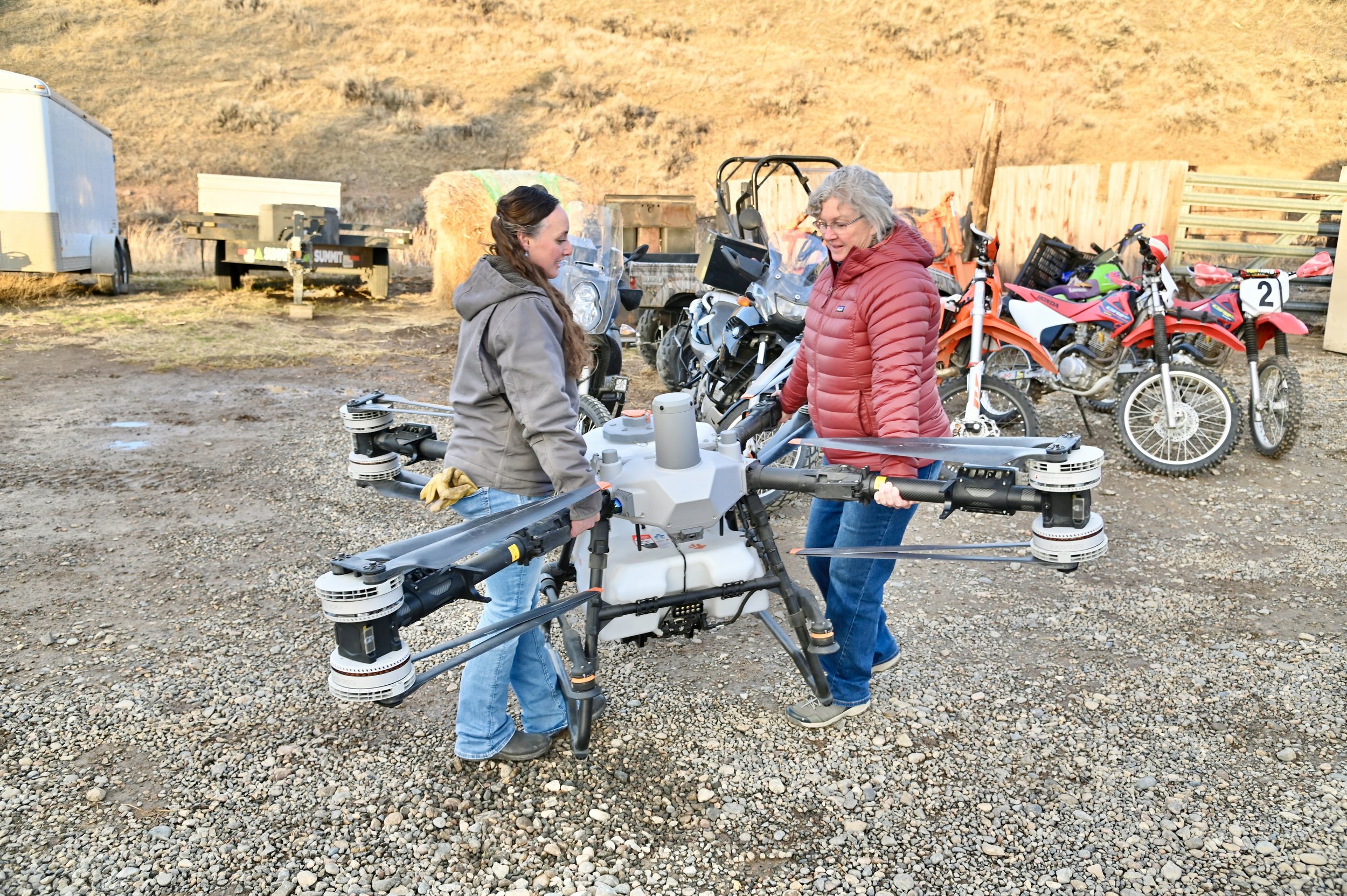
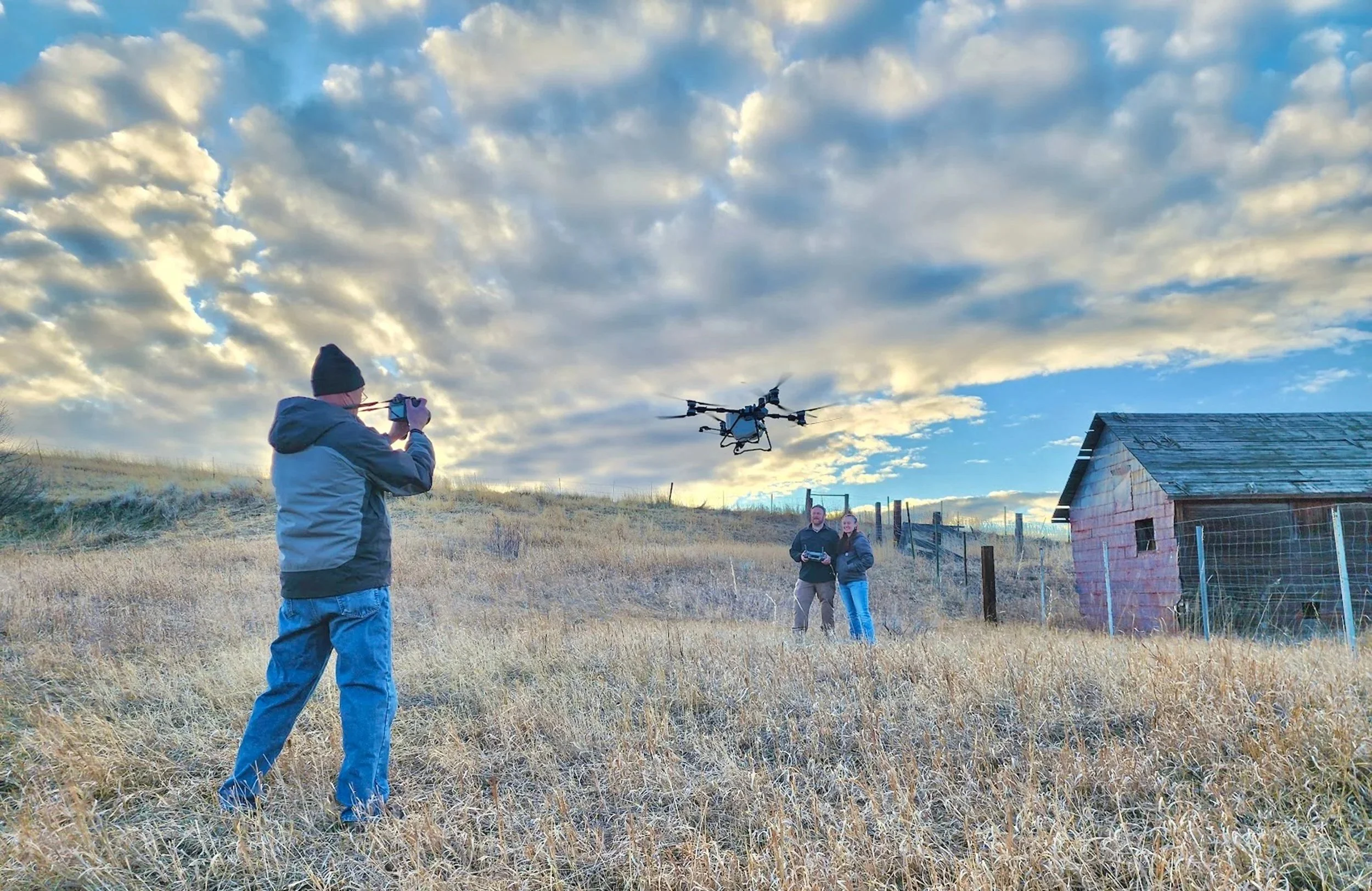
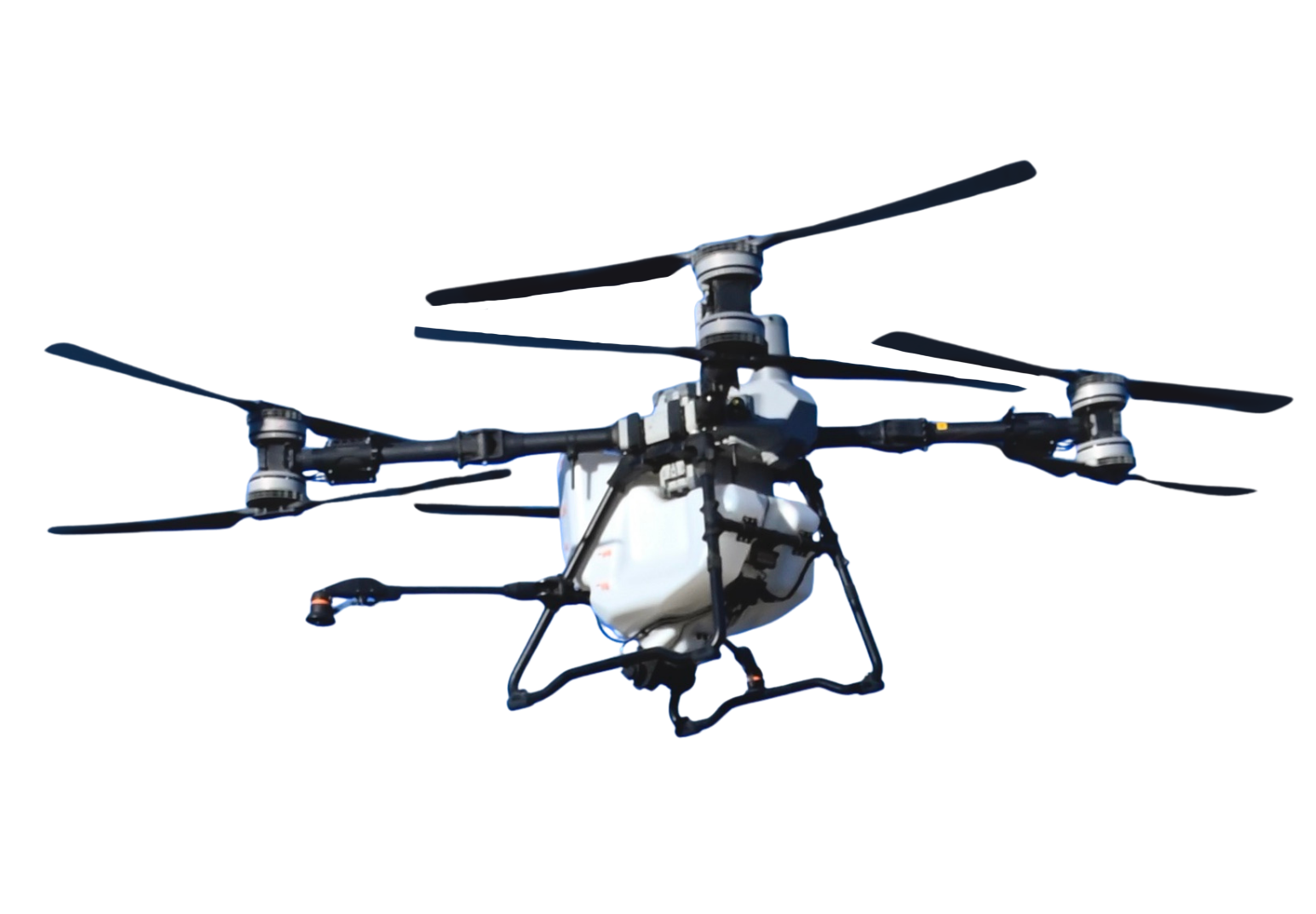
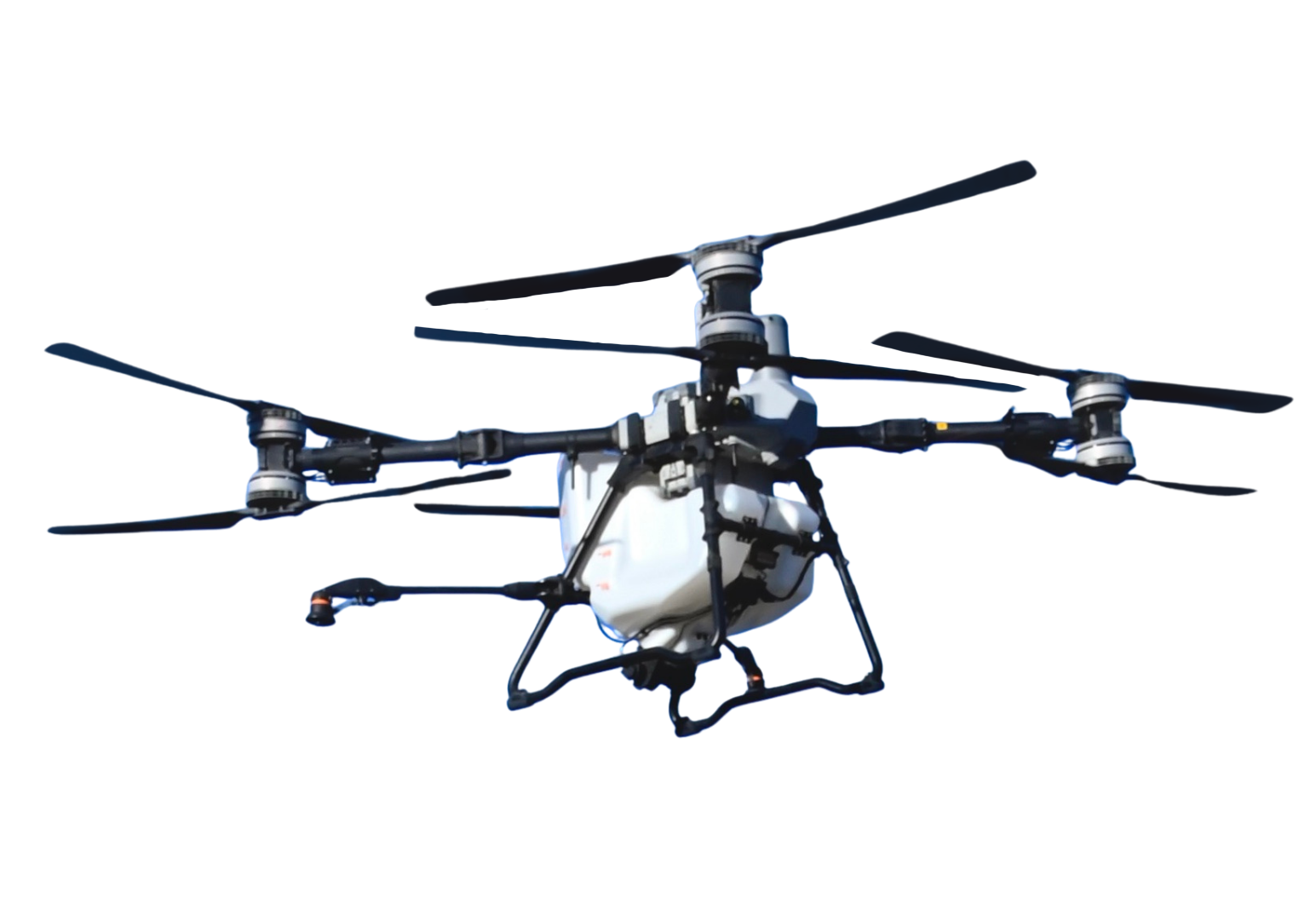
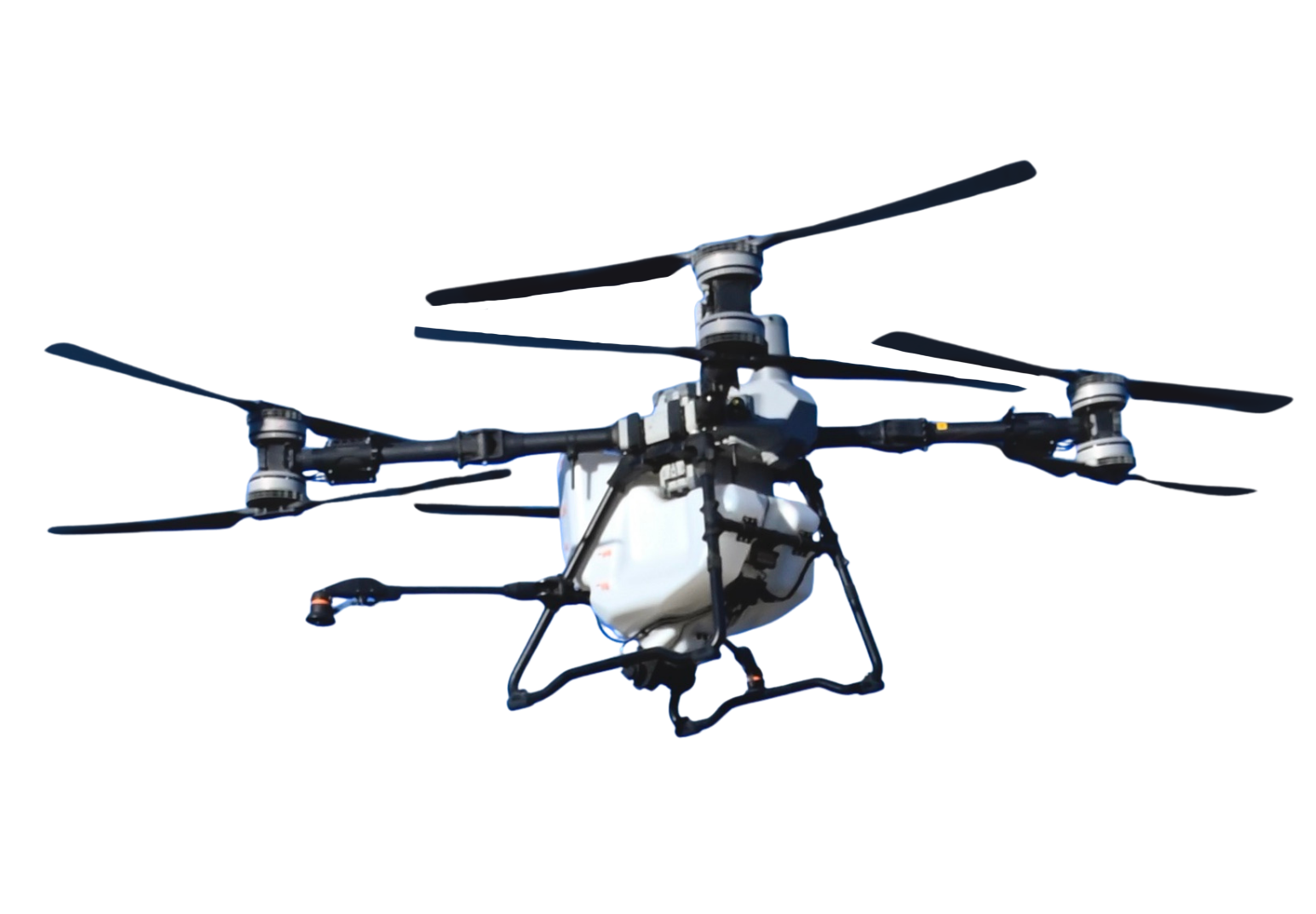
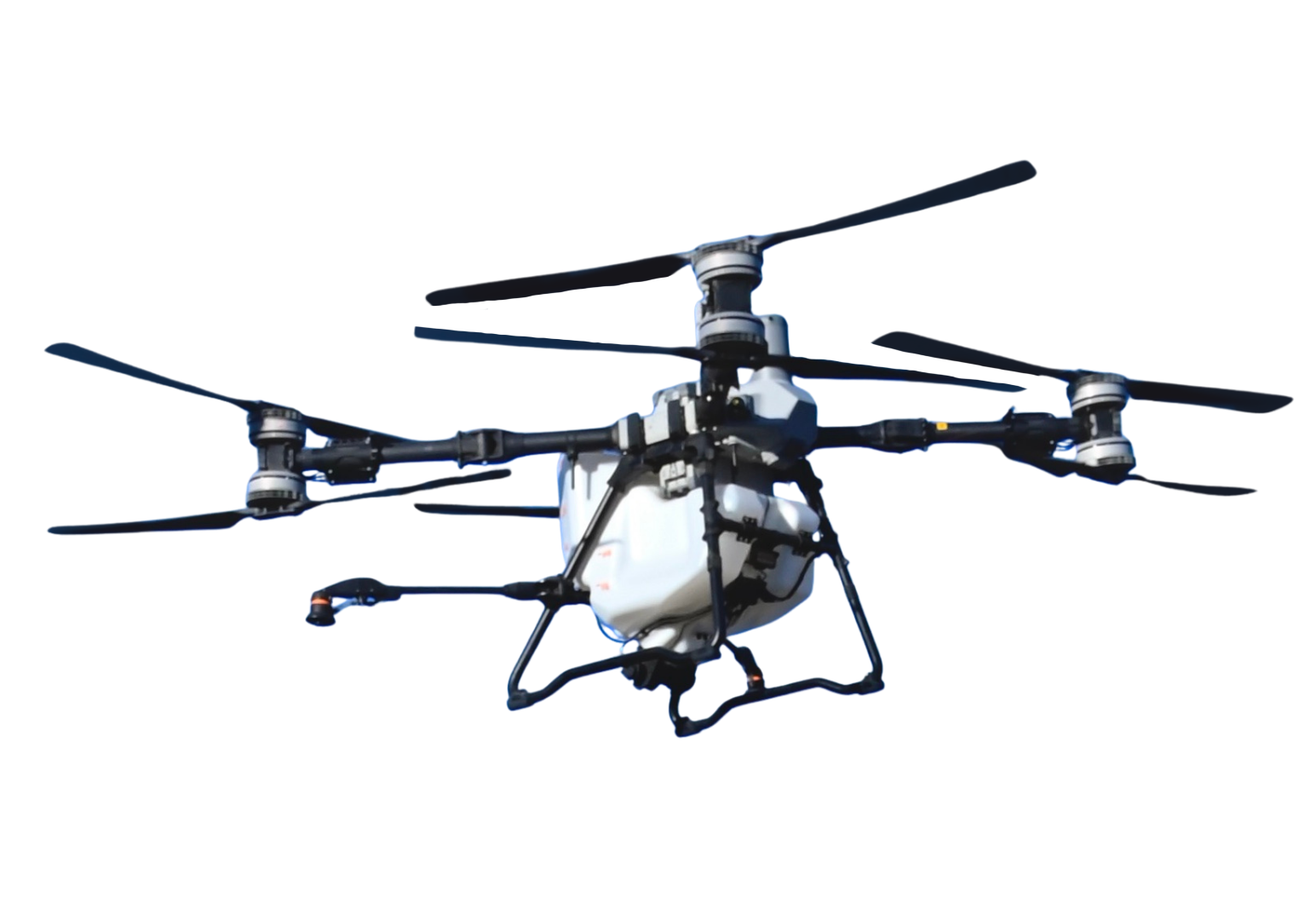
A slight breeze started as Adam Pedone prepared to launch the drone. “Not enough to worry about,” he smiled. The drone lifted off, looking like a giant insect, with a wingspan of 13 feet, eight propellers, flashing red and green lights, and weighing 150 pounds.
Adam guided the aircraft up about ten feet in the air, made an abrupt turn and flew it over a nearby ridge, still visible, but at least 100 feet away.
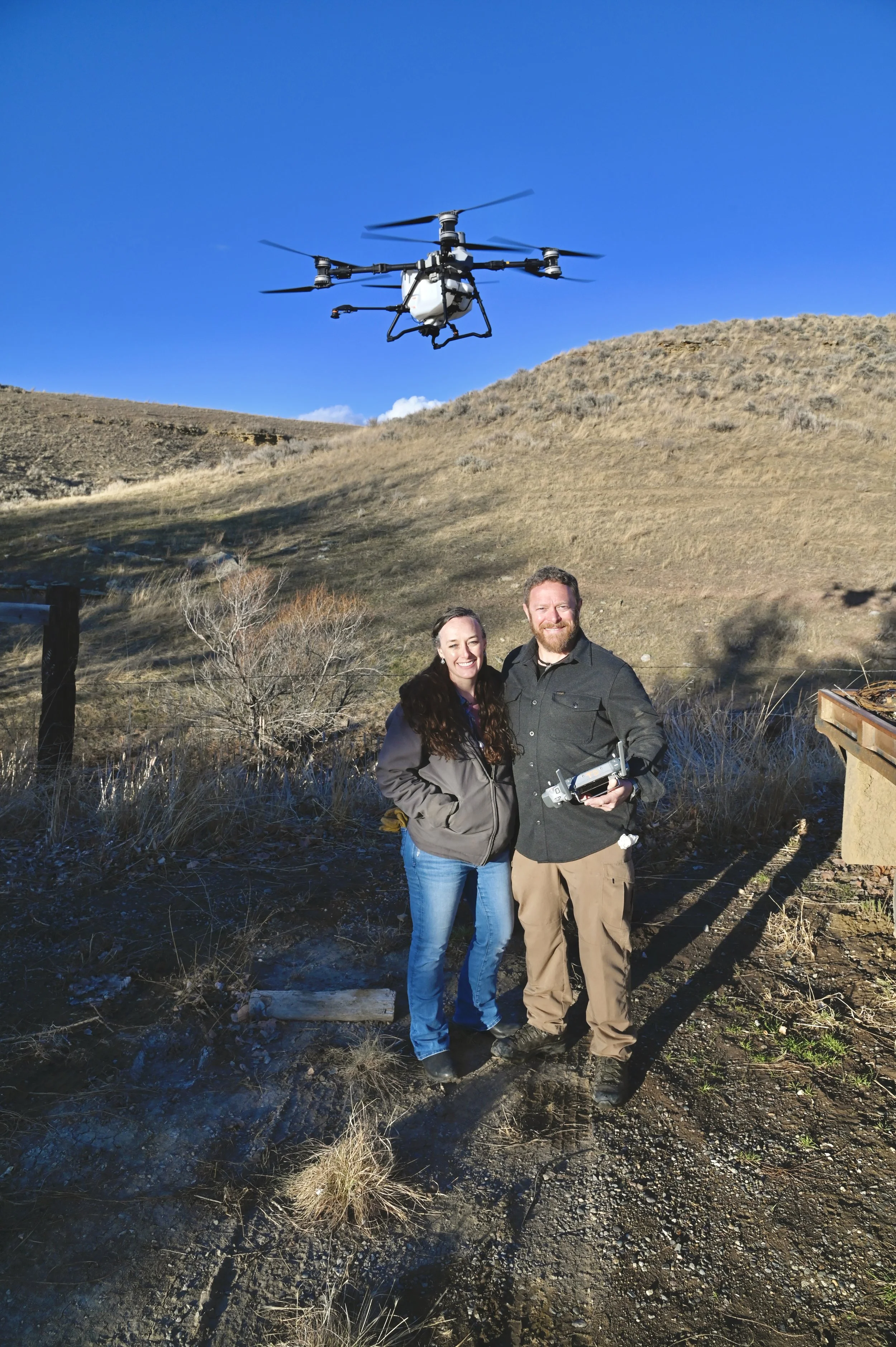
ADAM & SARAH PEDONE
“They are a blast to fly,” he said as he commanded the drone by remote control, while watching the screen as it flew. “I never get tired of flying them.”
Adam graduated from Montana State University with a degree in Earth Science Physical Geography and GIS (Geographic Information Systems). He started mapping using a Global Positioning System (GPS) survey pod to map the infrastructure of Bozeman’s fire hydrants, water valves and storm drains. But it was while working on a ranch in Stillwater County that he was introduced to the idea of using drones for weed control.
“I’ve always had an interest in aerospace,” Adam said. “So, I got my drone pilot’s license, and the certification and licensing needed to spray weeds and I haven’t looked back.”
It doesn’t take a trained eye to notice the noxious weeds growing across Montana’s rural landscape. From Canada thistle and field bindweed to leafy spurge and knapweed, the war on weeds has been a continuing battle for decades. But it wasn’t until recently that drones became the new weapon to help eradicate the long list of invasive and noxious plants.
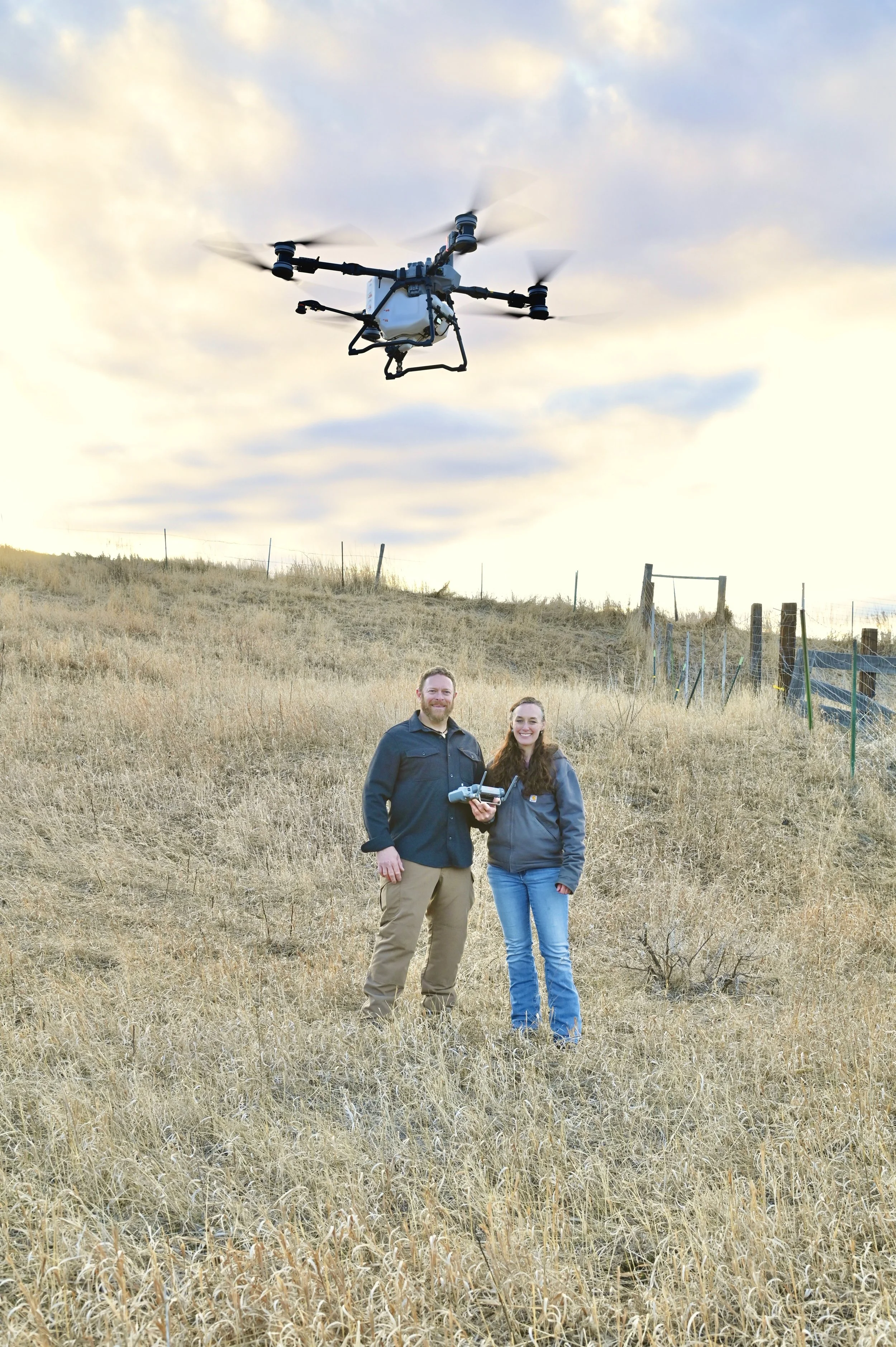
Adam’s timing is perfect. He and his wife - Sarah, also a drone pilot, own and operate Aero Pro Drone Solutions and two years ago they began offering drone services for weed control, fertilizer applications, orthographic mapping and imagery, and real estate photography.
The drone industry has exploded in the last several years. Because drones are considered aircraft, pilot's licenses are required for commercial flight, but not recreational. The FAA Remote Pilot Part 107 license prepares pilots to read maps and charts, to understand airspace regulations, comprehend runways, flight traffic patterns and weather systems.
“The easiest way to think of it, is that it’s a step or two below a regular private pilot’s license,” Adam explained. “You have to know about weather, clouds, radio communications and frequencies, aeronautical charts, runway numbers, theories of lift and aerodynamics and you have to pass a physical.”
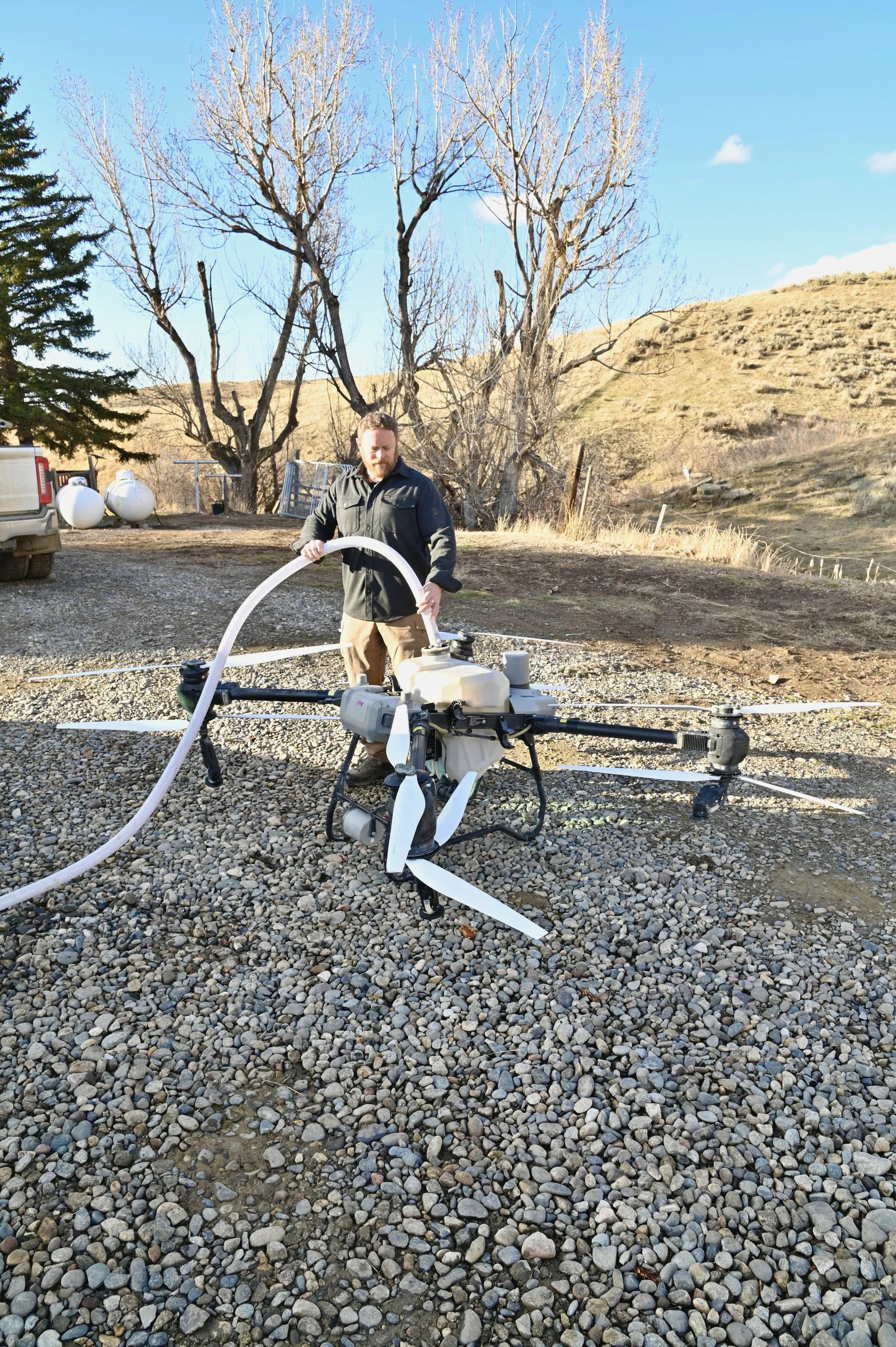
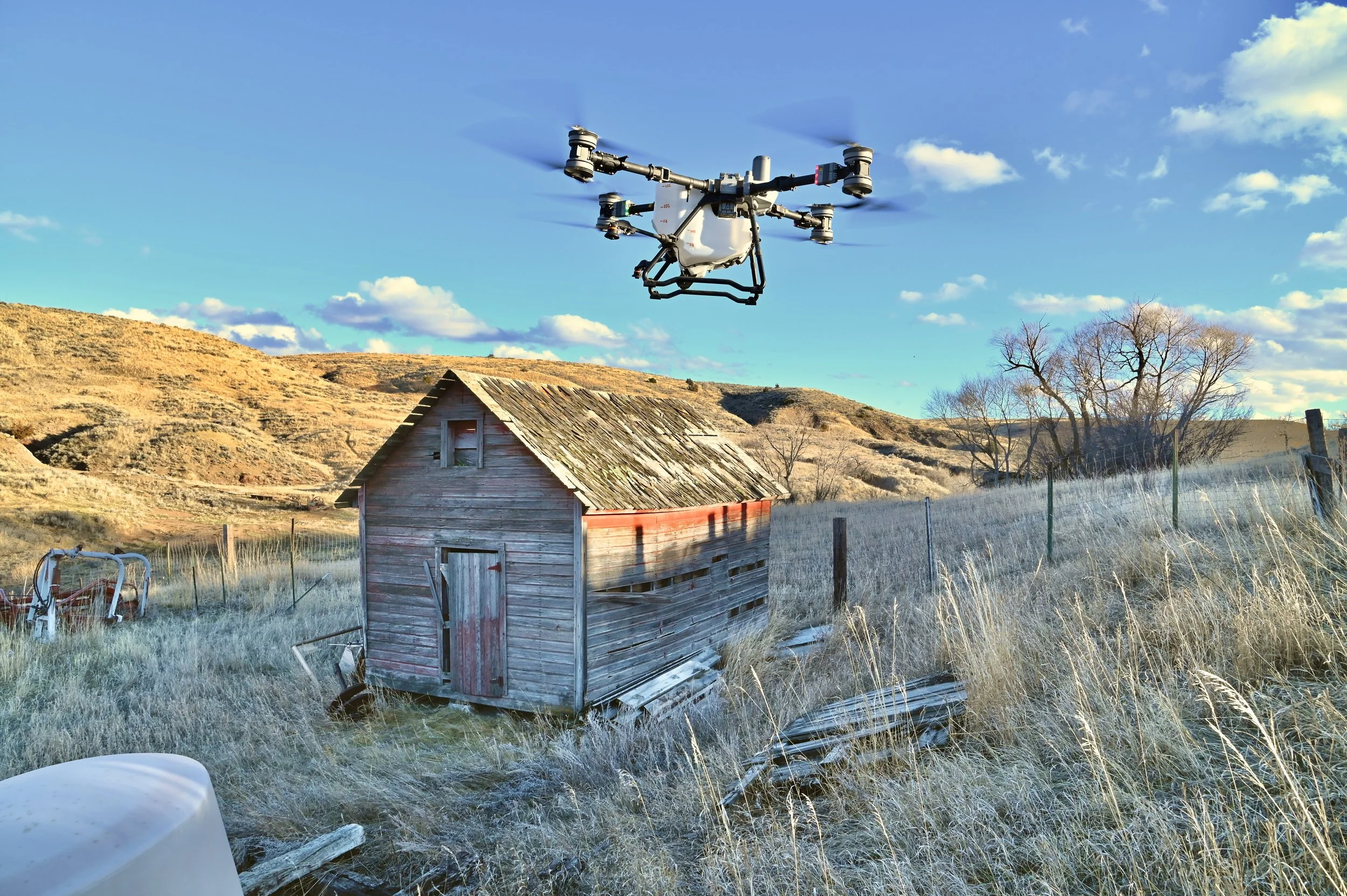
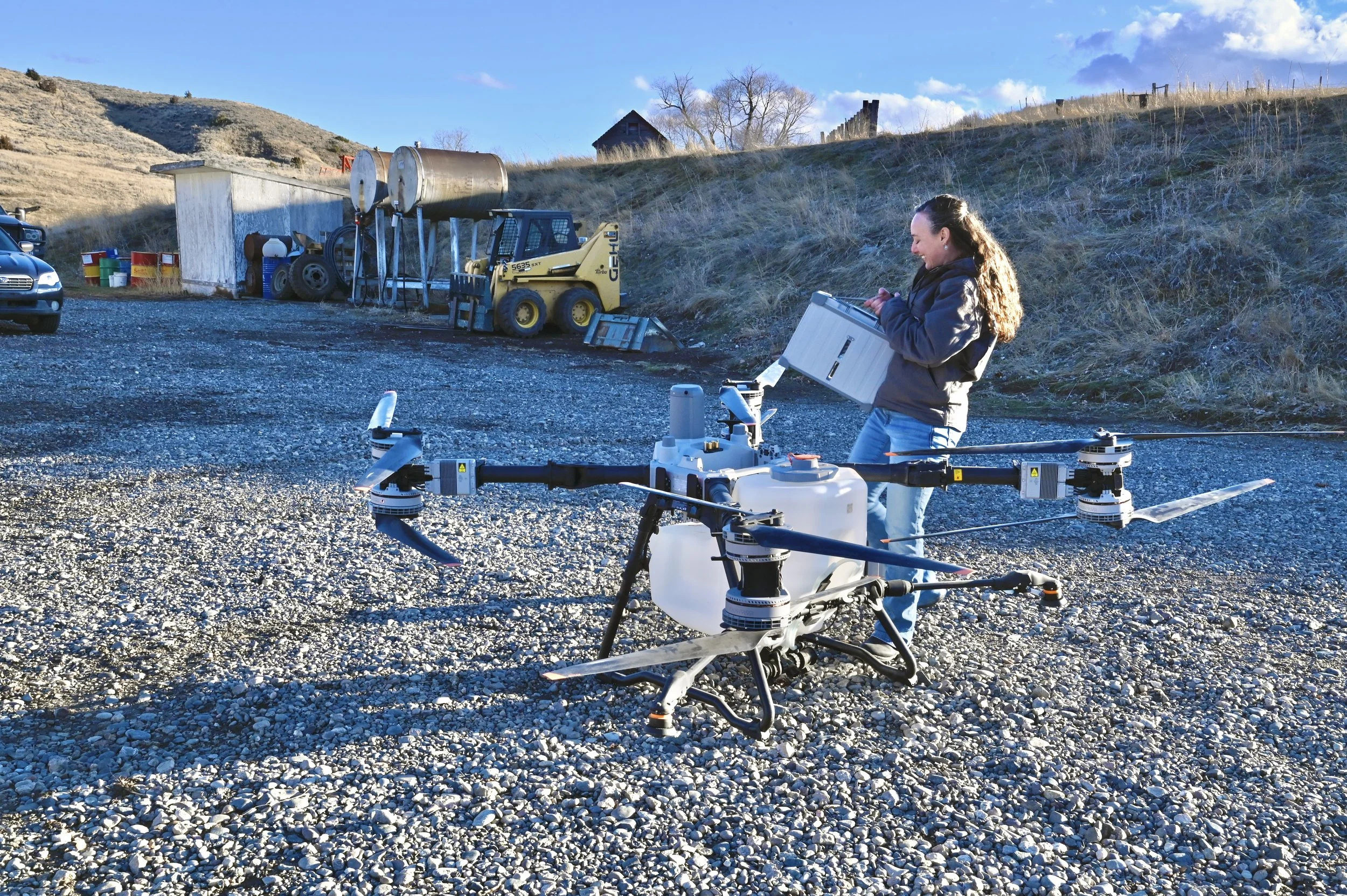
The drone Adam was demonstrating had just been added to Aero Pro’s fleet. Adam and Sarah own five drones; each specifically selected for their capabilities. The new one can carry 26 gallons of liquid, double the capacity of the others, and will cover larger areas faster when applying fertilizer or eradicating weeds.
A smaller spray drone is used for more difficult areas such as hillsides, steep terrain, obstacles or isolated areas that are hard to access.
“There are so many areas with noxious weeds that you can’t get to with a truck or a 4-wheeler,” Adam said. “To say nothing about hiking in, hauling chemical on your back, fighting brush, mud, rattlesnakes… drones are so much easier.”
Farmers and ranchers across the state are making the leap to drones for personal use. Many are using them to spray, fertilize, check fences and water holes and even to move livestock.
Though Adam is quick to say that he has taken all the legal steps to be in business to commercially use his drones, he understands why it's hard for many ranchers and farmers utilizing drones for private use on their own land to see the value of it.
“It’s likened to a driver’s license,” he said. “Everybody that has grown up on a ranch has been driving since they were kids, the same thing is happening with drones on private property. I understand it and I appreciate it, but it’s the ones that are selling their services without a license that make it dangerous.”
“It’s a bit of the wild west right now,” he continued. “The regulations side isn’t keeping up with reality. The bottom line is that if you are doing anything commercially right now, you better have a license and all the certifications that you need to fly a drone.”
Adam has taken the steps to take the guess work out of aerial spraying by utilizing his mapping skills before he makes an application. Using multi-spectral imaging, he can map out the area to be sprayed with his mapping drone and using specialized computer programs, he then calculates the application needs for the job.
This was especially helpful when he and Sarah were contracted by the Carbon County Weed District to target an established stand of Salt Cedars, a non-native, deciduous, willowy shrub that can grow to be over fifteen feet tall with a life span of about ten years. Its root system reaches deep into ground water which enables the plant to suck from twenty to 200 gallons of water daily.
Using their drone, the Pedone’s first mapped the area and identified each of the Salt Cedar plants that needed to be destroyed. Then instead of a broad sweeping spray, they modified one of their spray drones to drop a single stream directly below it and spot sprayed 183 plants, eradicating all of them.
“Water is a precious commodity,” Sarah said. “Just getting rid of the Salt Cedars in that area equates to at least two Olympic size swimming pools of water being put back into the ecosystem per year!”
In addition to partnering with Adam in the drone business, Sarah, who has a Master’s degree in Public Health and a Doctorate in Physical Therapy, has a full-time career as a Physical Therapist. She works at the Joliet branch of the Beartooth Billings Clinic.
Her passion for helping people heal and her desire to be a blessing to others crosses over to the drone business as both she and Adam enjoy problem solving, interacting with people and customer satisfaction. The couple said that they are growing in confidence with each passing year.
“We’ve crashed a couple of times,” Adam said. “But we’ve learned how to be mechanics. We keep spare parts on hand and extra batteries, and we can fix most problems in the field as well as at home.”
Sarah added that an "unscheduled landing" last fall was an unexpected blessing because the drone went down due to a manufacturer error while they were spraying an open field. The following day, they were planning to use the same drone to spray knapweed on a steep cliff behind the Stillwater Mine.
“It was a $1000 repair, versus crashing the drone on the side of the cliff,” she said. “So we felt very blessed it happened when it did.”
The couple doesn't leave home without an abundance of parts and spare batteries. Battery life is a constant component to be monitored. Their drones operate for about seven minutes per charge, so they keep a close eye on them.
“We’re very aware of our battery life and when it gets down to less than 10%, we bring it in to change.” Adam said. “It only took one time to train us to bring the drone back quickly. Each battery weighs about 35 pounds, so one long walk was all it took to monitor that closer.”
Along with the service side of their business, Adam and Sarah are also commercial drone dealers. American made drones will soon be replacing Chinese drones, since new models of foreign-made drones have been banned from the U.S, and Aero Pro Drone Solutions is working with U.S. manufactures to provide domestically built and customized machines.
“Ingenuity in American made drones is progressing rapidly,” Adam said. “American-made drones now have the opportunity to outcompete China-made drones. The industry is only going to get better, and we’re excited to be part of it.”
“We’re blessed to have this business,” Sarah added. “We have a lot of fun doing this together. God’s been gracious.”
Phone: 406.686.2326